

Paint Questions & Answers List
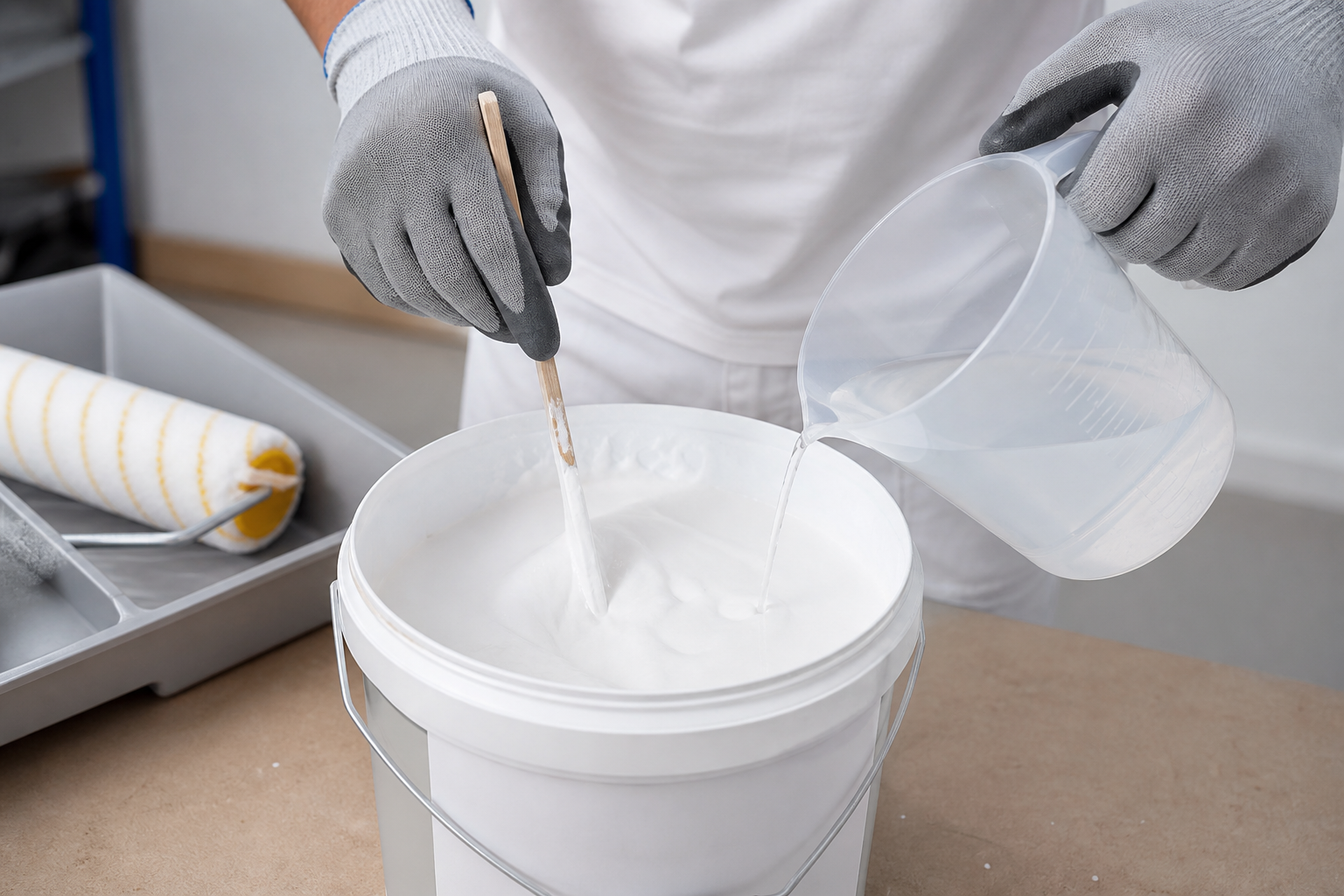
What should I use to thin water-based acrylic paint?
Use clean water only where thinning is permitted by the product instructions. Do not use solvent thinners in water-based acrylic coatings.
Use clean water only where thinning is permitted by the product instructions. Do not use solvent thinners in water-based acrylic coatings.
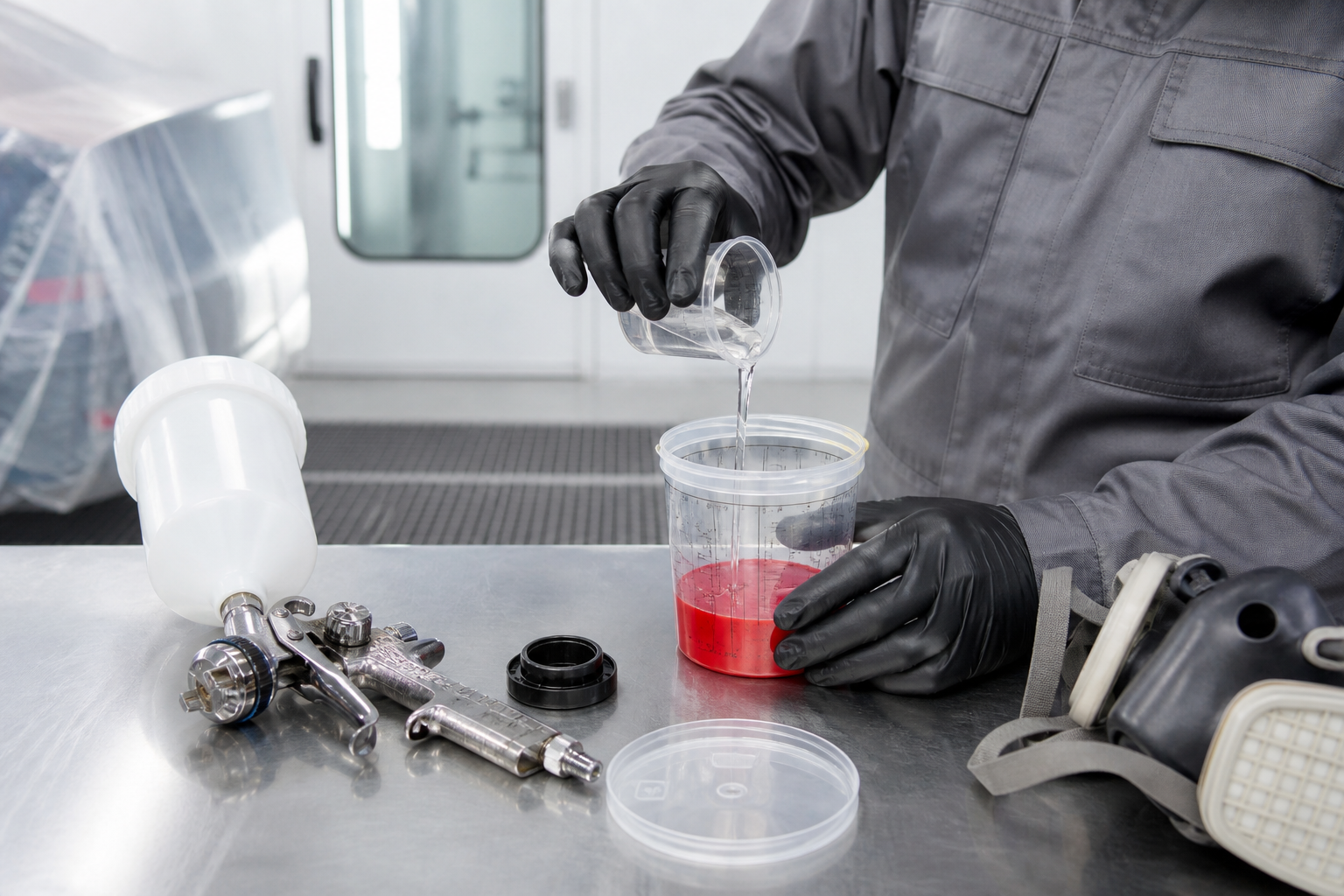
Which thinner should I use with Quick Drying Enamel?
For spray application, use ACRO Q.D. Enamel Thinners with Quick Drying Enamels. A Grade/Lacquer Thinners can also be used, but they are faster and more aggressive and are therefore not the preferred choice where controlled flow and finish are important.
ACRO Q.D. Enamel Thinners are the recommended thinner for Quick Drying Enamels, especially for spray application. They are specifically formulated for Quick Drying Enamels, QD Primers and High Gloss Enamels and provide the more appropriate solvent balance for thinning, atomisation, flow and levelling.
ACRO A Grade/Lacquer Thinners can also be used with Quick Drying Enamels, and ACRO lists them for general use with Q.D. enamels, NC lacquers and Q.D. primers. However, lacquer thinner is generally a stronger and faster-evaporating solvent system, so it should not be treated as the first-choice spraying thinner when a controlled finish is required.
If the lacquer thinner is too aggressive, too fast for the spraying conditions, or too much is added, the paint can lose wet-film body and flow too quickly. This can contribute to runs or sagging from excessive reduction, while rapid solvent evaporation can cause dry spray, poor flow and orange-peel texture because the coating starts drying before it has levelled properly.
For this reason, use ACRO Q.D. Enamel Thinners as the normal and recommended thinner for spraying Quick Drying Enamels. Use A Grade/Lacquer Thinners only where appropriate and with careful control of the reduction and spraying conditions. Do not use Turps for Quick Drying Enamels; ACRO lists Turps for alkyd brushing enamels and other slower-drying alkyd systems instead.
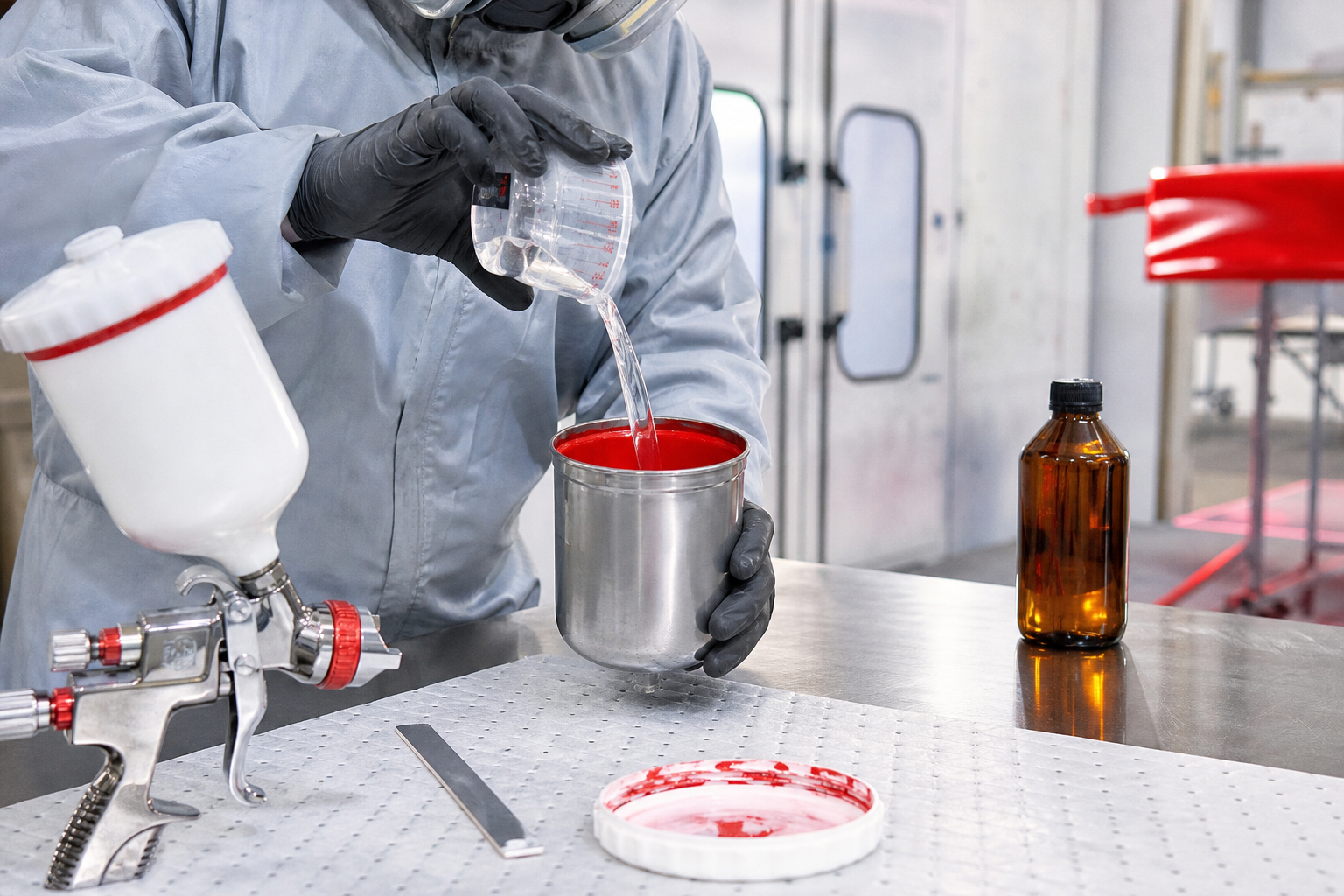
Can I thin Quick Drying paint with Turps?
No. Turps is intended for compatible alkyd brushing products.
No. Turps is intended for compatible alkyd brushing products. In Quick Drying systems it can cause agglomeration, clumping and eventual gelling. Use the correct Q.D. Enamel Thinners or other thinner specified for the coating.
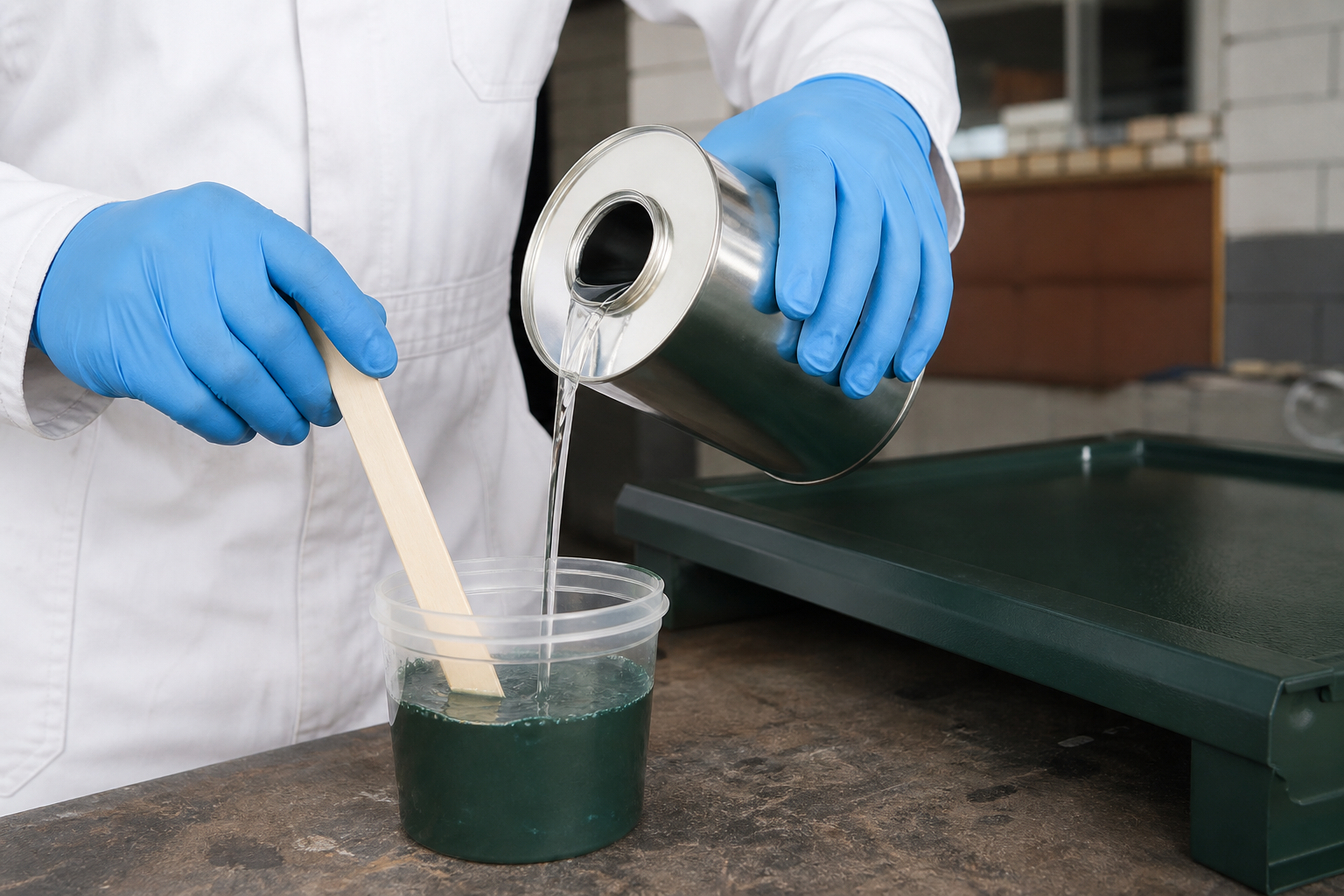
What is Turps used for?
ACRO Turps is intended for compatible alkyd brushing enamels, varnishes, plaster primer, undercoats and Truck & Tractor Enamel.
ACRO Turps is intended for compatible alkyd brushing enamels, varnishes, plaster primer, undercoats and Truck & Tractor Enamel. Always follow the product-specific instructions before thinning.
What is A Grade/Lacquer Thinners used for?
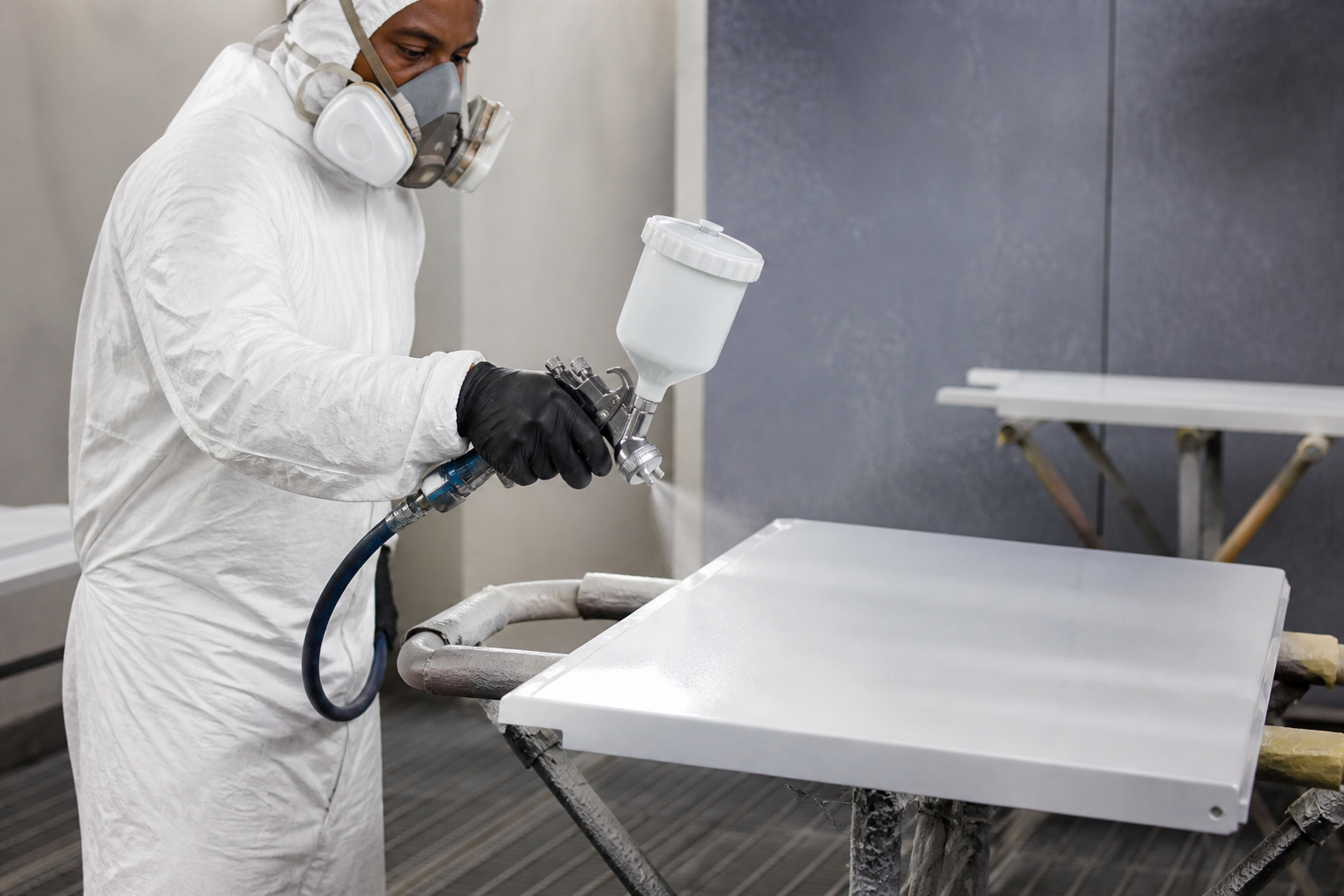
ACRO A Grade/Lacquer Thinners is primarily used with NC lacquers and other lacquer-type coatings. It can also work with Q.D. enamels and Q.D. primers, but ACRO Q.D. Enamel Thinners is the recommended thinner for those products.
ACRO A Grade/Lacquer Thinners is a strong, fast-evaporating solvent blend used mainly with lacquer-type and fast-drying solvent-based coatings. Typical uses include NC lacquers and other compatible industrial, automotive and wood-finishing systems.
ACRO also lists A Grade/Lacquer Thinners for general use with Quick Drying Enamels and Q.D. Primers. However, this does not mean it is the preferred thinner for those coatings. For Quick Drying Enamels and Q.D. Primers, ACRO Q.D. Enamel Thinners is specifically formulated for the job and should normally be used, particularly for spray application.
Because lacquer thinner is generally faster and more aggressive, excessive reduction or unsuitable spraying conditions can cause the coating to lose body or dry too quickly. This can contribute to poor flow, dry spray, orange peel, runs or sagging. For that reason, A Grade/Lacquer Thinners may work in Q.D. coatings, but it should not automatically be treated as the recommended thinner.
Always use the thinner specified for the particular coating system where possible.
Which thinner is used with 2K coatings?
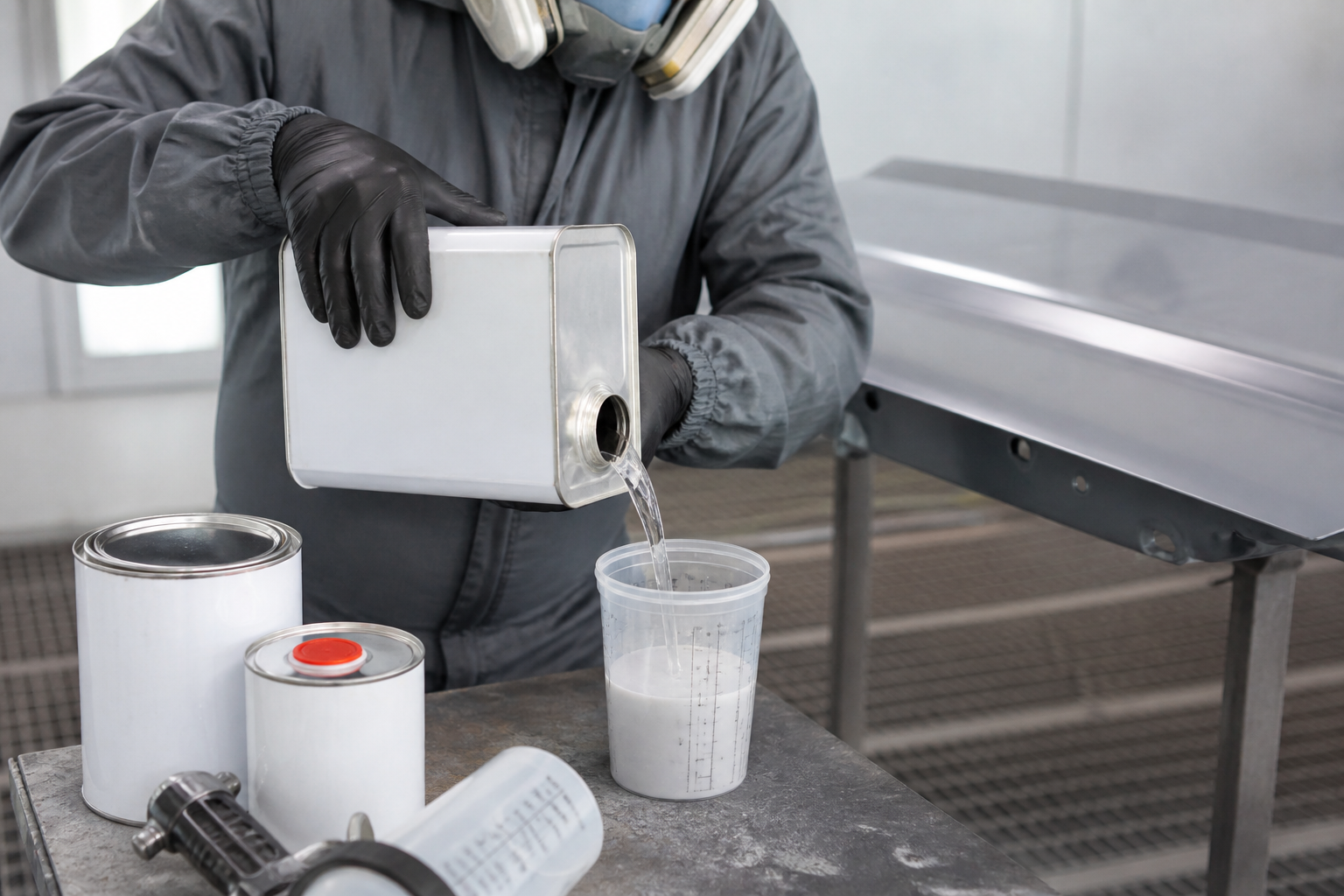
Use the thinner specified for the particular 2K coating system. ACRO 2K Thinners are used with 2K enamels and M.S. 4:1 primer, while epoxy and polyurethane systems use their corresponding ACRO Epoxy or Polyurethane Thinners.
There is no single thinner for every 2K coating. The correct thinner depends on the resin chemistry and coating system.
ACRO 2K Thinners are intended for 2K enamels and M.S. 4:1 primer.
ACRO Epoxy Thinners are intended for epoxy enamels.
ACRO Polyurethane Thinners are intended for polyurethane enamels and PU direct-to-metal coatings.
ACRO also offers Heavy Duty Industrial Thinners for suitable two-pack heavy-duty coating systems.
Always use the thinner specified for the coating being applied. Substituting a different solvent blend can change viscosity, evaporation rate, flow, levelling and final film performance.
What are Retarder Thinners used for?
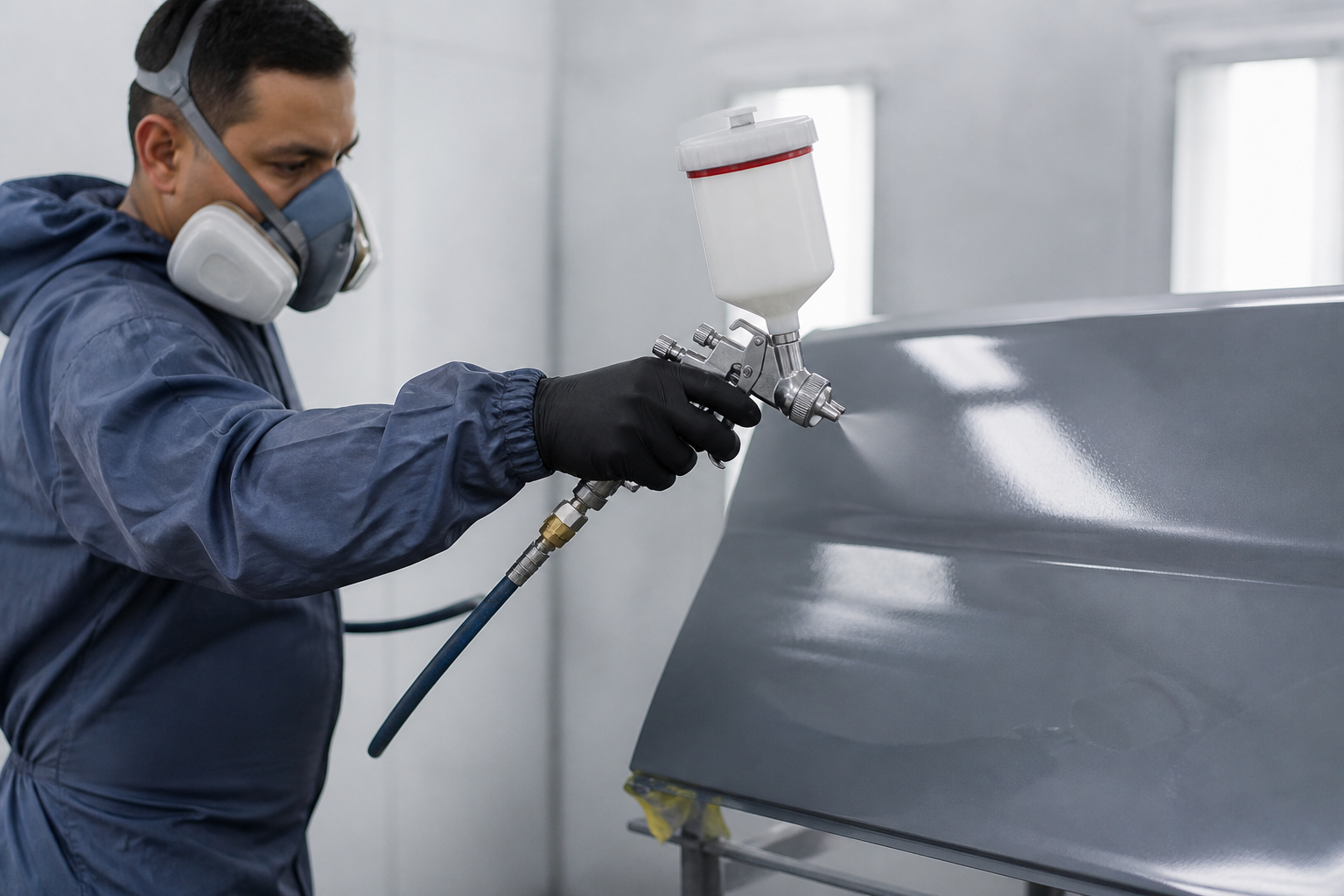
Retarder Thinners are formulated to improve the flow characteristics of sprayed lacquers and enamels.
Retarder Thinners are formulated to improve the flow characteristics of sprayed lacquers and enamels. They can help where evaporation is too fast, but should only be used where compatible with the coating system.
What should I use to clean paint guns and equipment?
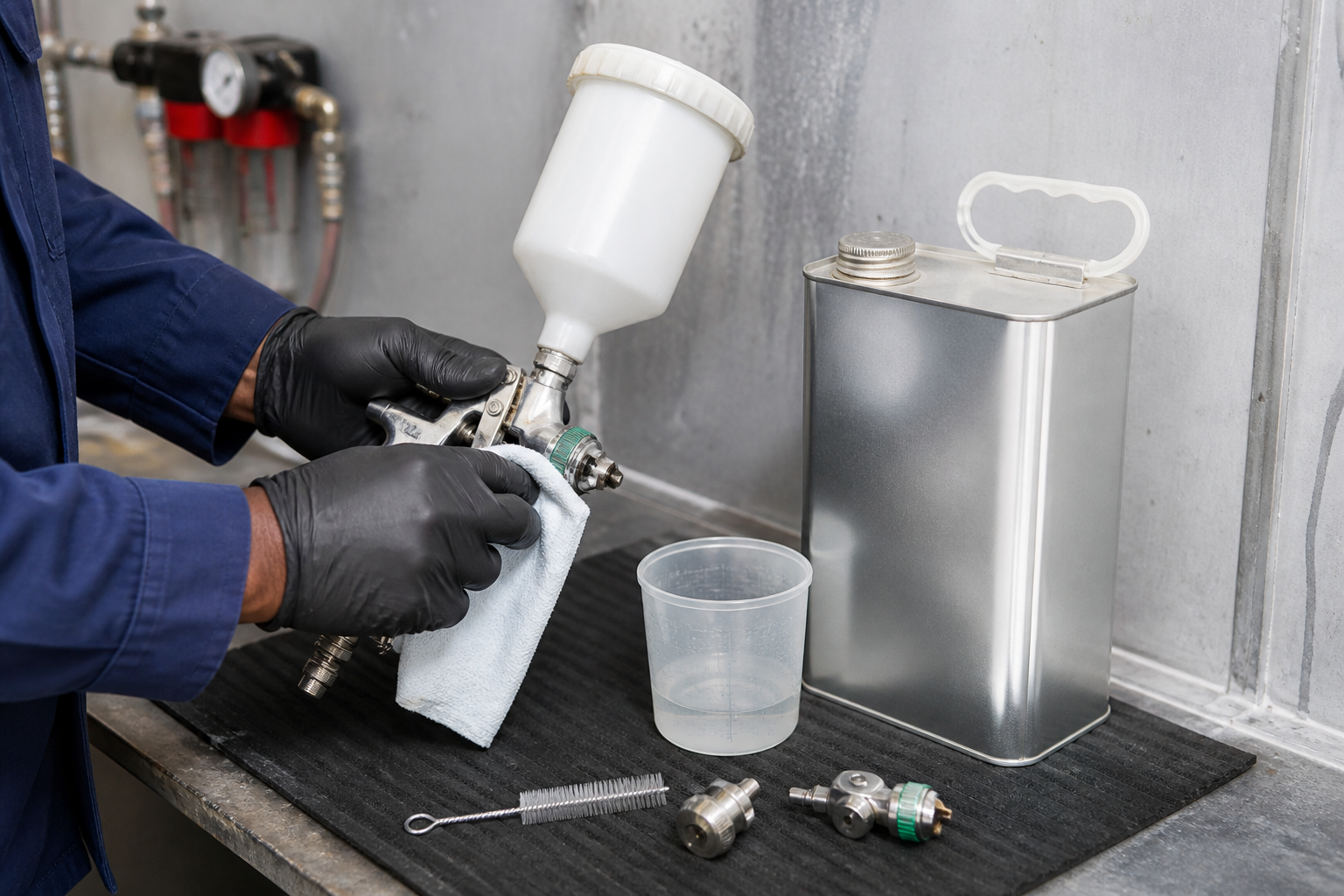
Use ACRO Cleaning Thinners where suitable. It is intended for cleaning brushes, paint guns, machinery and equipment and for removing compatible dried paint residues.
Use ACRO Cleaning Thinners where suitable. It is intended for cleaning brushes, paint guns, machinery and equipment and for removing compatible dried paint residues. Follow normal solvent safety precautions.
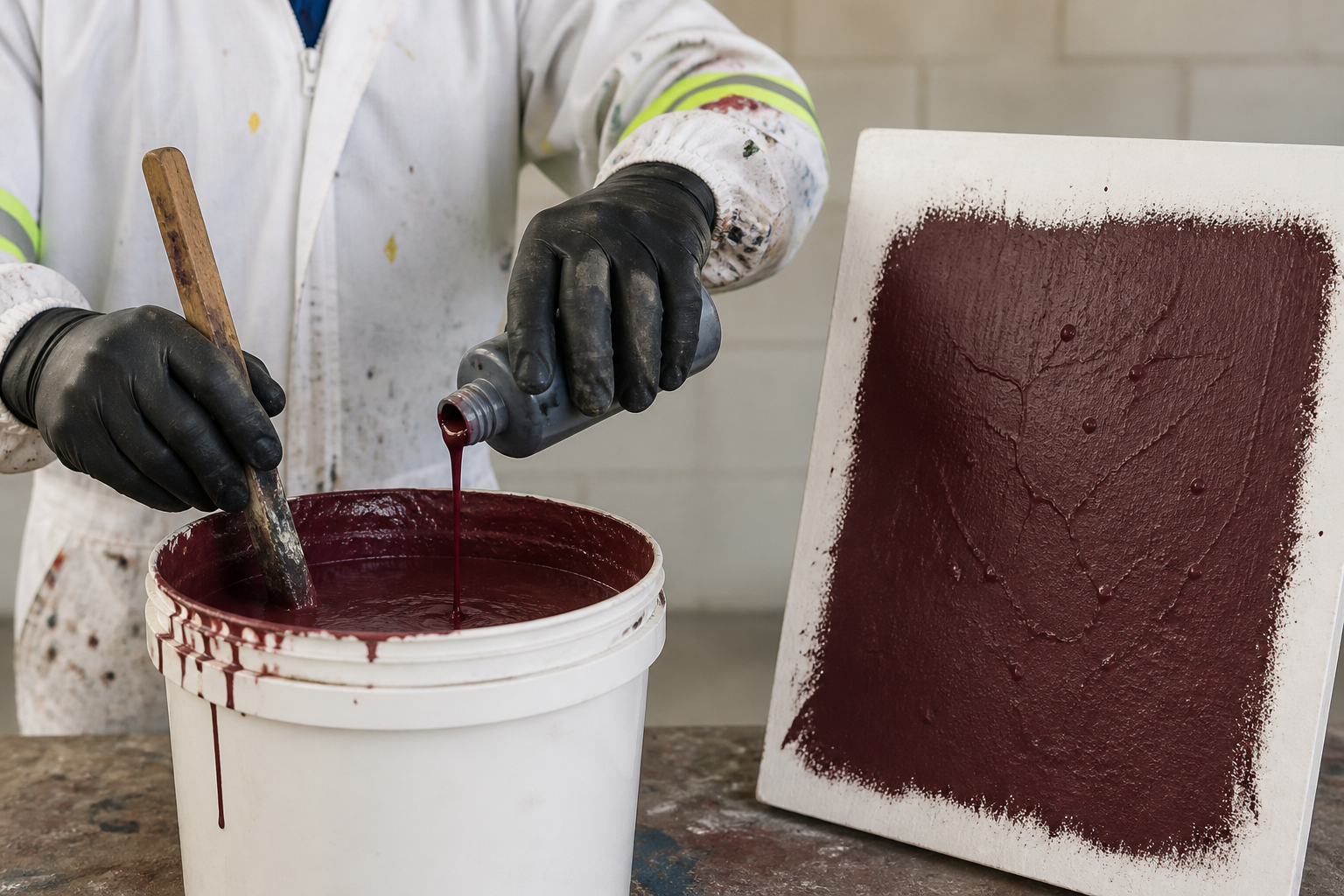
What happens if too much colourant is added to paint?
Excessive colourant can upset the binder-to-pigment balance, reducing film strength, hiding, durability and drying performance.
Excessive colourant can upset the binder-to-pigment balance, reducing film strength, hiding, durability and drying performance. In solvent-based enamels it can also contribute to slow or incomplete drying. Deep colours should be made from the correct tint base rather than forcing a white base with excessive colourant.
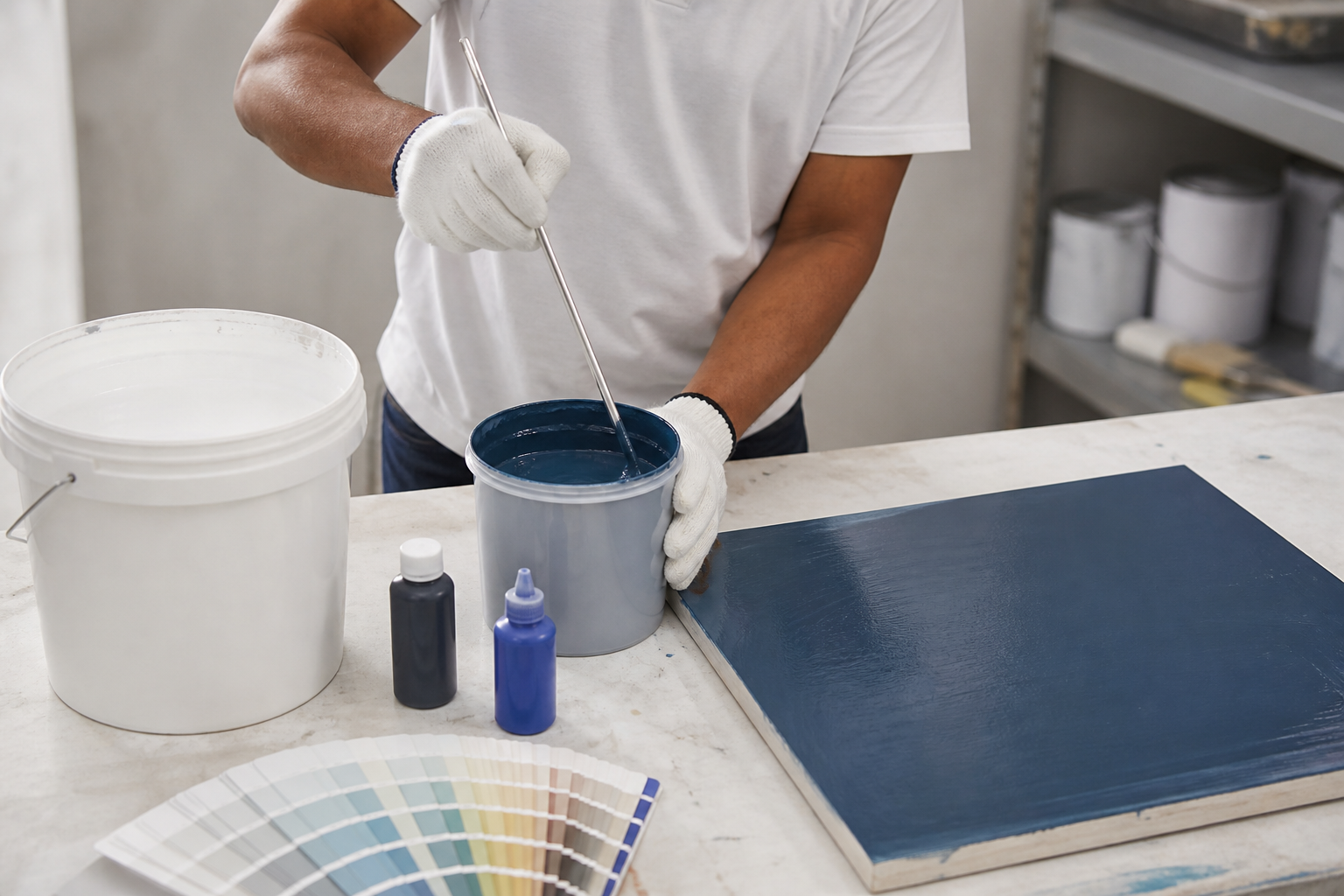
Can I tint white paint to a very deep colour with lots of universal colourant?
Not reliably. Deep colours should be produced from the appropriate deep or clear tint base.
Not reliably. Deep colours should be produced from the appropriate deep or clear tint base. Adding excessive colourant to a white base can weaken the coating and alter drying, durability and appearance.
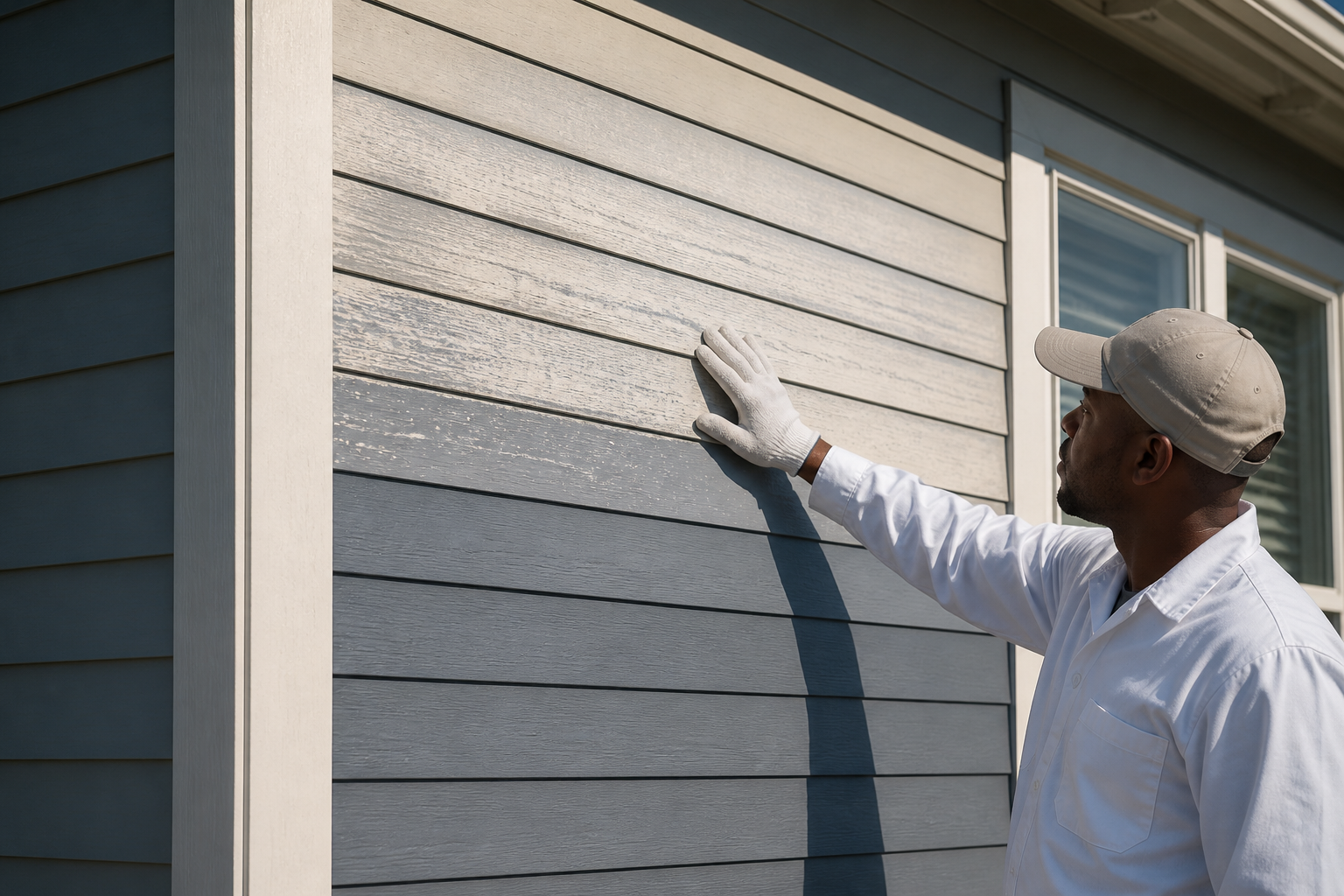
Why does exterior paint fade?
Fading is a loss or change of colour during exposure, most often strongest on areas receiving direct sunlight.
Fading is a loss or change of colour during exposure, most often strongest on areas receiving direct sunlight. UV-sensitive pigments can lose colour even when the paint film itself remains intact. Exterior colour selection and the quality of the coating both affect colour retention.
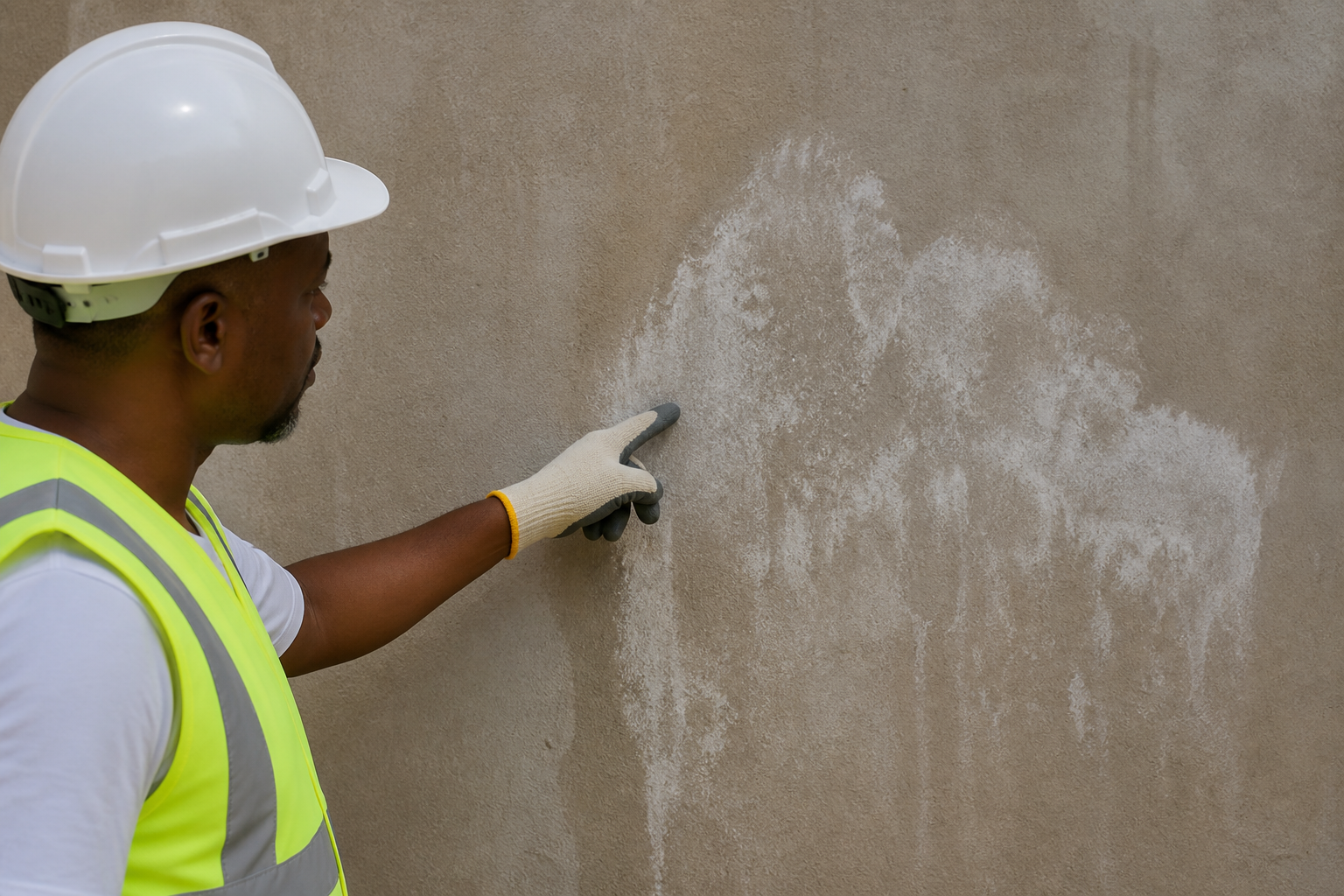
Why are there lighter patches on a freshly plastered wall?
Lighter patches on freshly plastered walls are usually caused by uneven porosity, residual moisture, surface salts or alkaline conditions in the plaster.
Fresh plaster can dry unevenly and may have different levels of porosity across the wall. These areas can absorb paint at different rates, causing lighter or patchy colour. Residual moisture, efflorescence or alkaline minerals in the plaster can also affect the appearance of the coating.
Allow the plaster to dry and stabilise properly, correct any moisture source, remove loose salts or powdery material, and prepare the surface thoroughly before repainting. On new, friable or highly porous plaster, use a suitable ACRO plaster primer or bonding/sealing system to stabilise the surface and provide a more uniform base before applying the decorative topcoat.
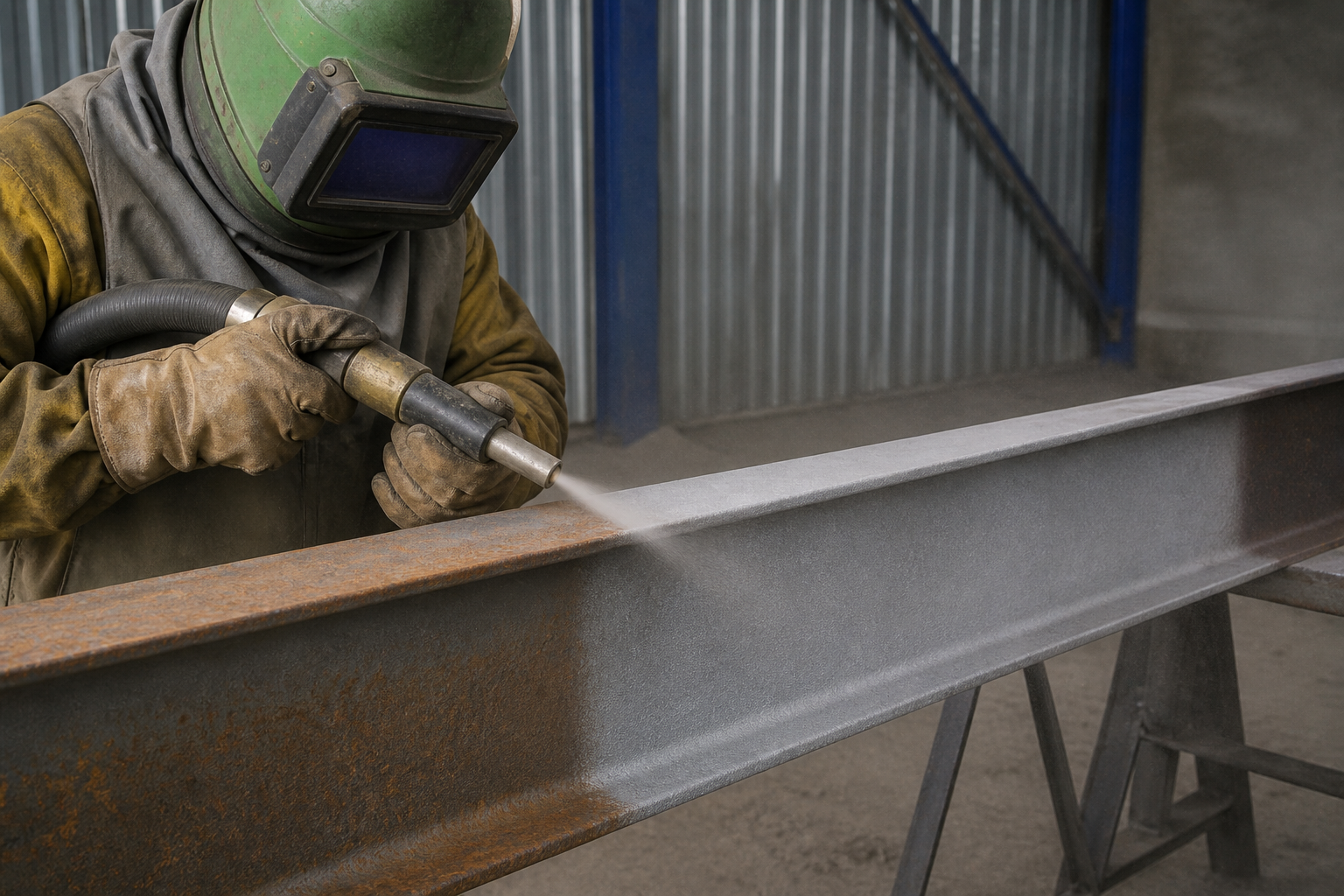
How should mild steel be prepared before painting?
Remove oil, grease, dirt, loose rust and mill scale. Abrasive blasting is the preferred preparation for heavy mill scale where practical.
Remove oil, grease, dirt, loose rust and mill scale. Abrasive blasting is the preferred preparation for heavy mill scale where practical. Chemical preparation may use a suitable phosphoric-acid cleaner followed by thorough rinsing and drying. Do not leave detergent, acid or soluble contamination on the surface before coating.
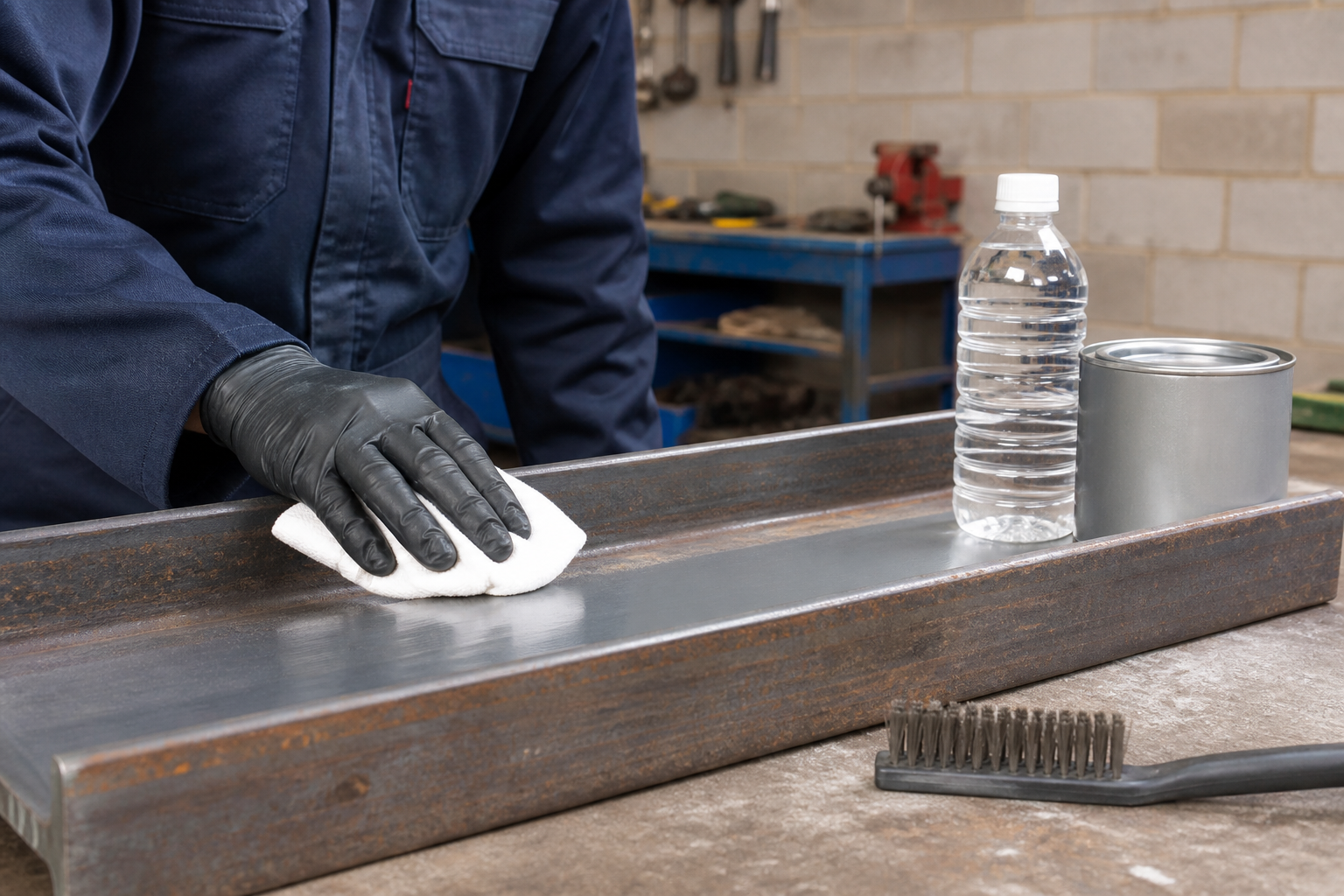
Should I clean steel with Turps or paint thinner before painting?
Do not rely on Turps or paint thinner as the main steel-cleaning process.
Do not rely on Turps or paint thinner as the main steel-cleaning process. Proper preparation requires removal of grease, salts, rust, mill scale and other contamination using suitable degreasing, mechanical preparation or an approved metal-cleaning process.
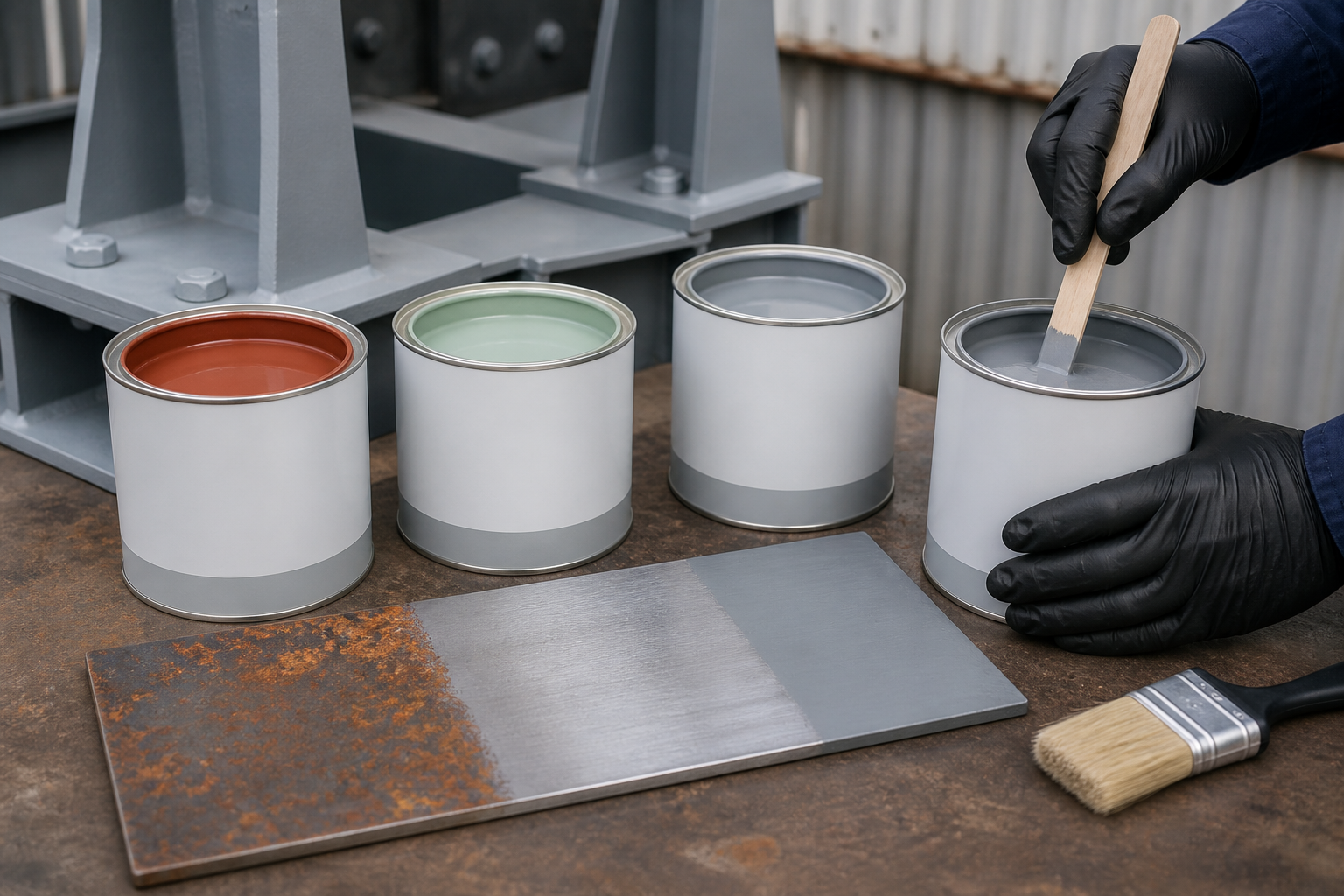
What ACRO primer can I use on mild steel?
Depending on the exposure and coating system, ACRO options include Quick Drying Primer, Zinc Phosphate Primer and Rust Barrier.
Depending on the exposure and coating system, ACRO options include Quick Drying Primer, Zinc Phosphate Primer and Rust Barrier. Zinc Phosphate Primer is specifically described for corrosion protection of mild steel and structural steel. Rust Barrier is a water-based anti-corrosive option for suitably prepared steel.
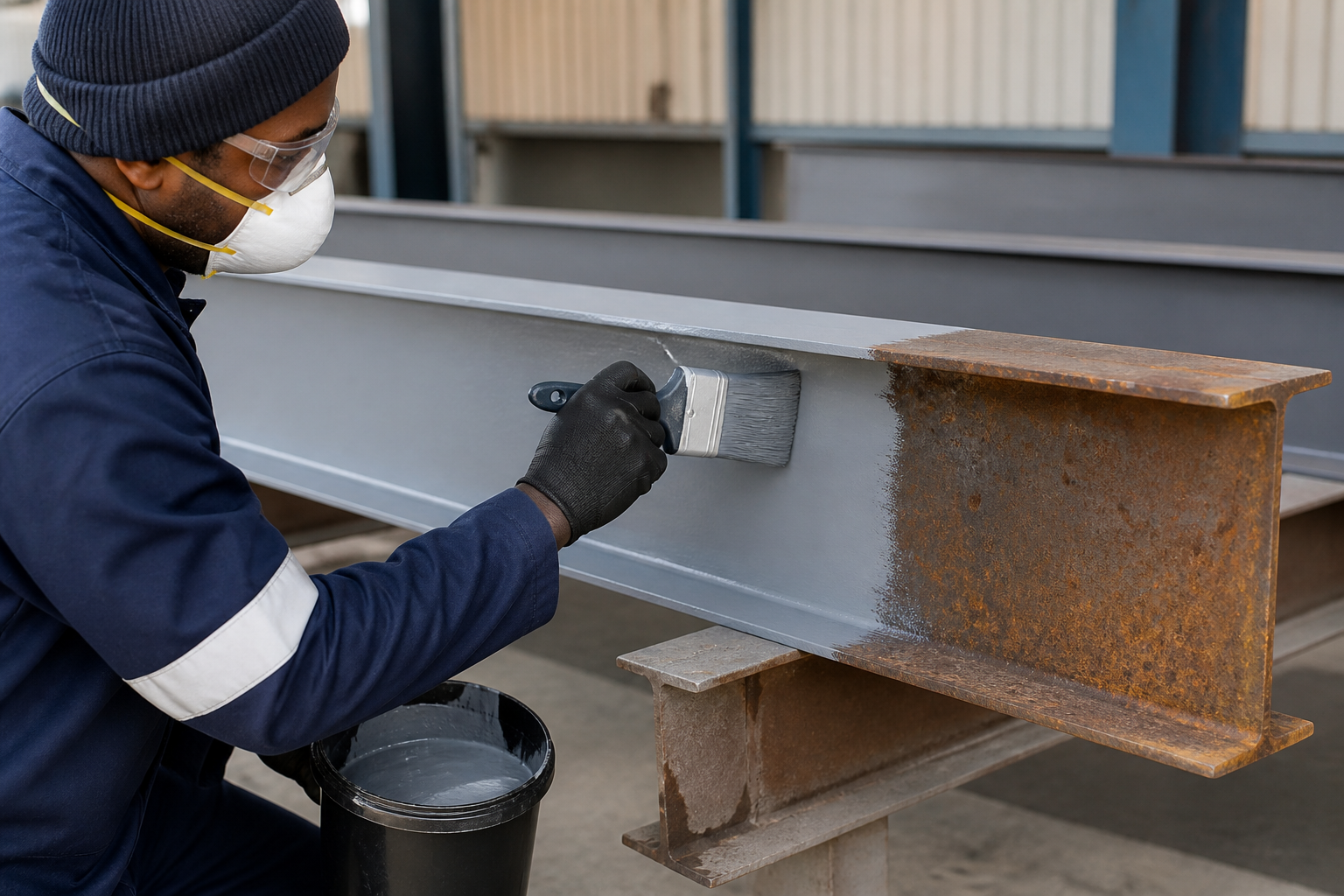
What is Zinc Phosphate Primer used for?
ACRO Zinc Phosphate Primer is a quick-drying anti-corrosive primer for mild and structural steel.
ACRO Zinc Phosphate Primer is a quick-drying anti-corrosive primer for mild and structural steel. It can be sprayed or dipped and may be overcoated with compatible Quick Drying enamels or alkyd undercoats and topcoats.
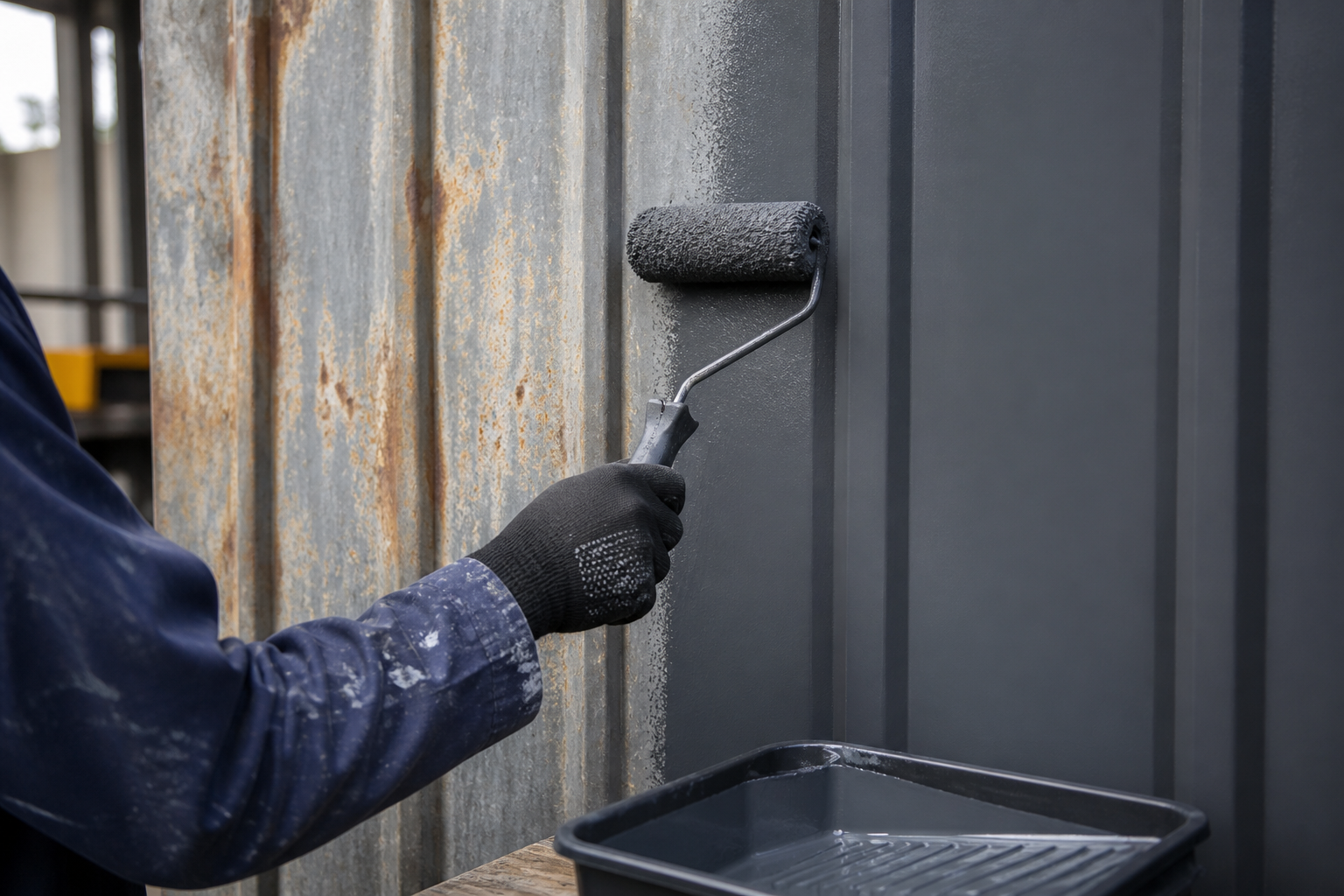
Can I paint directly onto metal without a separate primer?
Yes, but only with a product designed for direct-to-metal use and on a correctly prepared surface.
Yes, but only with a product designed for direct-to-metal use and on a correctly prepared surface. ACRO Direct to Metal 3 in 1 combines anti-corrosive protection, primer, undercoat and topcoat in one fast-drying system. ACRO also offers Acro Armour DTM for higher-performance 2K applications.
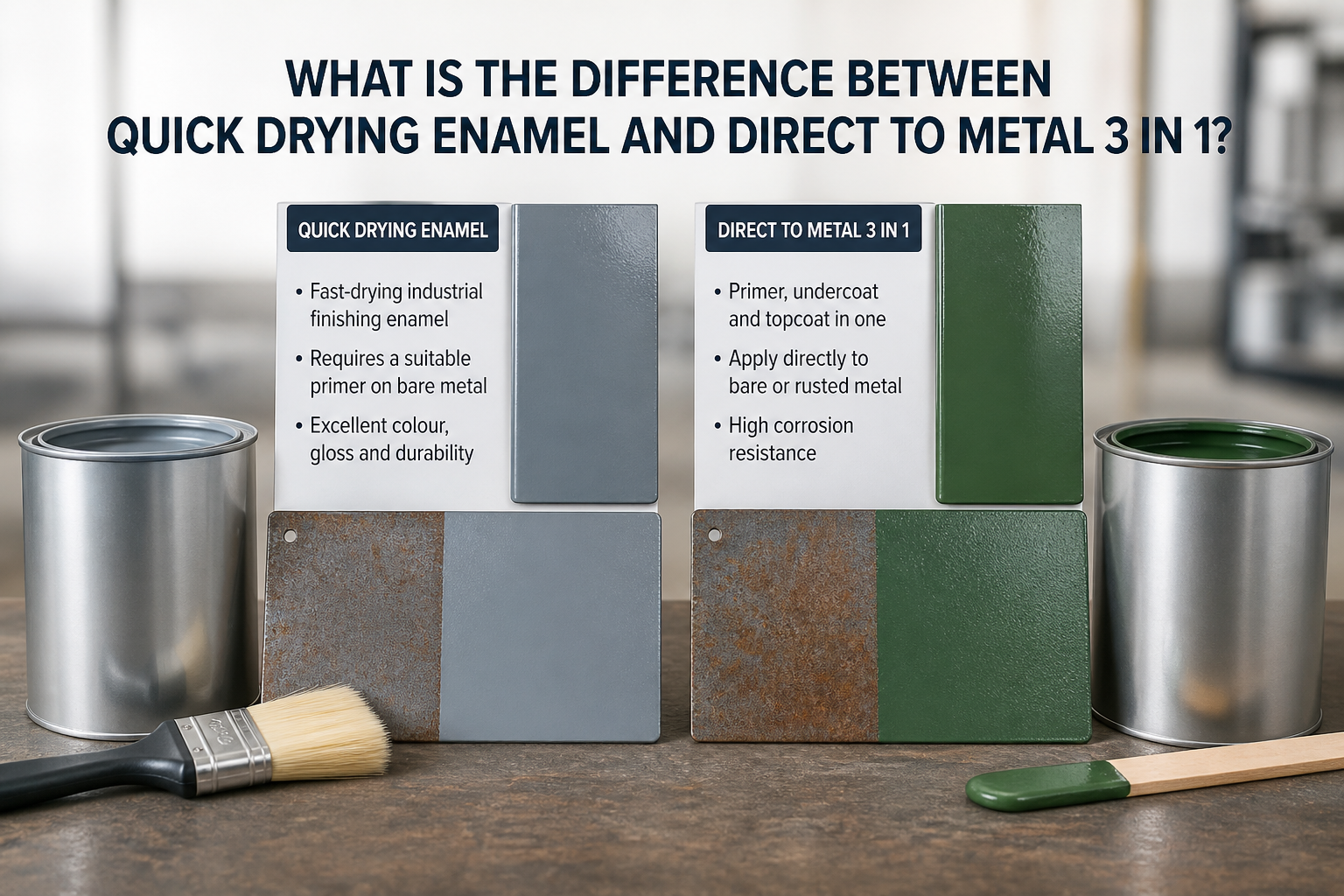
What is the difference between Quick Drying Enamel and Direct to Metal 3 in 1?
Quick Drying Enamel is a fast-drying industrial finishing enamel.
Quick Drying Enamel is a fast-drying industrial finishing enamel. Direct to Metal 3 in 1 is specifically designed as a combined anti-corrosive primer, undercoat and topcoat for direct application to suitably prepared metal. Product choice depends on the required coating system and service conditions.
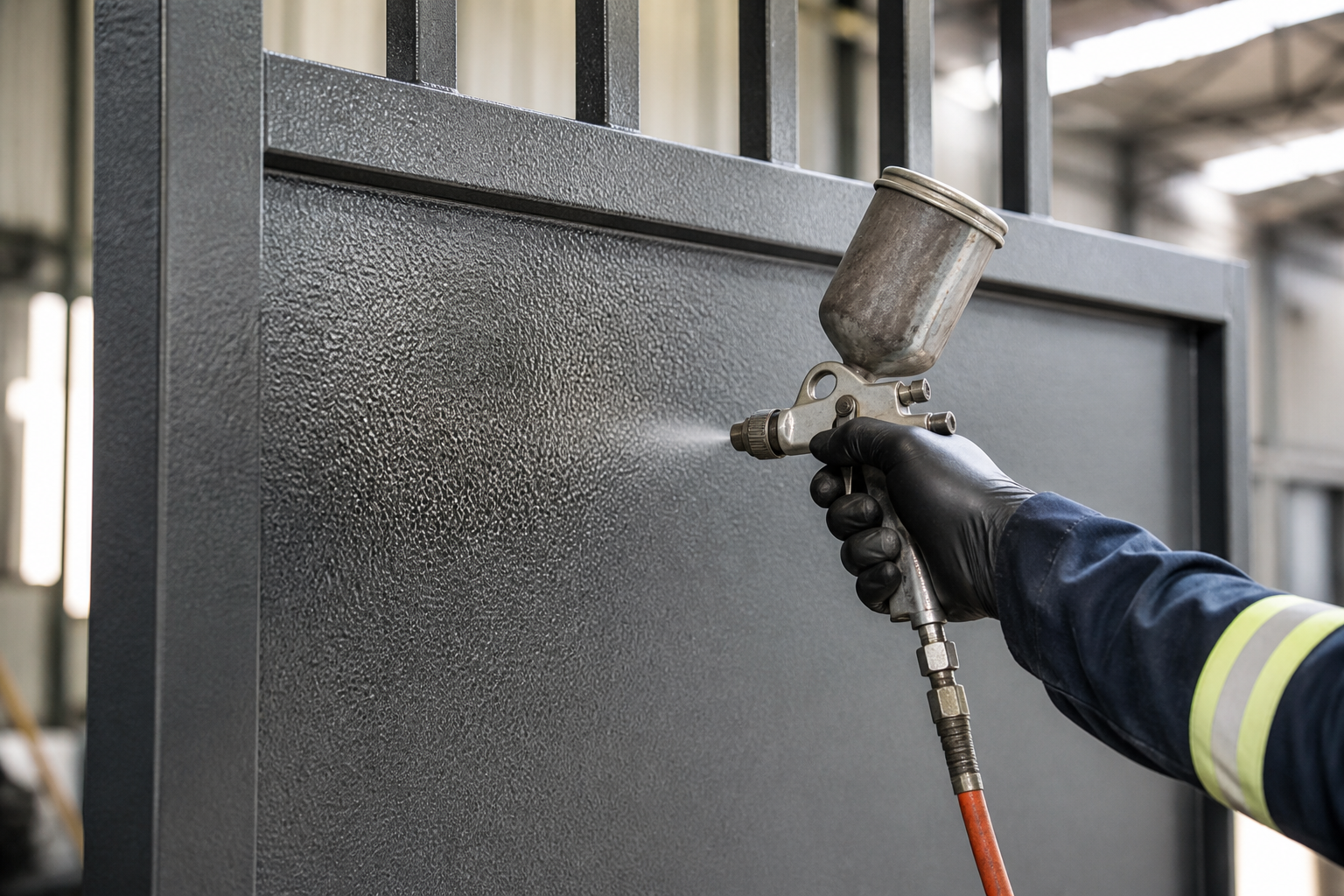
What is Quick Drying Hammertone used for?
Quick Drying Hammertone Colours provide a durable, decorative hammered-texture industrial finish on properly prepared metal.
Quick Drying Hammertone Colours provide a durable, decorative hammered-texture industrial finish on properly prepared metal. They are useful where a textured appearance and hard-wearing finish are wanted.
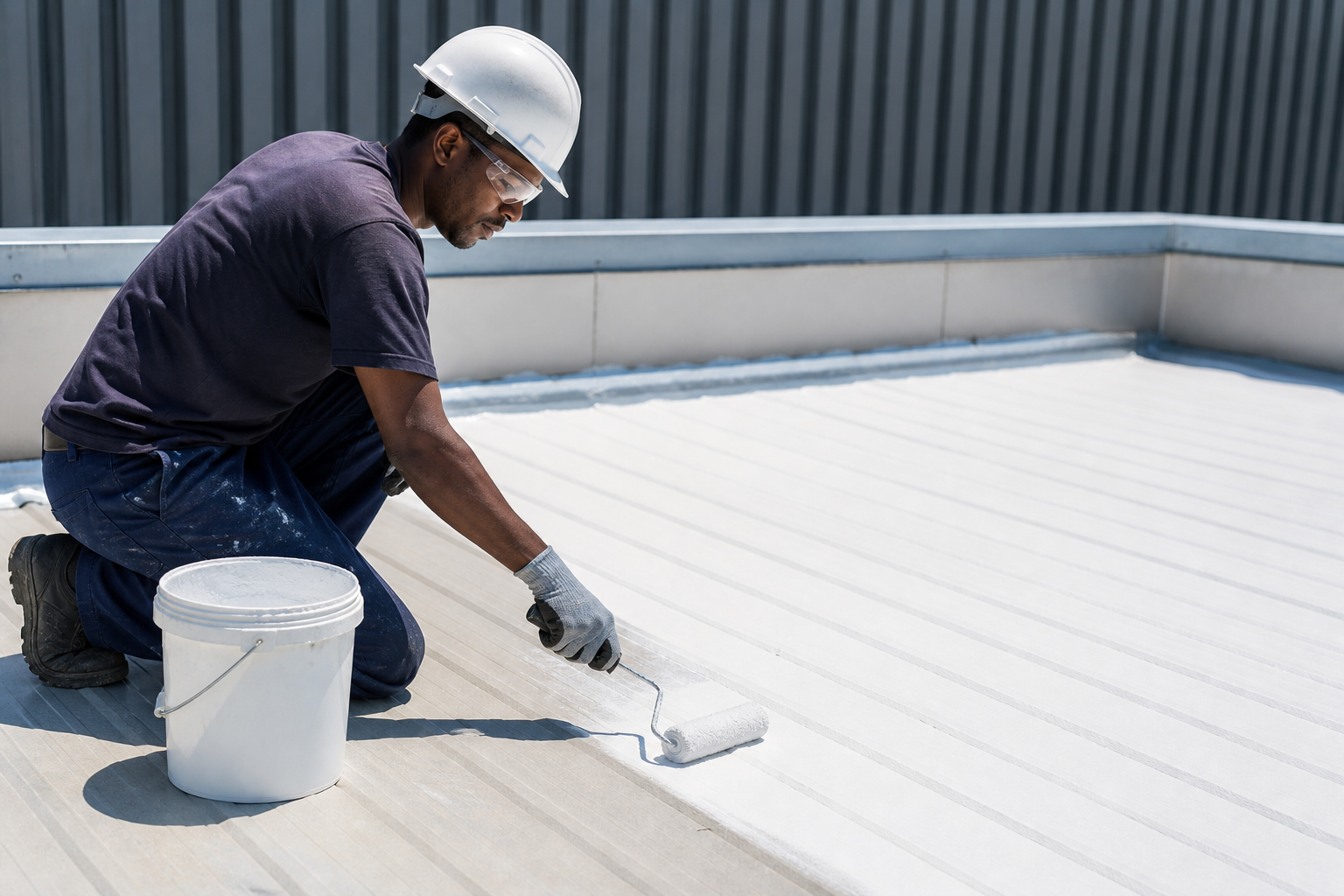
Can a primer be left as the final coat?
Only where the product is specifically approved as a protective coating.
Only where the product is specifically approved as a protective coating. Most primers are designed primarily for adhesion and corrosion protection and should be overcoated with the specified topcoat. ACRO Rust Barrier can be used as a protective primer or coating, while other primers should be treated according to their system requirements.
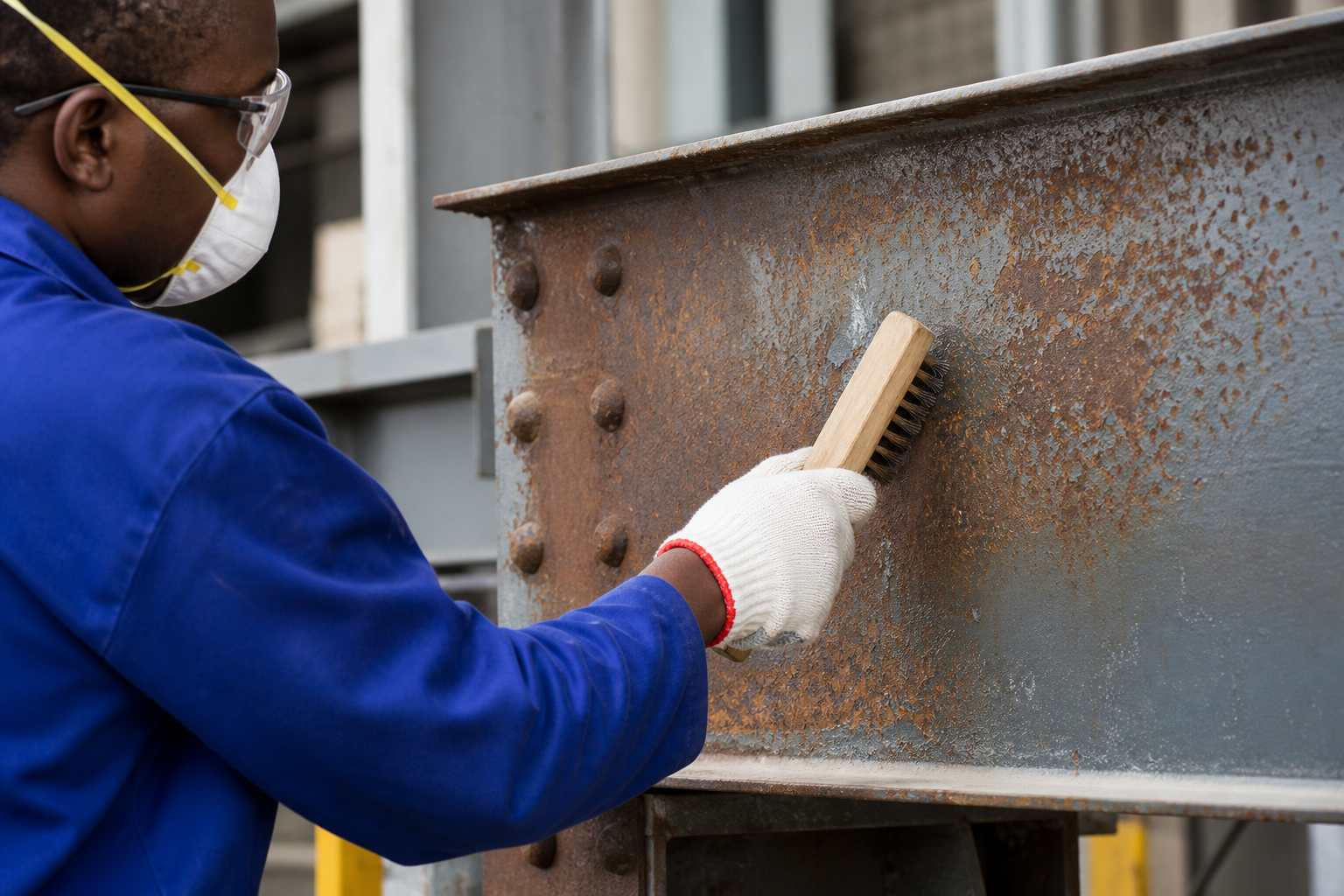
What should I use on rusted steel?
Remove loose rust, scale, grease and contamination first. Depending on the remaining corrosion and required coating system, ACRO options include Rust Barrier, Zinc Phosphate Primer, Coast Prime 1K Epoxy Etch, Rock-Hard Epoxy Primer, QD Direct-to-Metal 3-in-1, Acro Armour DTM and, for suitable rusted roof applications, ACRO Rubber – Rust Rehab.
Rusted steel must first be properly prepared by removing loose rust, scale, dirt, grease and poorly adhering coatings. The correct ACRO system then depends on how much rust remains, the required corrosion resistance and the service environment.
Rust Barrier is specifically designed for corrosion protection on steel and can be applied to suitably prepared clean metal as well as sound, firmly adhering rust. It helps stabilise existing corrosion and can be used as a primer or protective coating.
Zinc Phosphate Primer is a quick-drying corrosion-protection primer for mild and structural steel and is suitable once the steel has been properly prepared.
Coast Prime 1K Epoxy Etch is a high-performance anti-corrosive 1K epoxy etch primer intended for clean steel and suitable metallic substrates. It provides strong adhesion and must be overcoated for exterior exposure.
Rock-Hard Epoxy Primer is a two-component epoxy primer offering excellent corrosion and chemical resistance on suitably prepared metal surfaces and is suited to demanding industrial and commercial systems.
QD Direct-to-Metal 3-in-1 combines anti-corrosive protection, primer, undercoat and topcoat in one fast-drying system for metal surfaces.
Acro Armour DTM is a high-performance two-component polyurethane direct-to-metal coating for suitably prepared bare steel and other metal substrates where high durability and anti-corrosive protection are required.
ACRO Rubber – Rust Rehab is specifically suited to properly prepared rusted metal roofs and other listed roof applications where a flexible, waterproofing, rust-converting and corrosion-inhibiting system is required.
The correct product should therefore be chosen according to the amount of residual rust, surface preparation achieved, exposure conditions and required coating performance.
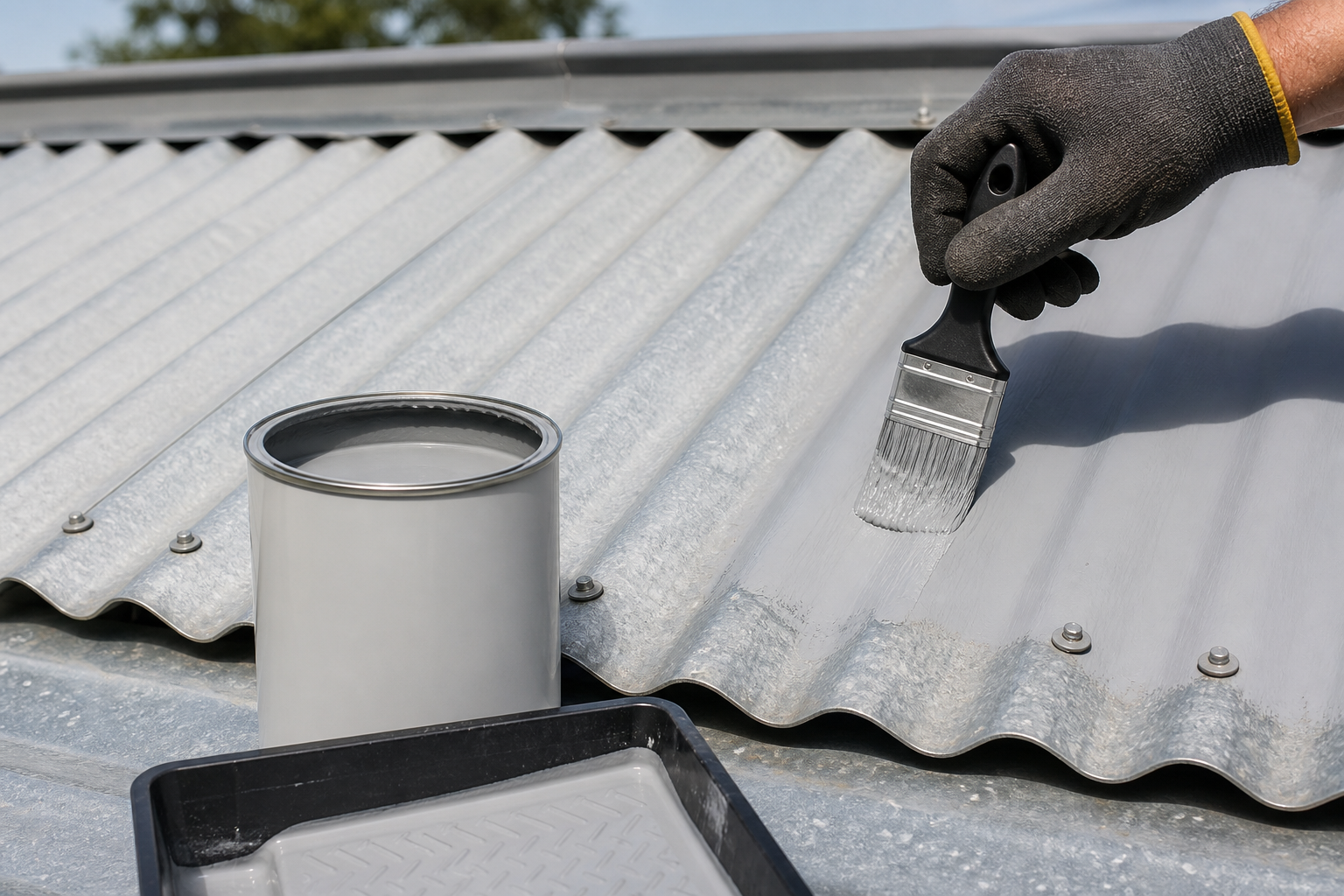
What primer should I use on galvanised iron?
Use ACRO Galvanised Iron Primer on suitably prepared galvanised iron where a dedicated bonding primer is required.
Use ACRO Galvanised Iron Primer on suitably prepared galvanised iron where a dedicated bonding primer is required. The surface must be clean and correctly prepared before application.
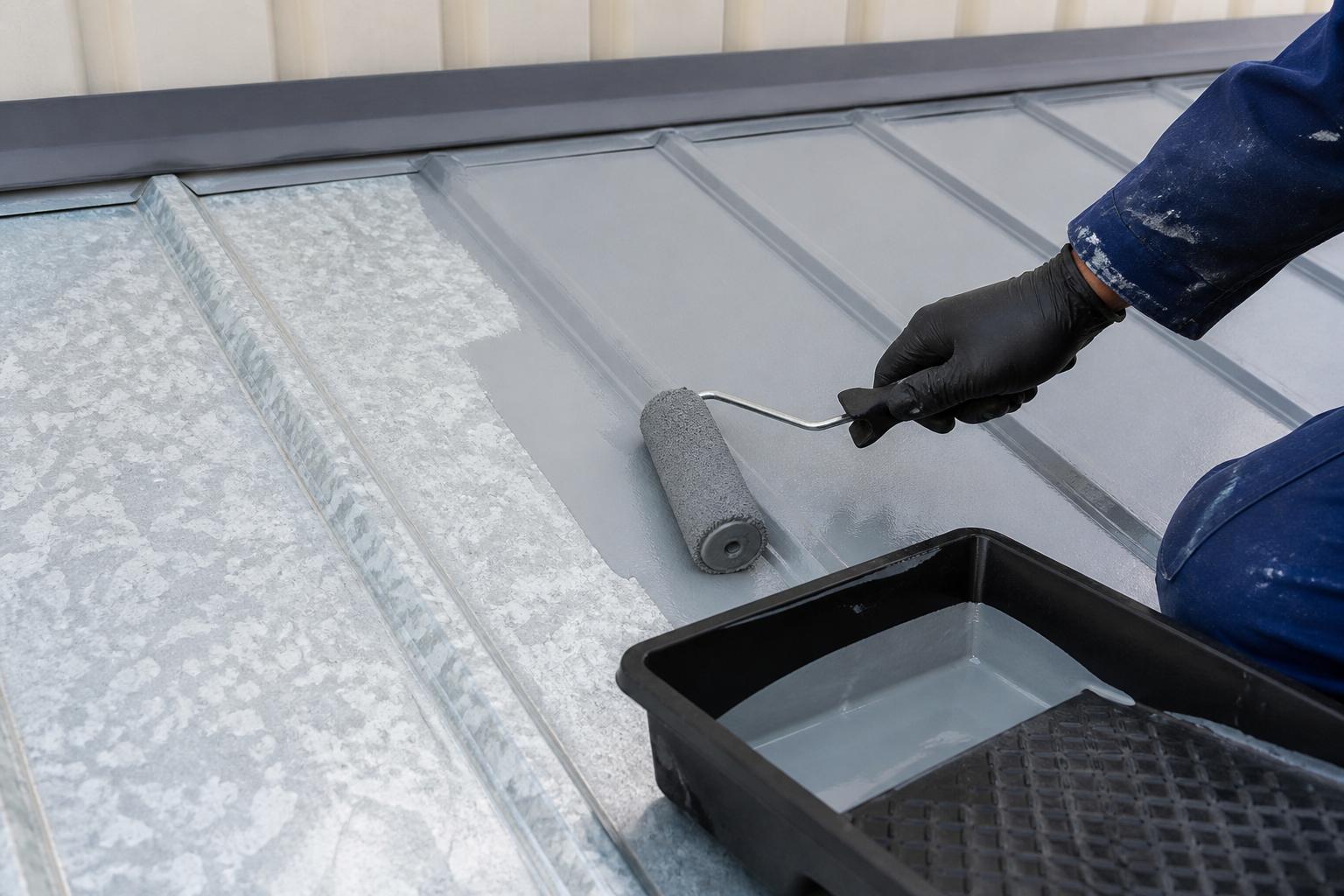
Can I paint over galvanised steel with ordinary paint?
Galvanised steel is an adhesion-sensitive substrate. Clean and prepare it correctly and use a coating system suitable for galvanised metal.
Galvanised steel is an adhesion-sensitive substrate. Clean and prepare it correctly and use a coating system suitable for galvanised metal. ACRO Galvanised Iron Primer provides a bonding layer for subsequent decorative or protective coatings.
What is Acro Armour 4:1?
Acro Armour 4:1 is a two-component polyurethane coating for demanding industrial and commercial applications.
Acro Armour 4:1 is a two-component polyurethane coating for demanding industrial and commercial applications. It provides a durable high-gloss finish and is suitable for correctly prepared steel, aluminium, galvanised steel and fibre-reinforced plastic.
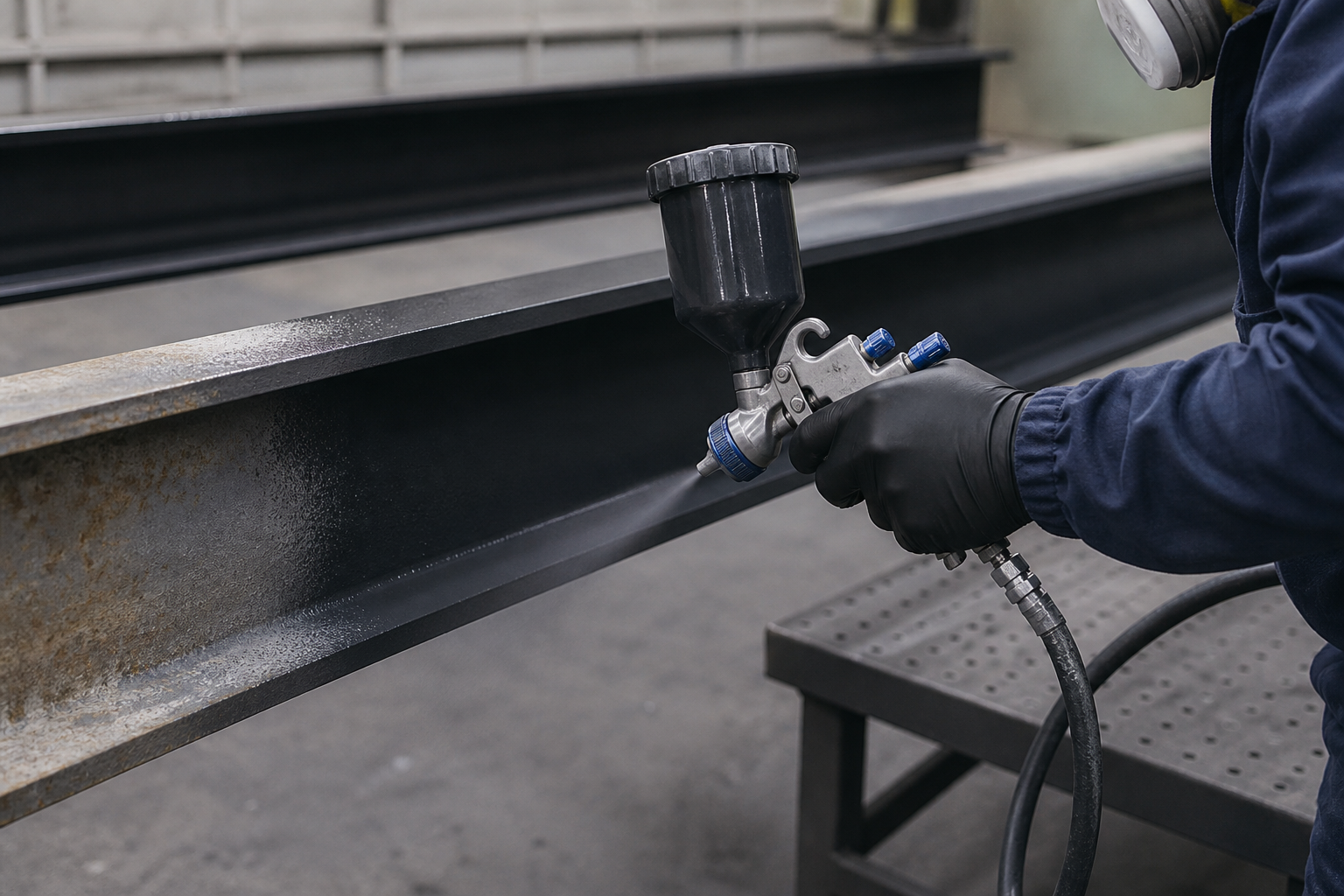
What is Acro Armour DTM?
Acro Armour DTM is a high-performance two-component polyurethane direct-to-metal coating.
Acro Armour DTM is a high-performance two-component polyurethane direct-to-metal coating. It is designed to combine anti-corrosive protection with a durable high-gloss finish on suitably prepared steel, aluminium, galvanised steel and fibre-reinforced plastic.
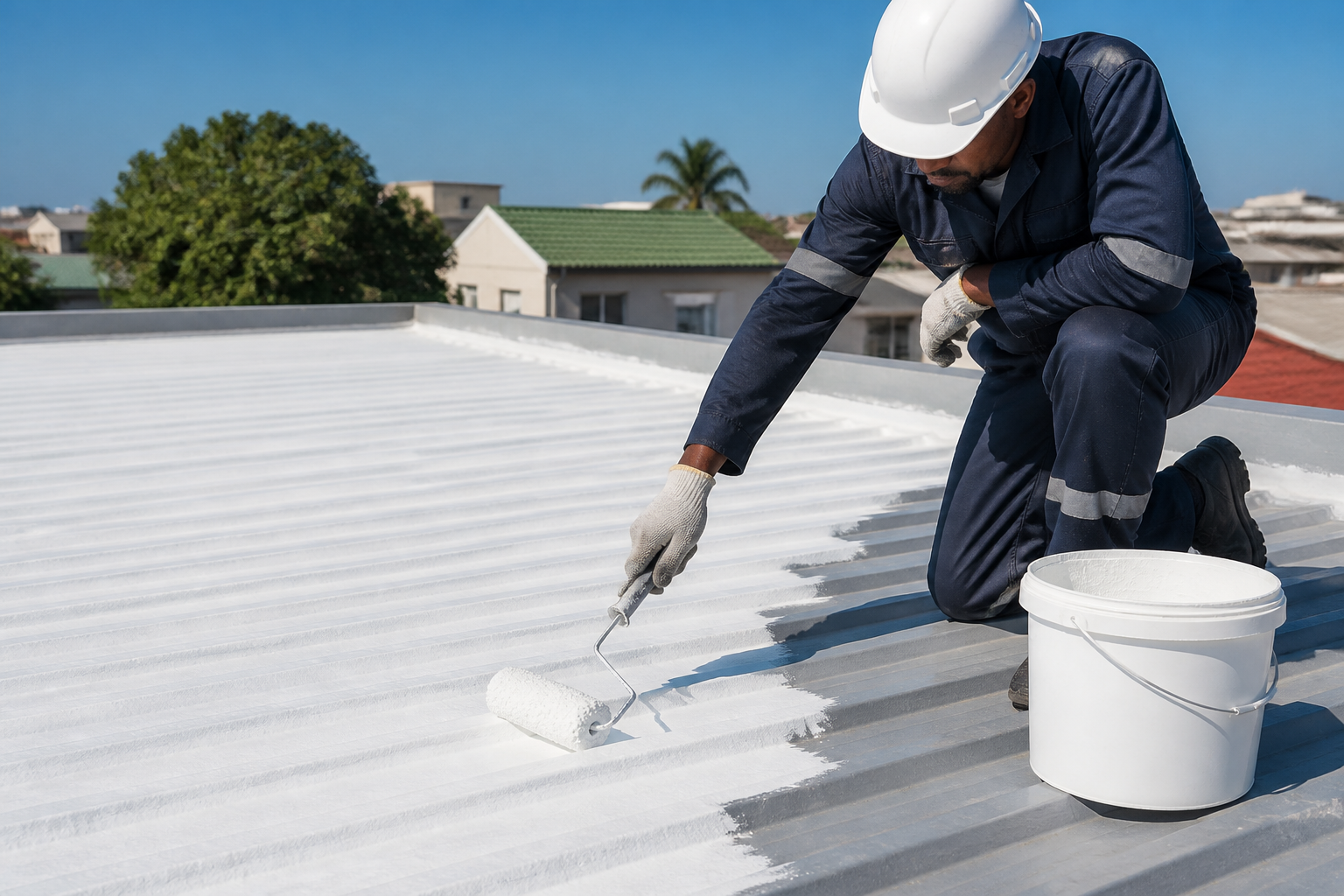
Which ACRO product is a standard acrylic roof paint?
Roof Kote is ACRO's durable acrylic roof paint for properly prepared roof surfaces.
Roof Kote is ACRO's durable acrylic roof paint for properly prepared roof surfaces. It is UV resistant, water resistant and quick drying, with an expected service life of approximately 5–7 years when correctly applied to a properly prepared substrate.
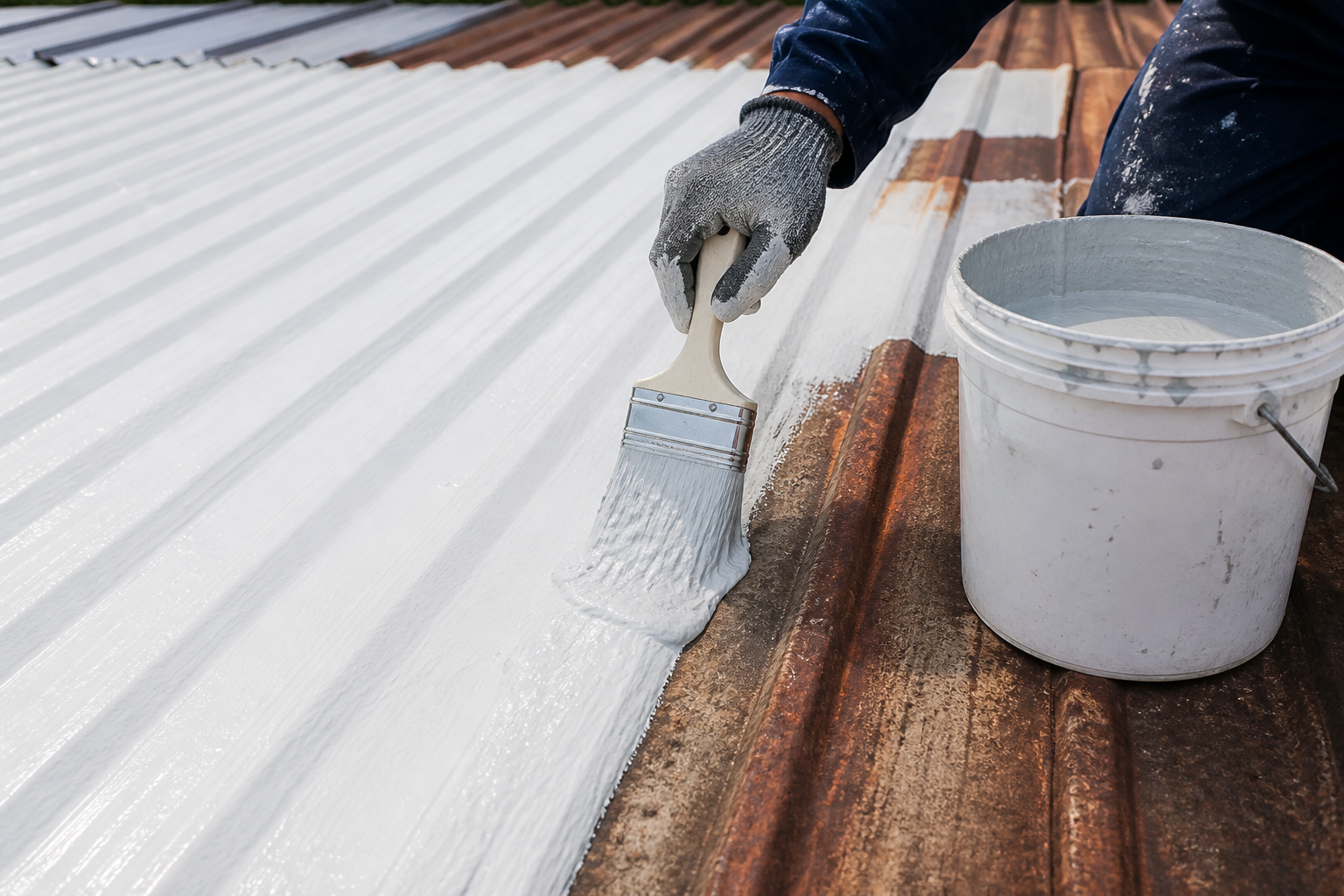
Which ACRO roof coating is rubberised?
Roof & Seal, ACRO Rubber roof & ACRO Rubber Rust Rehab are all flexible rubberised roof coating designed to paint, waterproof and protect suitable roof and construction surfaces.
ACRO has more than one rubberised coating. Roof & Seal is a flexible rubberised roof and waterproofing coating. ACRO Rubber is also a rubberised coating system for flexible waterproofing and protective applications. ACRO Rubber Rust Rehab combines rubberised protection with a system intended for rusted or corrosion-prone metal surfaces. The correct product depends on the substrate, condition of the surface, and whether the main requirement is waterproofing, flexibility, or corrosion protection.
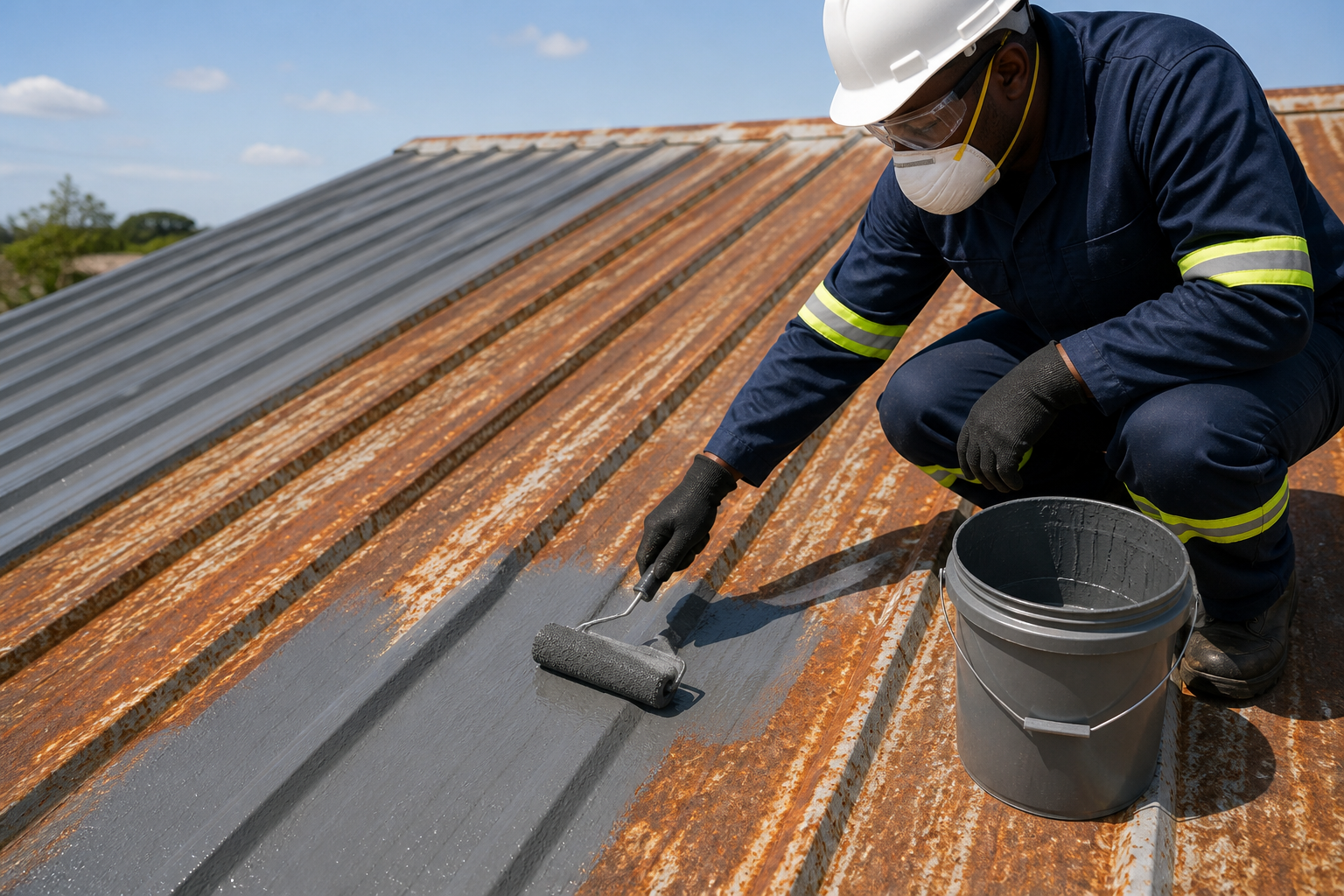
What should I use for a rusted metal roof?
Acro Rubber - Rust Rehab is designed for properly prepared rusted metal roofs and combines rust-converting, anti-corrosive and waterproofing functions.
Acro Rubber - Rust Rehab is designed for properly prepared rusted metal roofs and combines rust-converting, anti-corrosive and waterproofing functions. Remove loose rust, failed coatings and contamination before application.
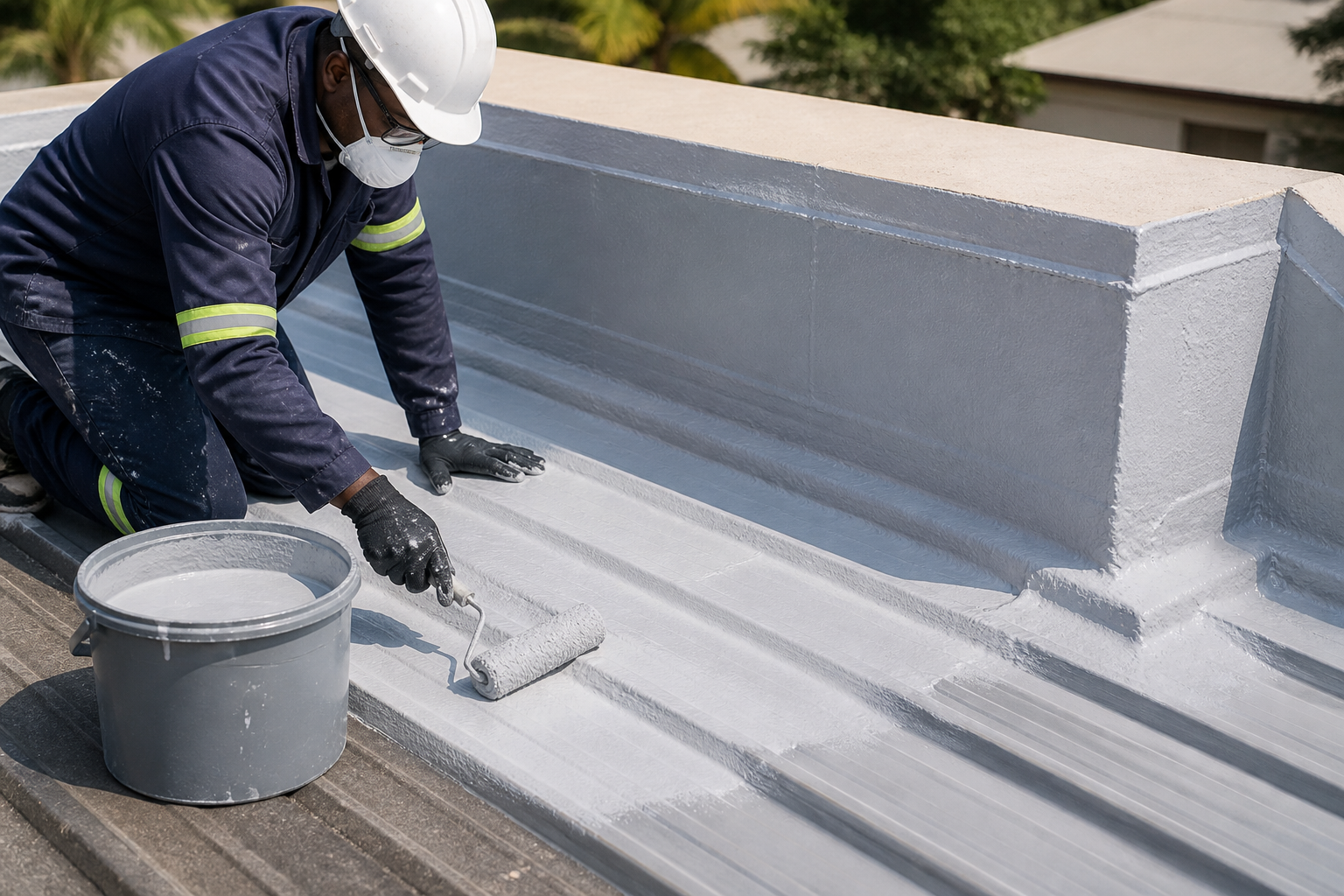
What is Fiberklad Flex used for?
Fiberklad Flex is a fibre-reinforced flexible waterproofing coating for roofs, parapets, flashings, joints, laps and roof screws.
Fiberklad Flex is a fibre-reinforced flexible waterproofing coating for roofs, parapets, flashings, joints, laps and roof screws. Its reinforced film helps bridge minor cracks and movement and can be used without a separate woven membrane in suitable applications.
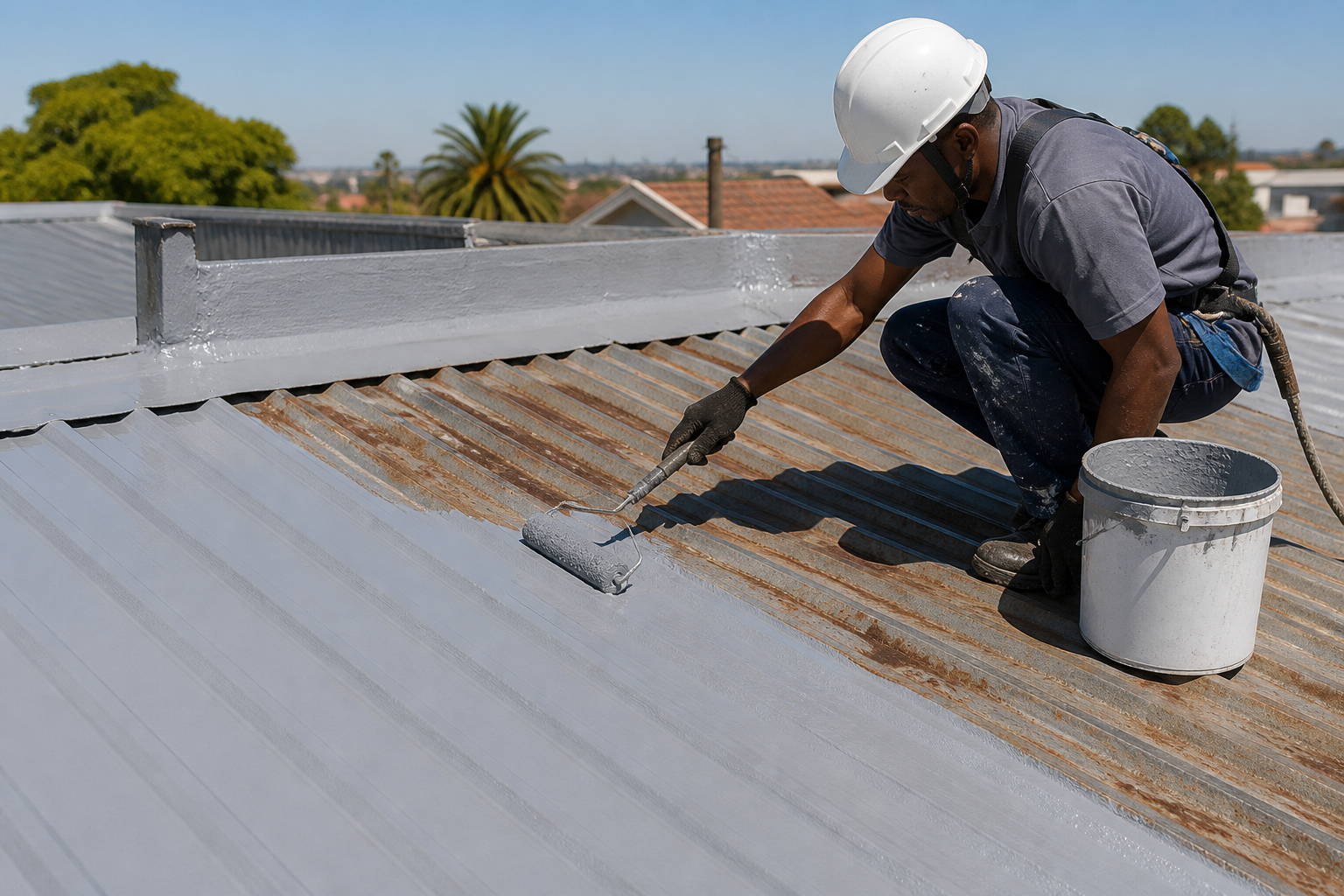
What is Rain-Block Pro used for?
Rain-Block Pro is a heavy-duty elastomeric waterproofing coating for pitched iron and tiled roofs, skylights, parapets, ridges, flashings and roof penetrations.
Rain-Block Pro is a heavy-duty elastomeric waterproofing coating for pitched iron and tiled roofs, skylights, parapets, ridges, flashings and roof penetrations. It can be reinforced with a suitable waterproofing membrane where required.
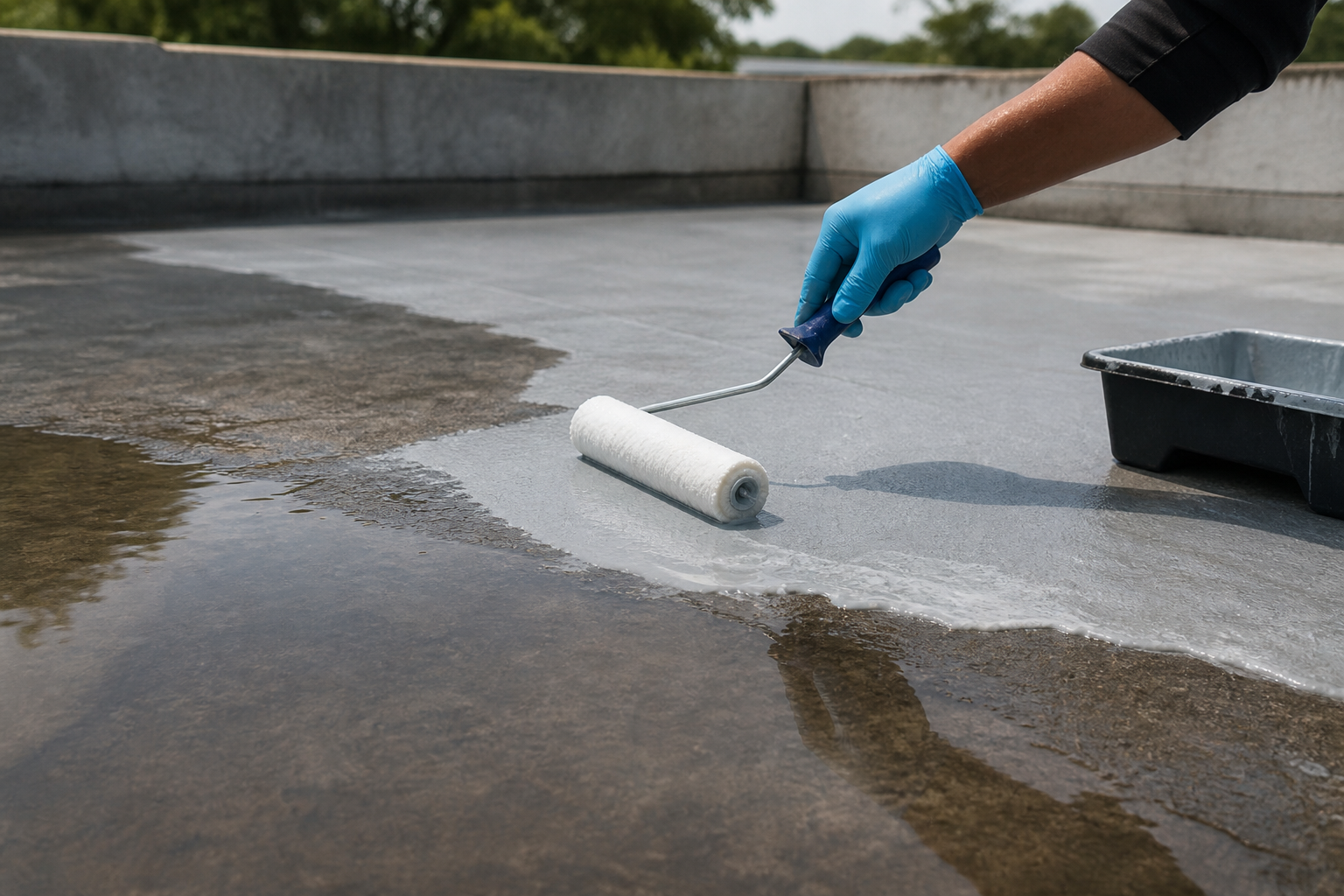
Can Rain-Block Pro be used where water ponds permanently?
It is not intended for areas subject to long-term ponding water. The source of ponding should be corrected and the waterproofing system selected for the actual exposure.
It is not intended for areas subject to long-term ponding water. The source of ponding should be corrected and the waterproofing system selected for the actual exposure.
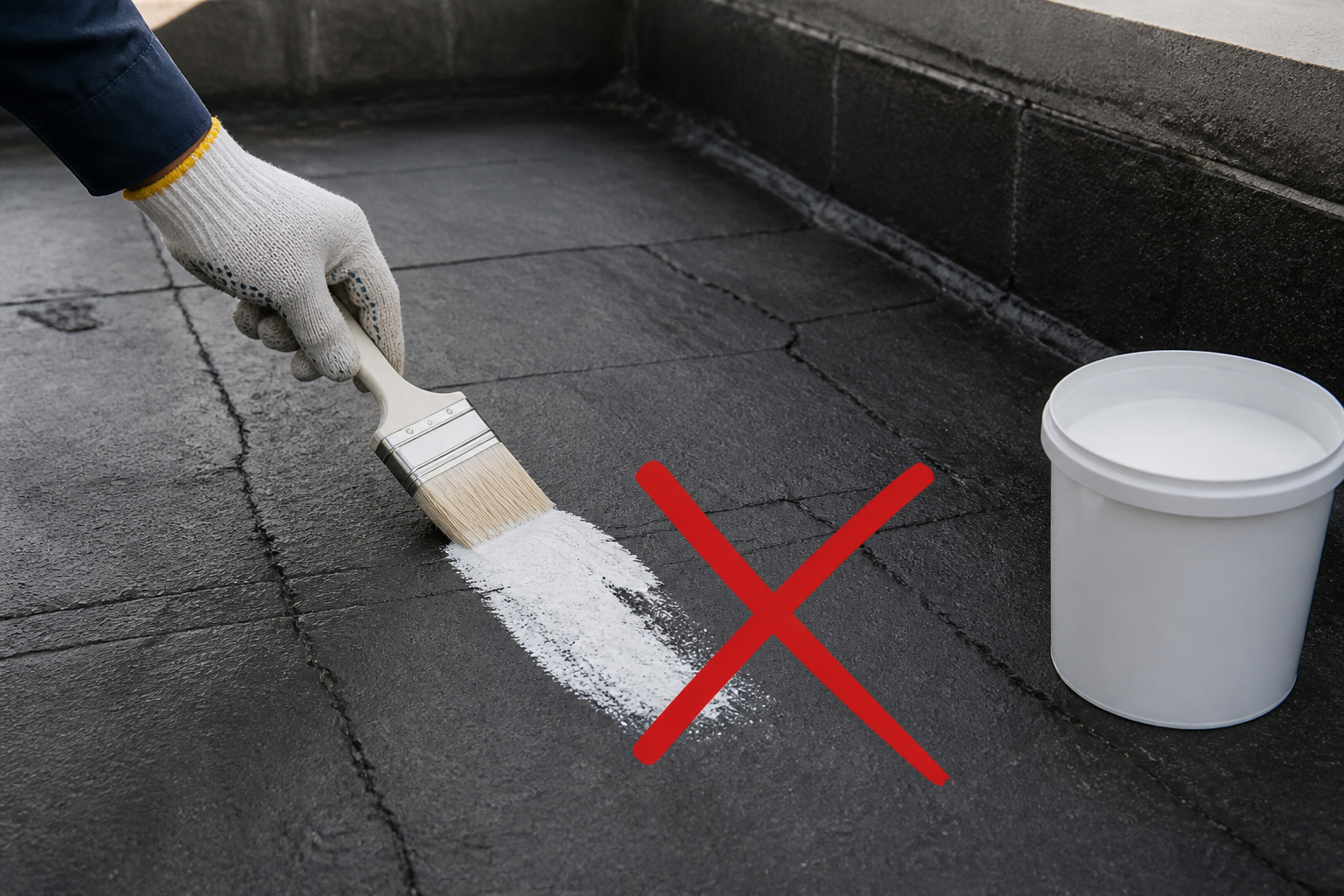
Can I apply Rain-Block Pro over bitumen?
Do not apply it over bitumen waterproofing systems unless the application has been specifically approved.
Do not apply it over bitumen waterproofing systems unless the application has been specifically approved. Bitumen can cause compatibility and bleed-through problems with water-based coatings.
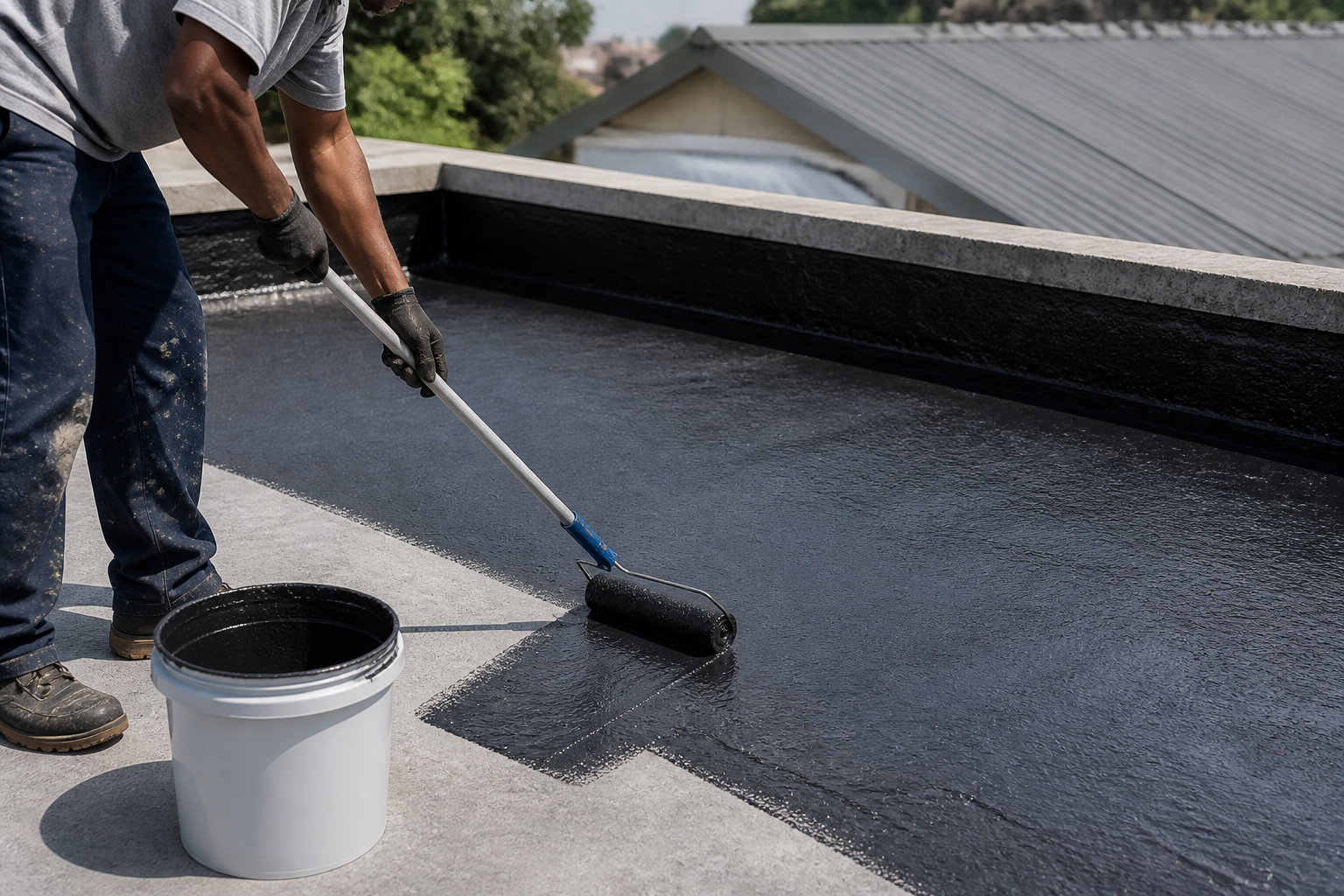
How much Roof & Seal will I need?
As a guideline, Roof & Seal covers about 5–6 m²/L on the first coat and about 6–8 m²/L on the second coat.
As a guideline, Roof & Seal covers about 5–6 m²/L on the first coat and about 6–8 m²/L on the second coat. Porous, rough, corrugated or weathered surfaces will reduce practical coverage.
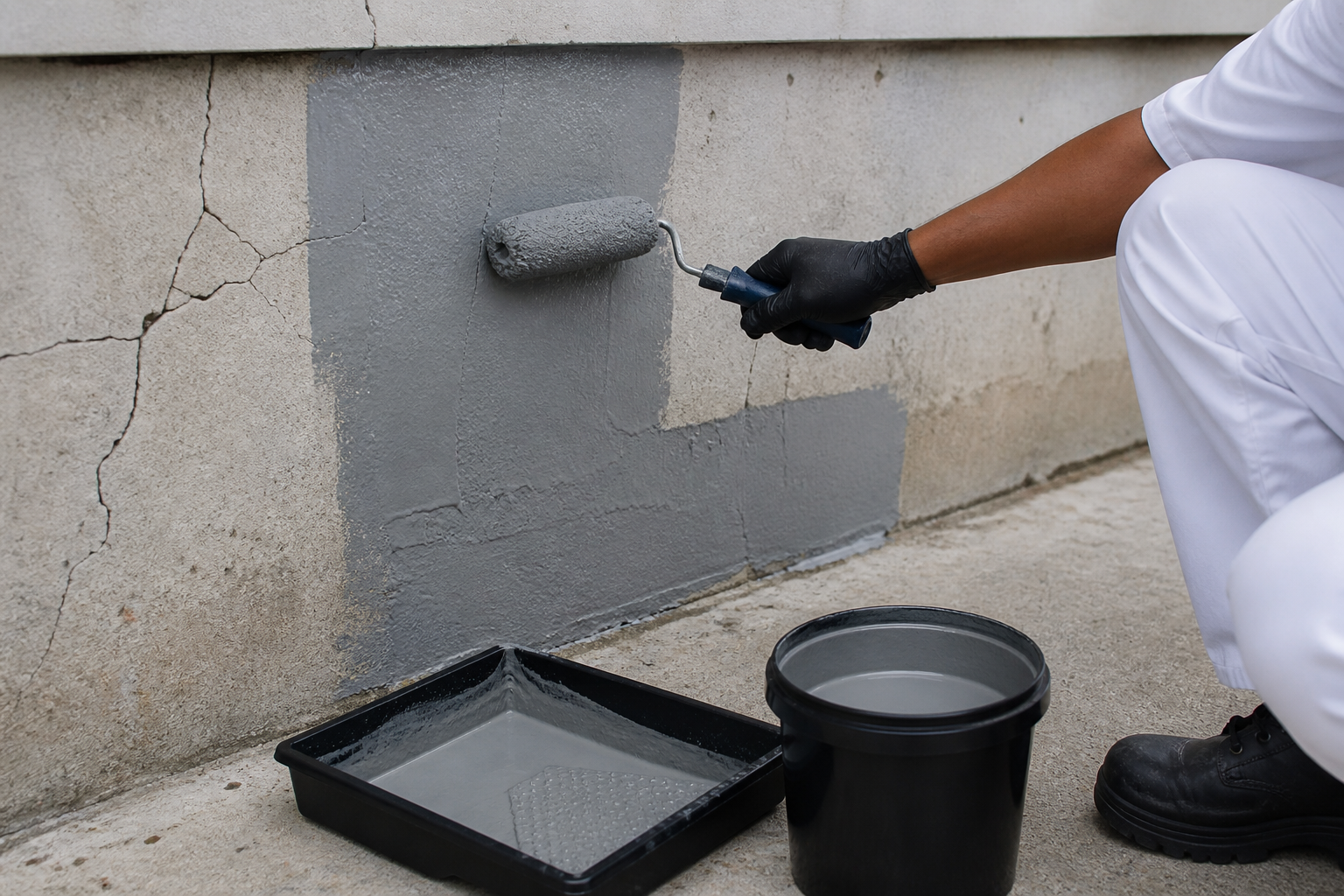
How much Fiberklad Flex will I need?
The guideline is approximately 2 m²/L per coat, typically in 2–3 coats.
The guideline is approximately 2 m²/L per coat, typically in 2–3 coats. Actual consumption depends strongly on surface porosity, profile, defects and the waterproofing build required.
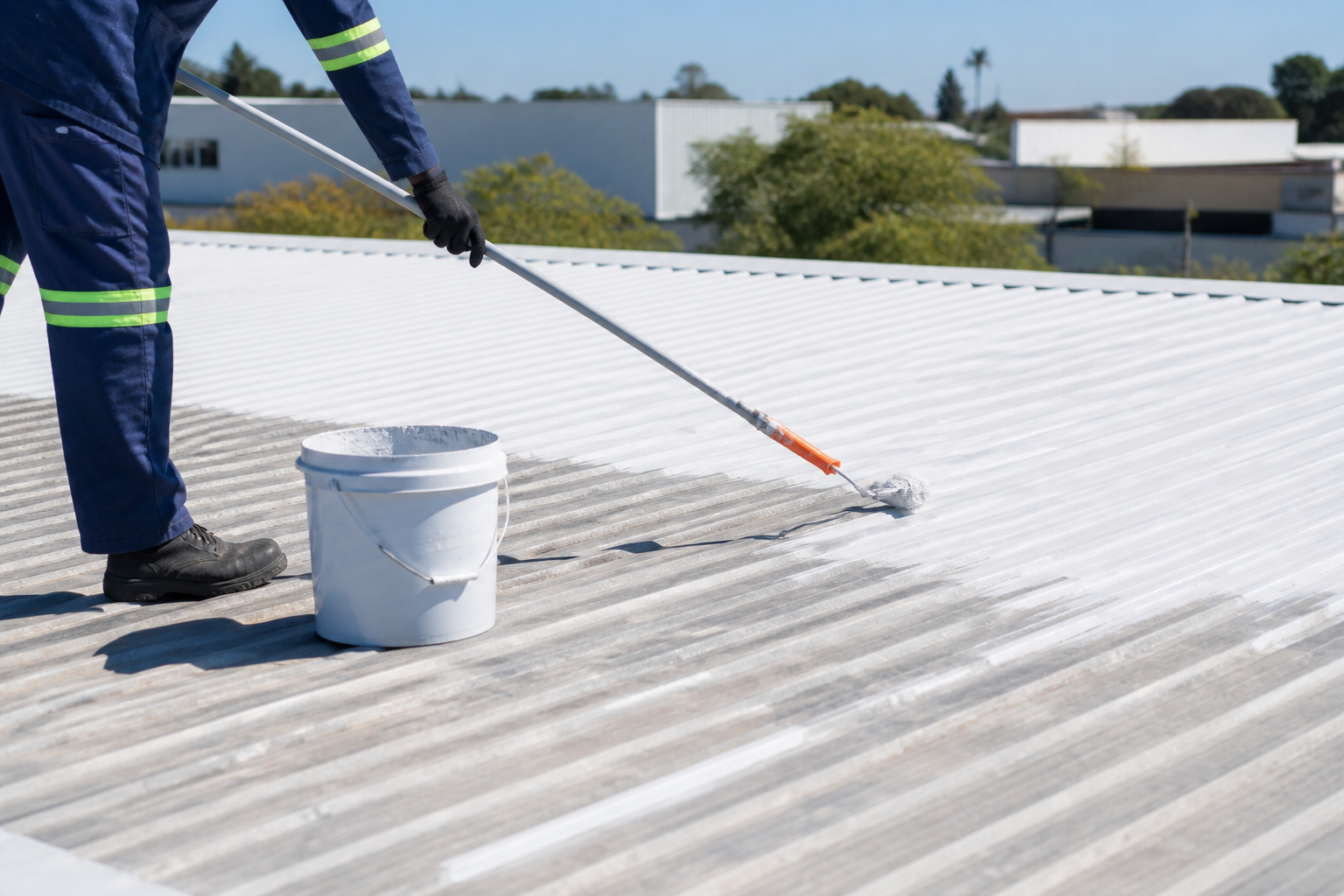
How much Roof Kote will I need?
Roof Kote covers approximately 5–7 m²/L for the first coat on new or porous surfaces and about 6–8 m²/L for later coats on sealed or previously painted surfaces.
Roof Kote covers approximately 5–7 m²/L for the first coat on new or porous surfaces and about 6–8 m²/L for later coats on sealed or previously painted surfaces. Roof profile and condition affect actual usage.
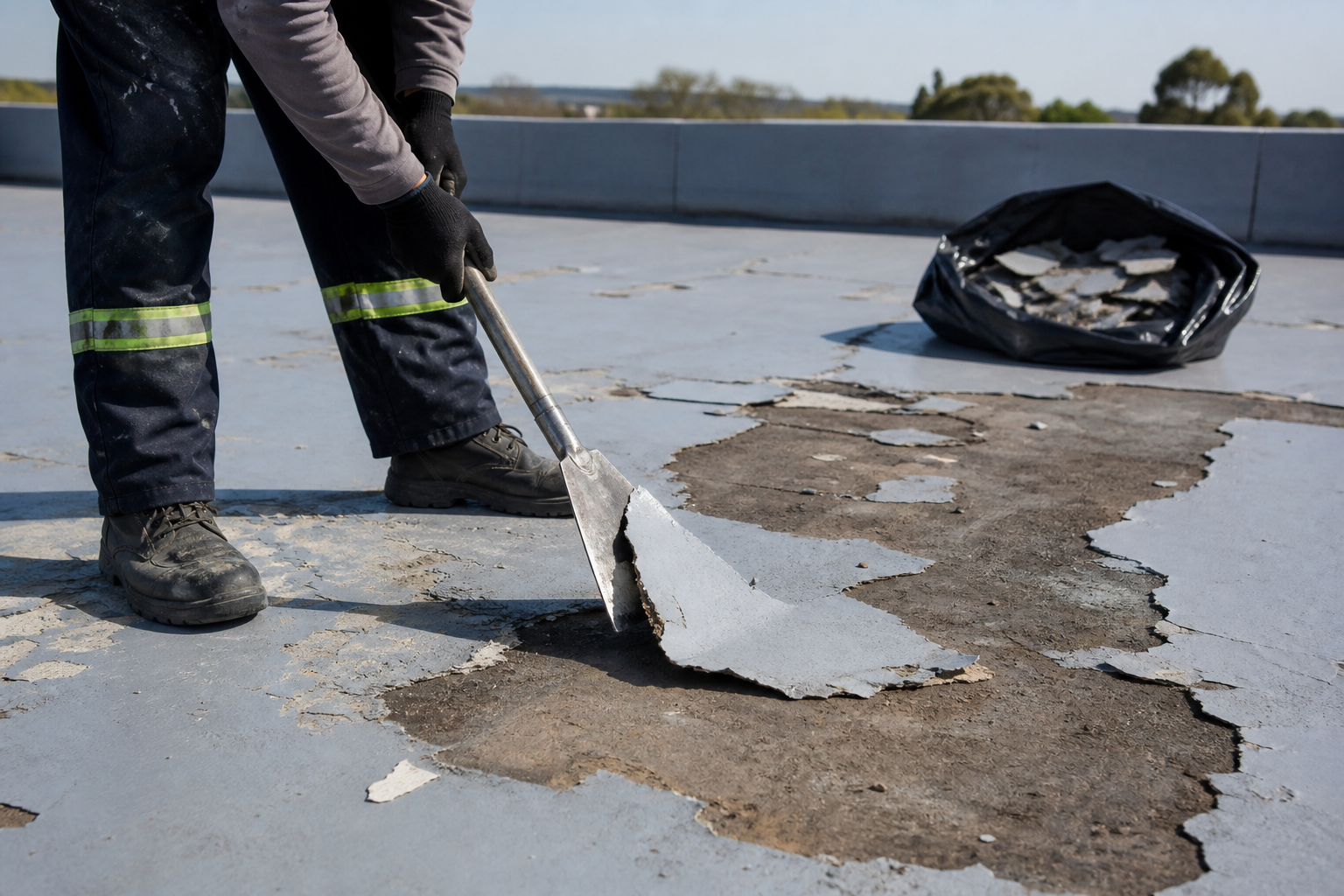
What should I do when old roof waterproofing is peeling or failing?
Do not simply bury loose or failed waterproofing under new coating.
Do not simply bury loose or failed waterproofing under new coating. Remove all loose, peeling and unsound material, identify and repair the reason for failure, clean and dry the substrate, then rebuild the waterproofing system on a sound surface.
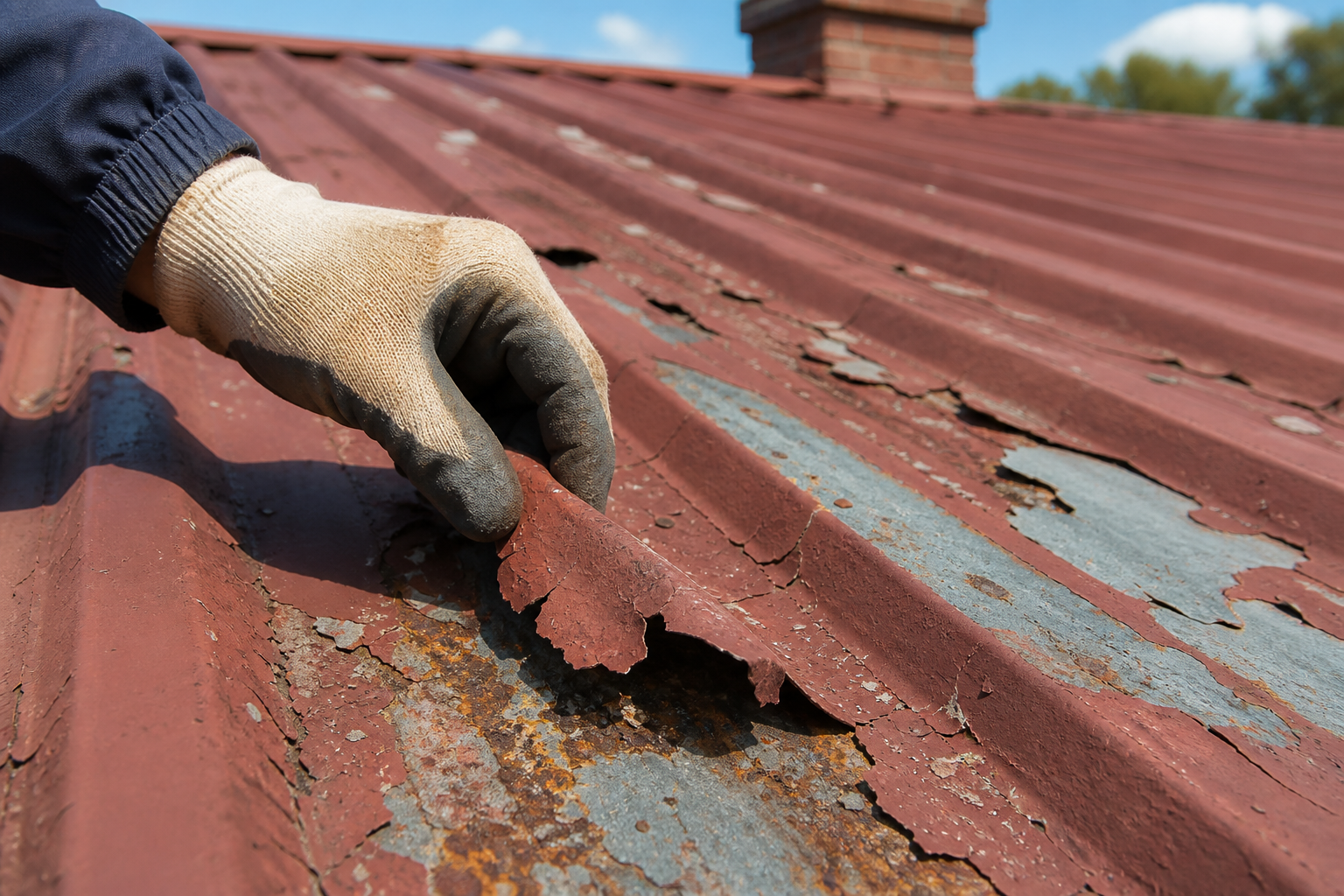
Why does roof paint peel?
Common causes include poor cleaning, loose rust, chalking, moisture, incompatible old coatings, insufficient surface preparation or painting before the substrate is dry.
Common causes include poor cleaning, loose rust, chalking, moisture, incompatible old coatings, insufficient surface preparation or painting before the substrate is dry. The failure must be traced before recoating.
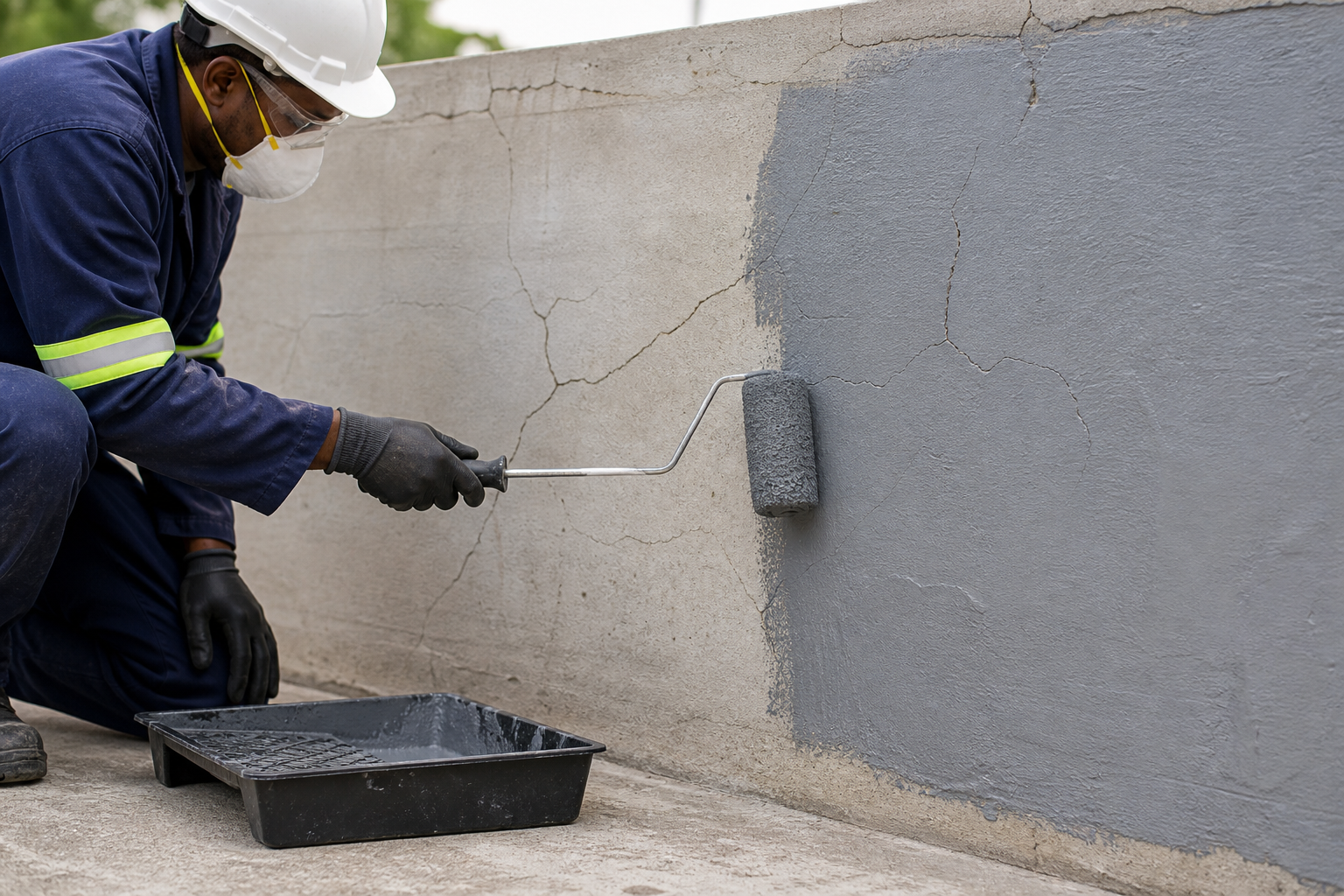
Can waterproofing coating repair cracks?
Flexible waterproofing can bridge minor cracks and movement, but structural or actively moving cracks must first be repaired correctly.
Flexible waterproofing can bridge minor cracks and movement, but structural or actively moving cracks must first be repaired correctly. Fiberklad Flex and Roof & Seal are designed to accommodate limited movement; reinforced membrane systems may be needed at vulnerable joints.
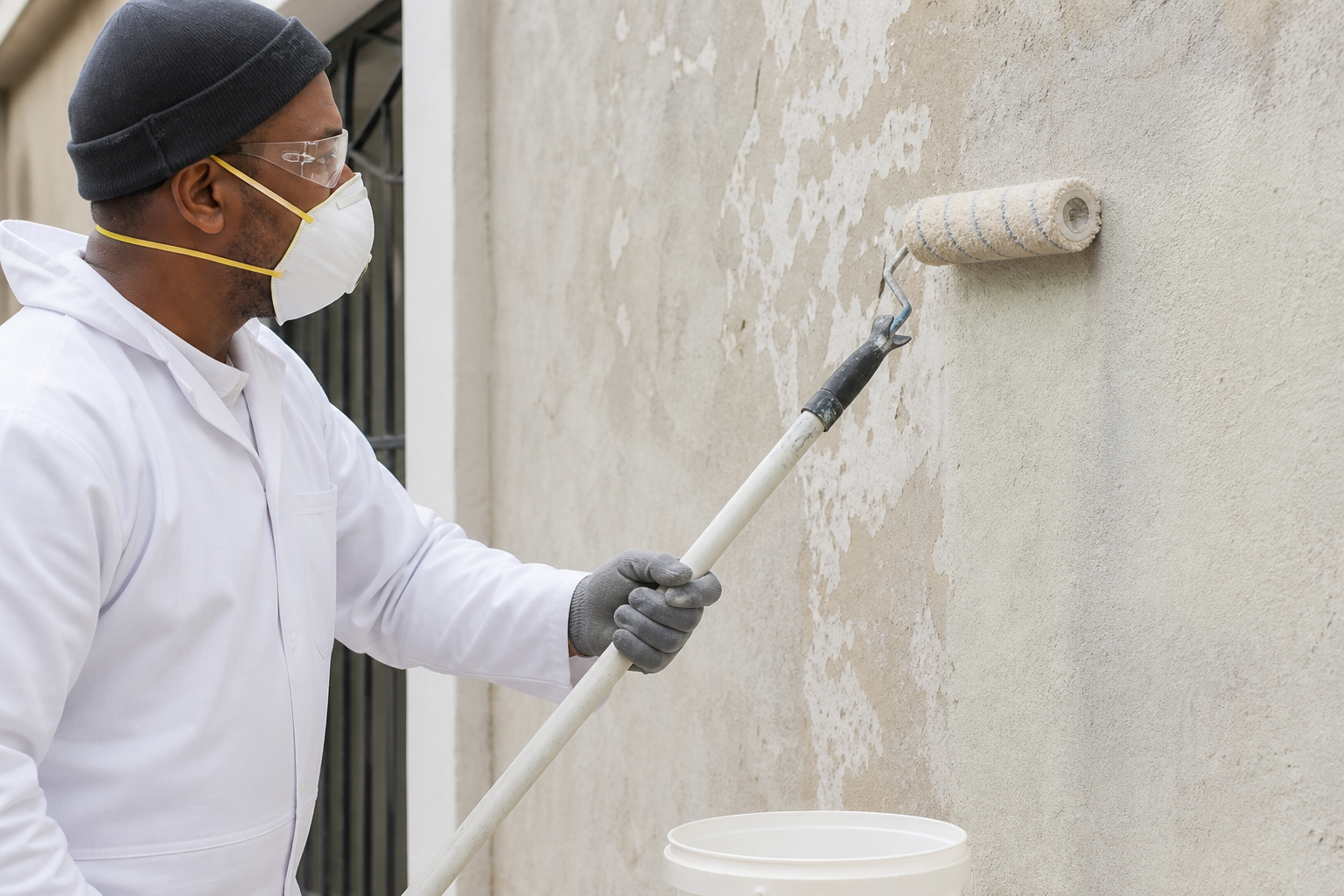
What should I use on a powdery or friable wall before repainting?
Remove loose material and as much powder as possible, wash and dry the surface, then stabilise it with a suitable penetrating primer/sealer.
Remove loose material and as much powder as possible, wash and dry the surface, then stabilise it with a suitable penetrating primer/sealer. ACRO Water-Based Plaster Primer is described for powdery, friable, weathered and previously painted areas and has penetrating and binding properties.
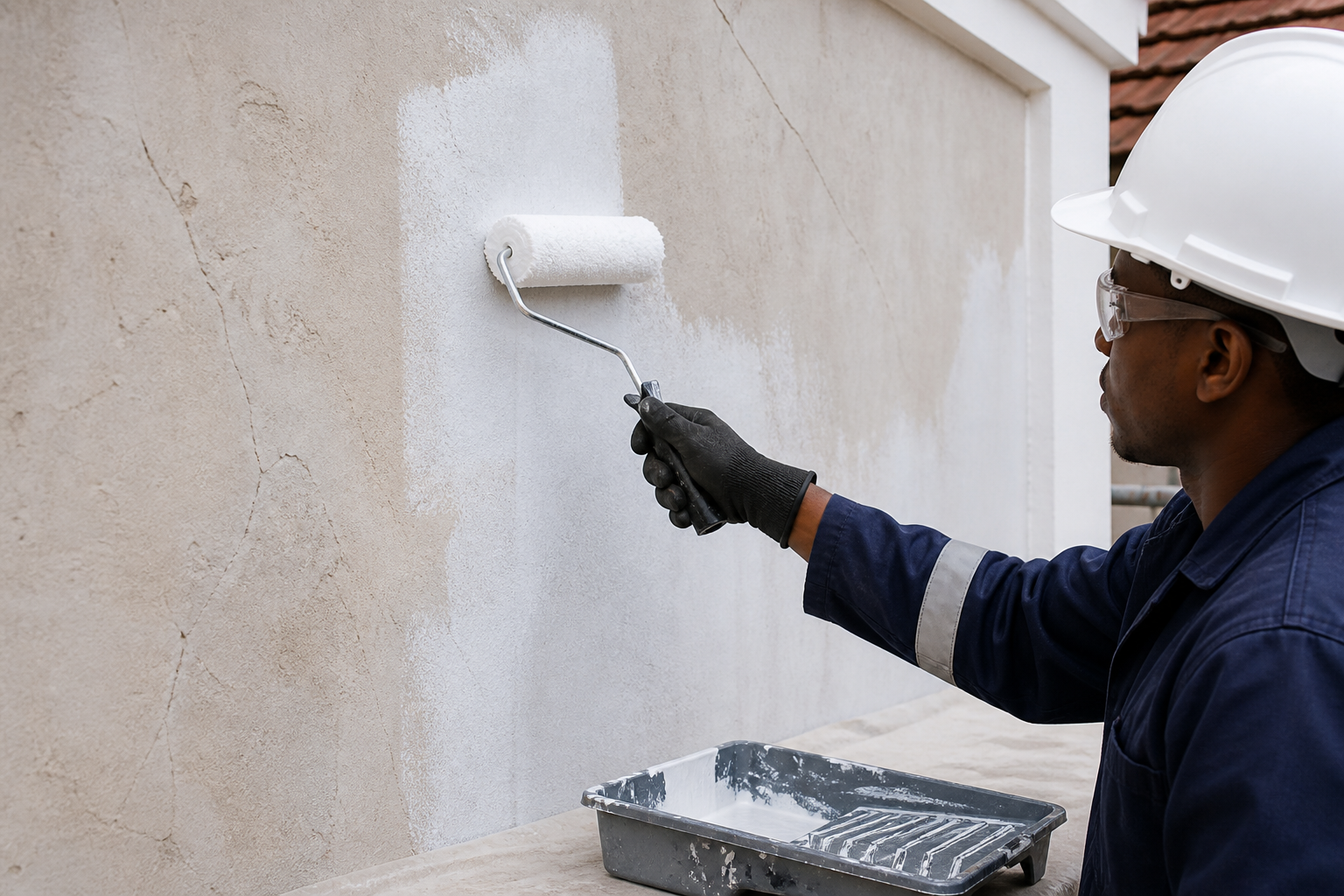
What should I use on new or weathered plaster?
The correct primer depends on the plaster condition and coating system. ACRO Water-Based Plaster Primer is suitable for new or weathered plaster and has good alkaline resistance.
The correct primer depends on the plaster condition and coating system. ACRO Water-Based Plaster Primer is suitable for new or weathered plaster and has good alkaline resistance. Ensure new plaster is adequately cured, dry and free of salts before coating.
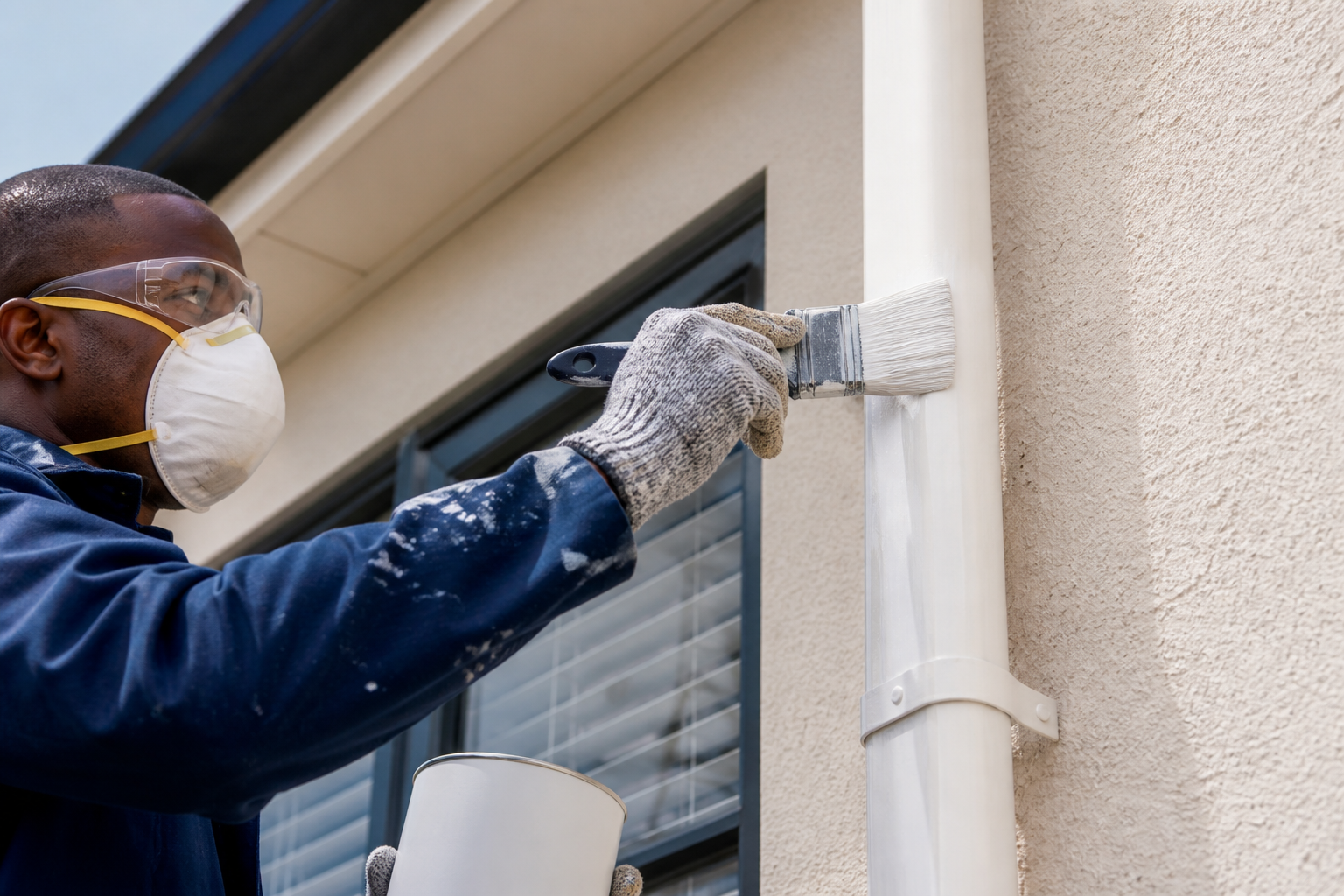
What is Universal Undercoat used for?
ACRO Universal Undercoat is an alkyd-based undercoat for prepared household surfaces such as doors, window frames and downpipes.
ACRO Universal Undercoat is an alkyd-based undercoat for prepared household surfaces such as doors, window frames and downpipes. It can also be used on hardboard, fibre cement, primed metal and wooden substrates and can be overcoated with compatible ACRO water-based or alkyd decorative products.
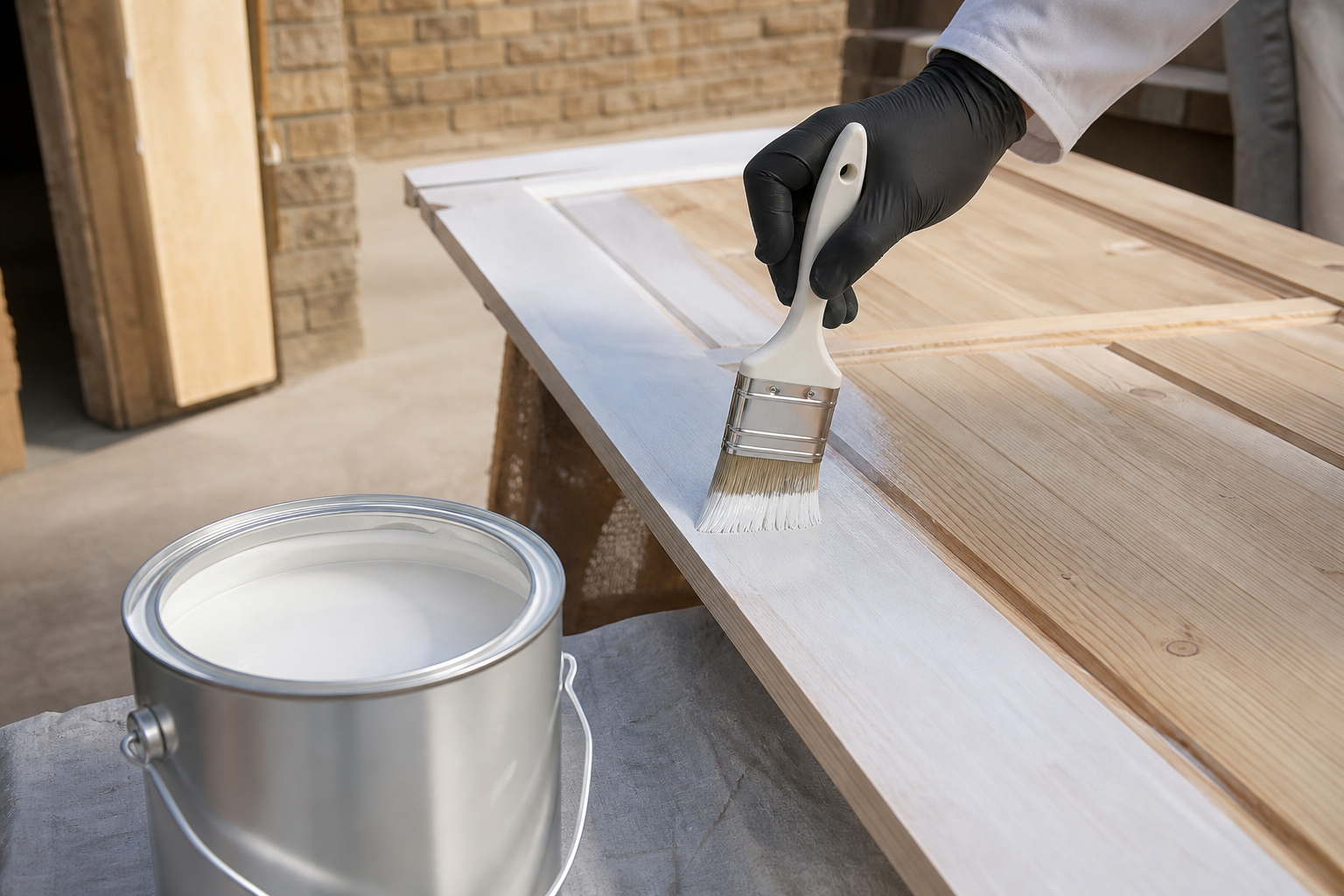
What should I use to prime bare wood?
ACRO White Wood Primer is an alkyd-based primer for interior and exterior wood.
ACRO White Wood Primer is an alkyd-based primer for interior and exterior wood. It provides adhesion and hiding and can be overcoated with compatible ACRO decorative and solvent-based products.
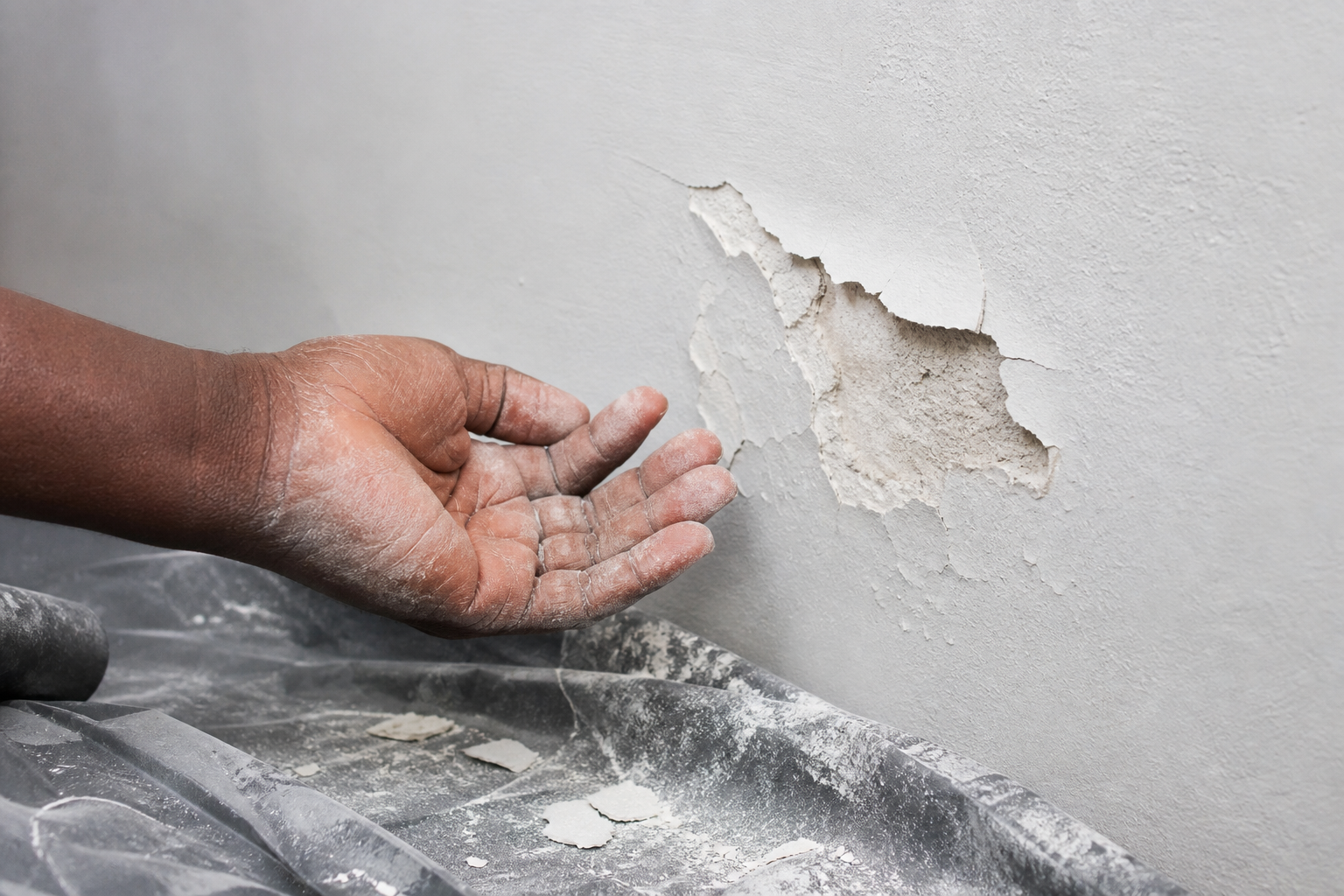
Why is paint peeling from gypsum plaster?
Gypsum and similar smooth plaster surfaces can be soft, powdery or highly absorbent.
Gypsum and similar smooth plaster surfaces can be soft, powdery or highly absorbent. If painted without suitable preparation, the coating may bond to a weak surface layer and peel when stressed. Remove unsound paint, stabilise and prime the substrate correctly before recoating.
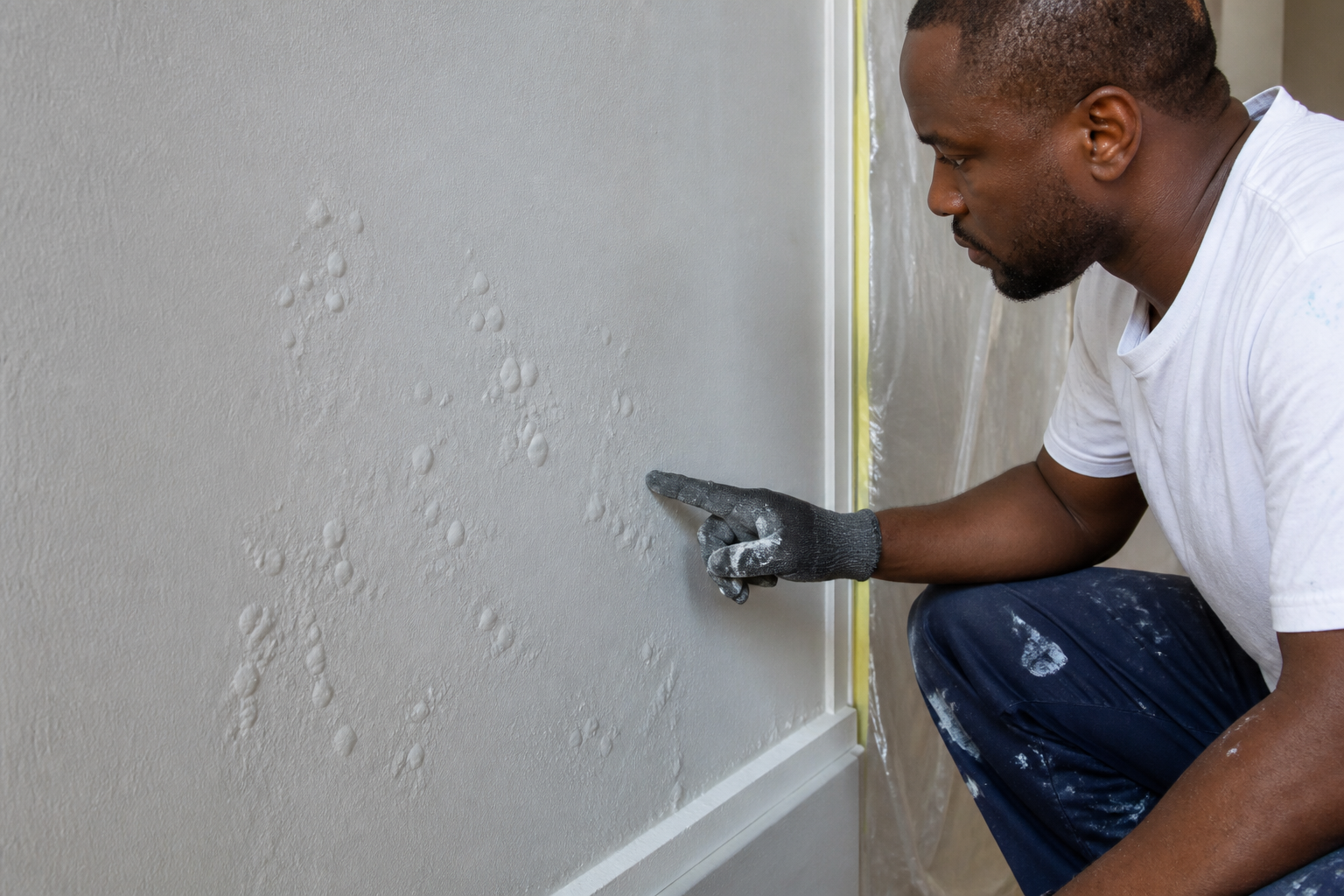
Why is my newly painted wall blistering?
Blistering can be caused by moisture ingress, trapped solvent, painting a damp surface, contamination or loss of adhesion.
Blistering can be caused by moisture ingress, trapped solvent, painting a damp surface, contamination or loss of adhesion. Find and correct the moisture or contamination source first; then remove failed paint, allow the wall to dry, prime as required and recoat.
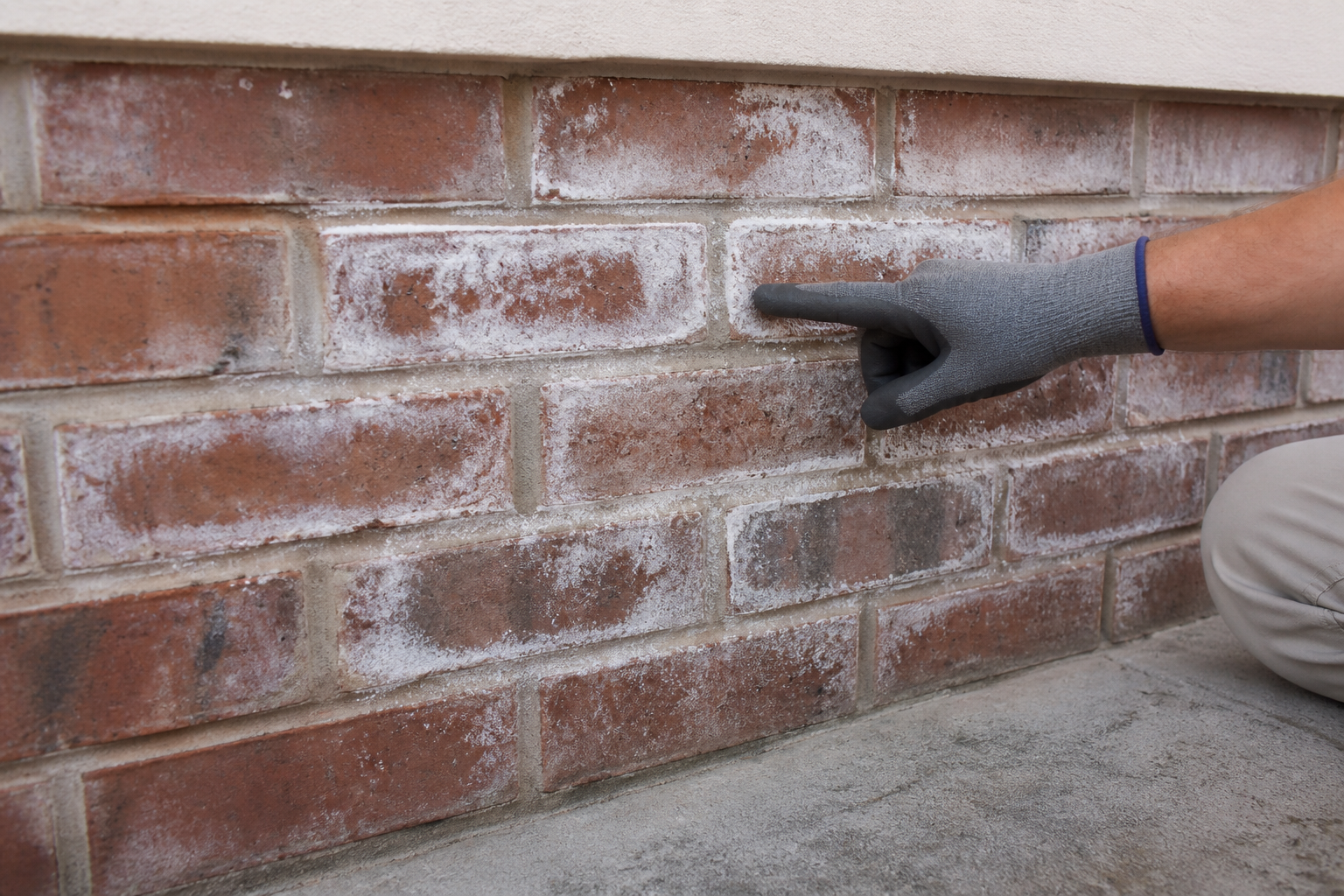
What is efflorescence?
Efflorescence is a white salt-like deposit on brick, plaster or masonry. Moisture dissolves salts in the substrate and carries them to the surface.
Efflorescence is a white salt-like deposit on brick, plaster or masonry. Moisture dissolves salts in the substrate and carries them to the surface. Correct the moisture source, remove the salts and allow the wall to dry and stabilise before repainting.
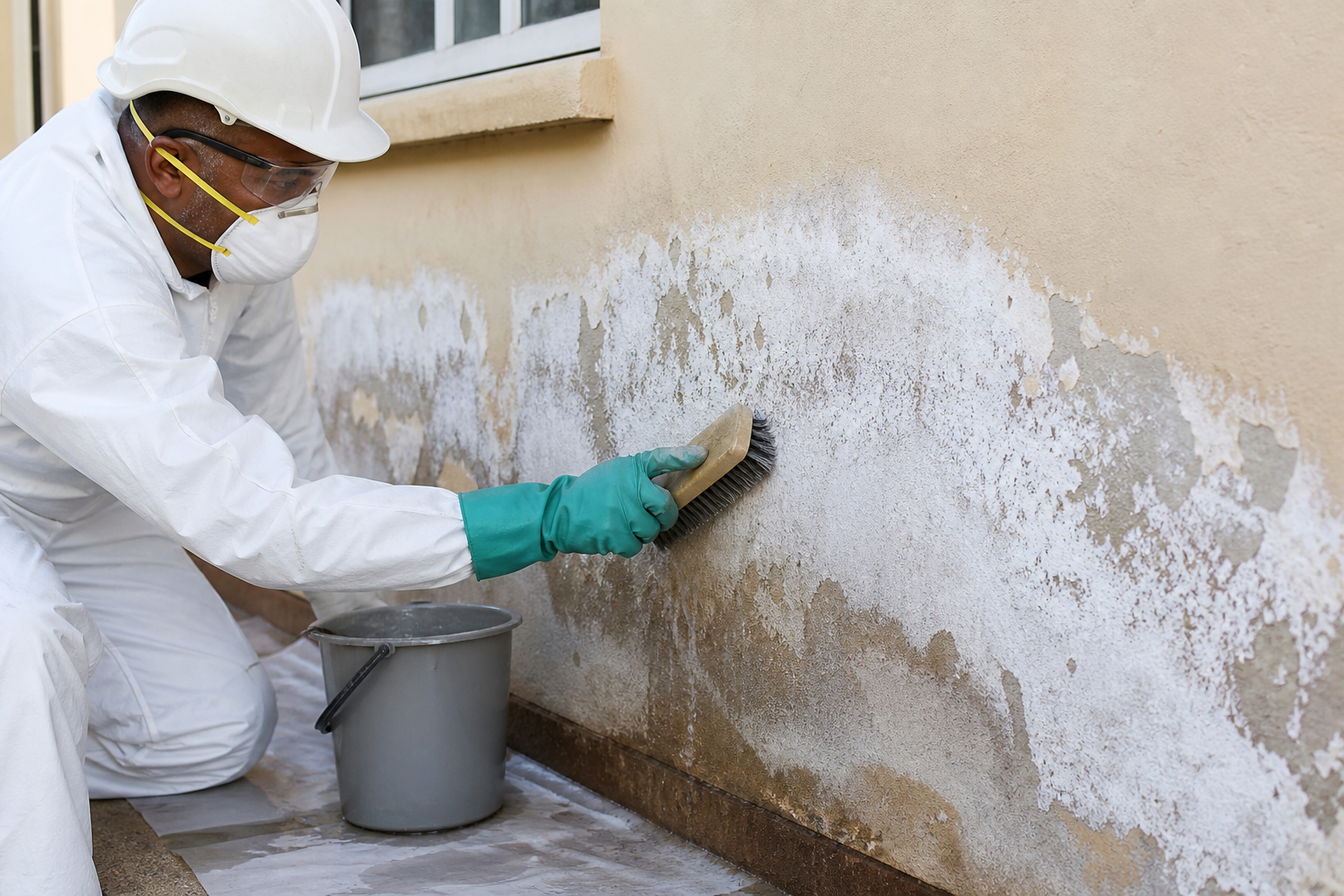
How do I fix efflorescence before repainting?
First trace and repair the source of moisture. Remove loose paint and wash away salt deposits.
First trace and repair the source of moisture. Remove loose paint and wash away salt deposits. Allow the substrate adequate time to dry and check whether salts return. Do not trap active efflorescence under a new coating.
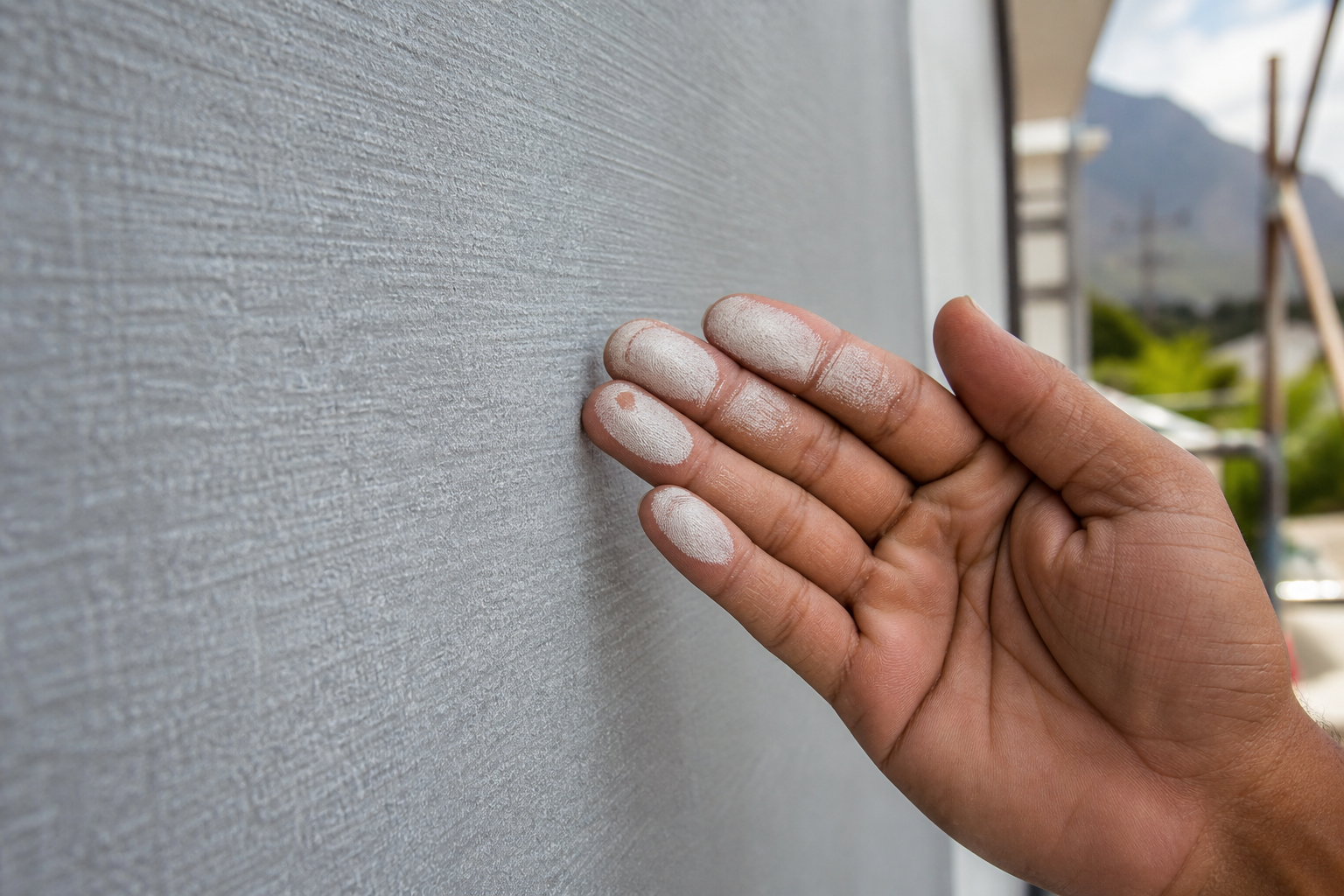
Why is exterior paint chalky?
Chalking is a powdery surface caused by weathering and UV breakdown of the coating binder.
Chalking is a powdery surface caused by weathering and UV breakdown of the coating binder. Wash away the chalk, remove loose paint and ensure the remaining surface is sound. A suitable binding or penetrating primer may be required before repainting.
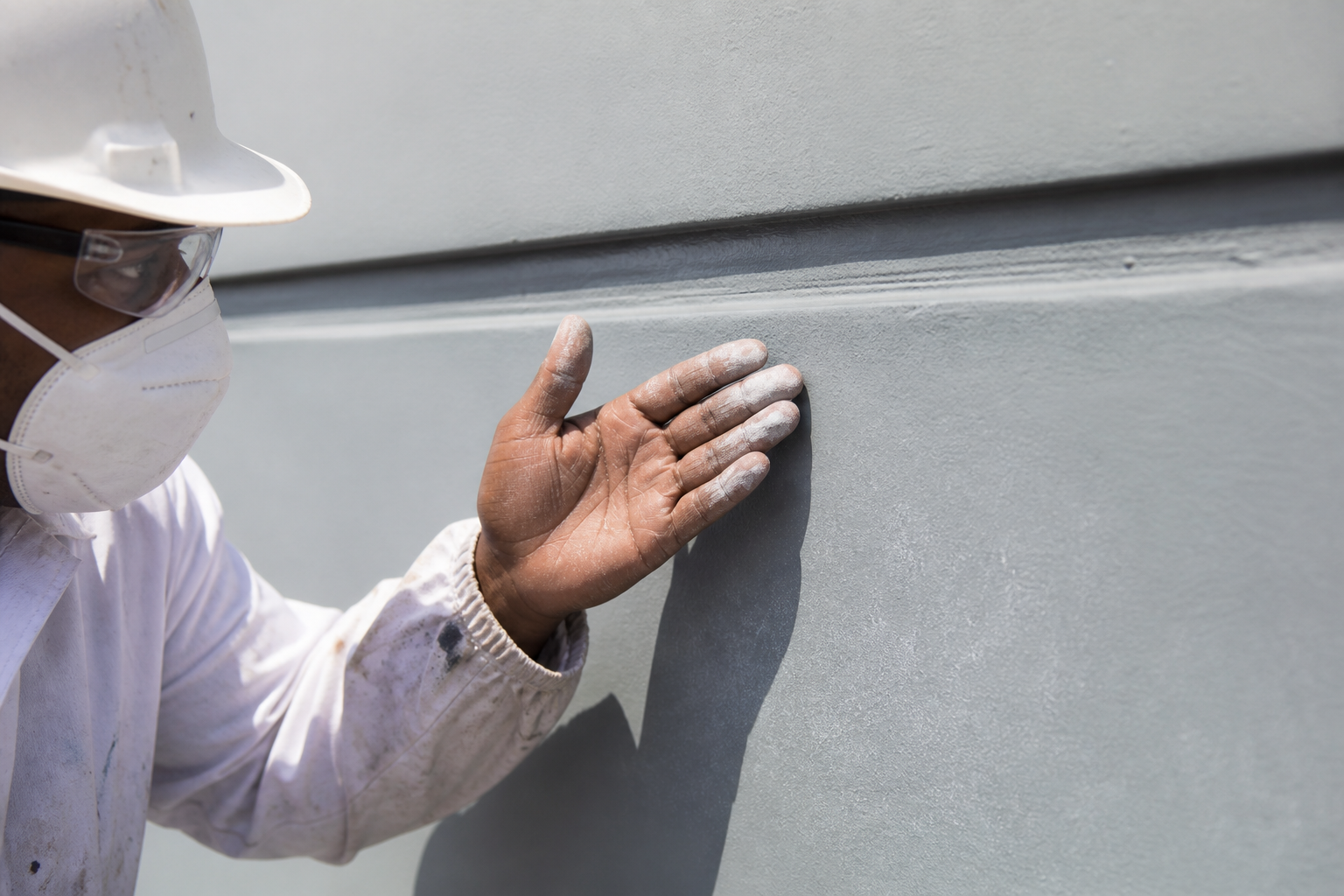
What is the difference between chalking and fading?
Chalking produces a removable powder on the paint surface and can make the colour appear lighter.
Chalking produces a removable powder on the paint surface and can make the colour appear lighter. Fading is an actual loss or change of pigment colour from exposure. Wiping a chalked surface may reveal the original colour underneath; true fading will remain.
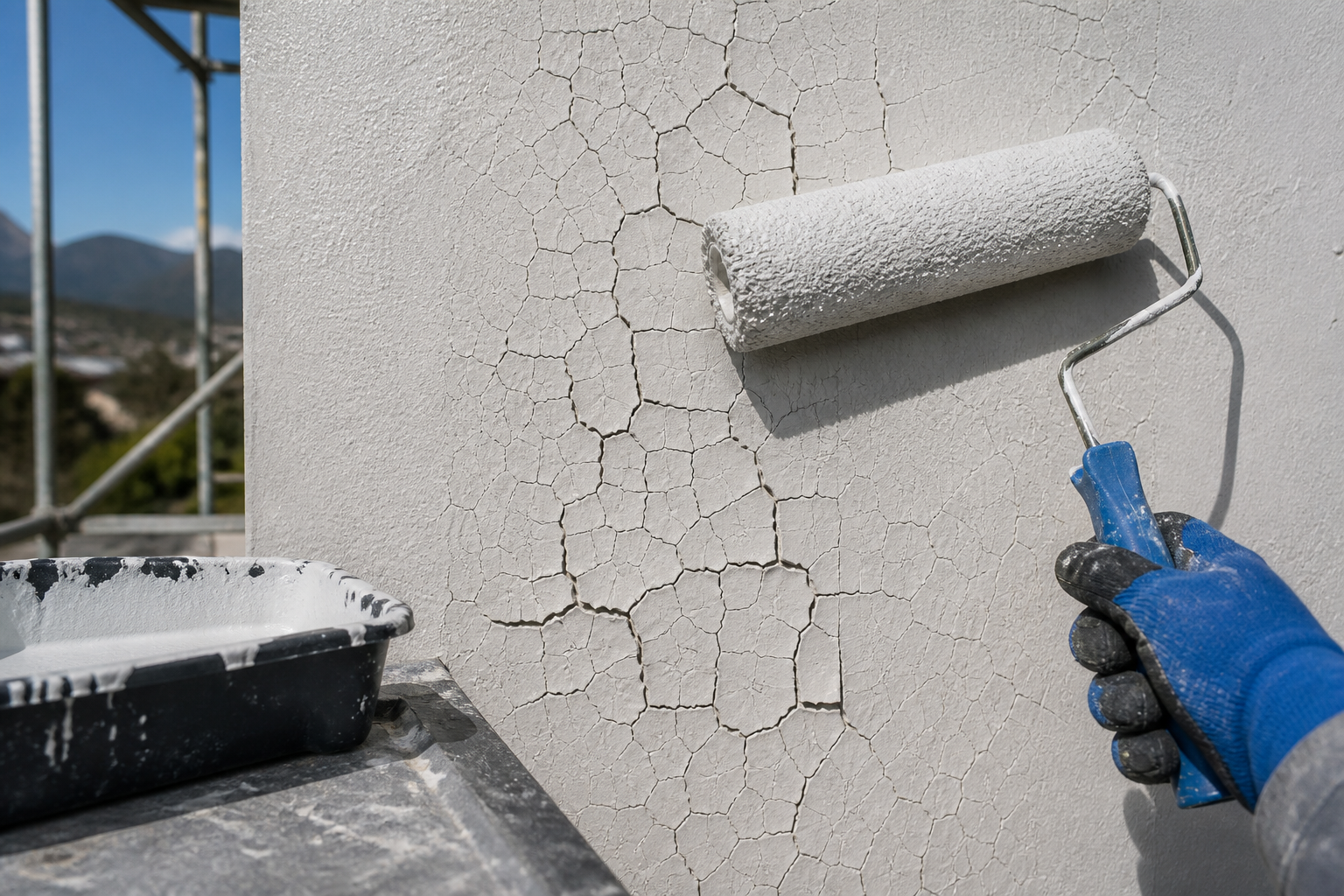
Why does paint crack like dried mud?
Mud cracking can occur when a water-based coating is applied too heavily, dries incorrectly or fails to form a proper film, including under temperatures below the coating's…
Mud cracking can occur when a water-based coating is applied too heavily, dries incorrectly or fails to form a proper film, including under temperatures below the coating's minimum film-forming conditions. Remove cracked material and recoat under suitable conditions at the correct film build.
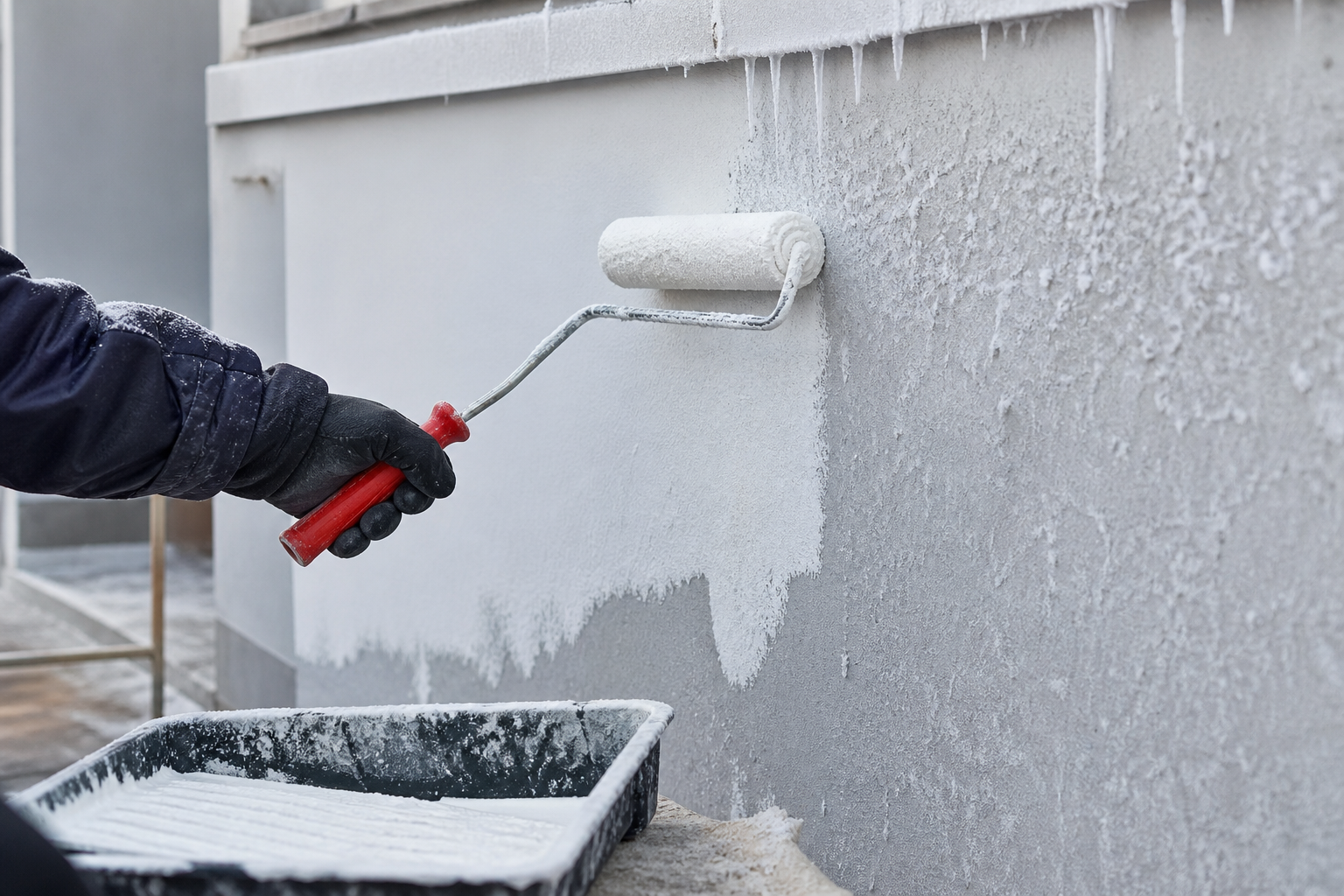
Can I paint when the wall is very cold?
Avoid applying water-based coatings when the substrate is too cold for proper film formation.
Avoid applying water-based coatings when the substrate is too cold for proper film formation. The supplied training guidance recommends keeping the substrate around 10–15°C or above for the first few hours after application. Always follow the product data sheet and weather conditions.
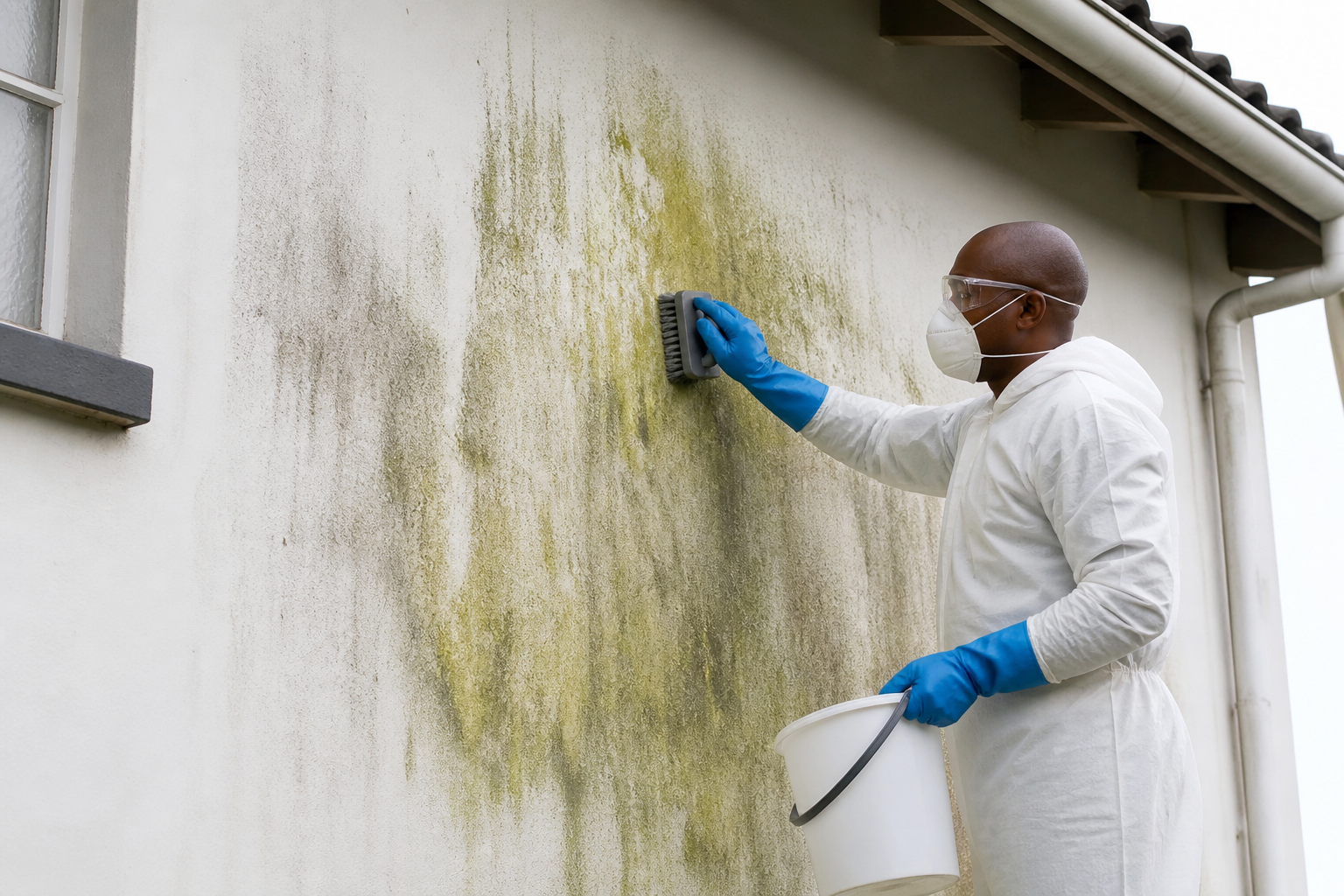
What causes mould or algae on painted walls?
Persistent moisture, shade and contamination encourage fungal and algal growth.
Persistent moisture, shade and contamination encourage fungal and algal growth. Correct the moisture source, clean and sterilise the affected area with an appropriate biocide treatment, repair cracks, allow it to dry and then repaint with a suitable exterior coating.
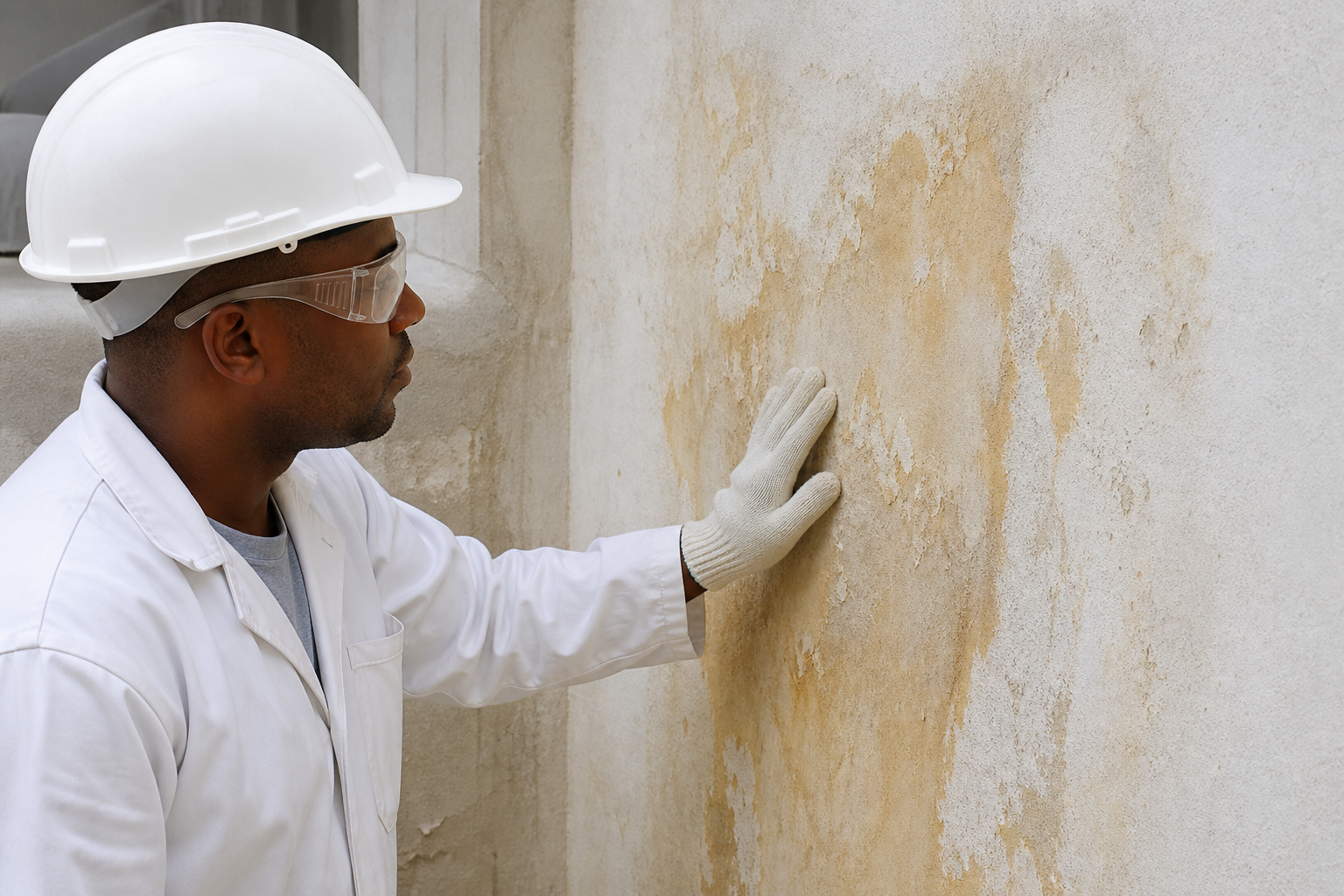
Why does paint turn yellow-brown or become water-sensitive on new plaster?
Fresh or damp plaster can be strongly alkaline. Alkali and moisture can attack incompatible coating components, causing patchiness, staining, softening or blistering.
Fresh or damp plaster can be strongly alkaline. Alkali and moisture can attack incompatible coating components, causing patchiness, staining, softening or blistering. Let the plaster cure and dry, correct moisture problems and use an alkali-resistant primer before recoating.
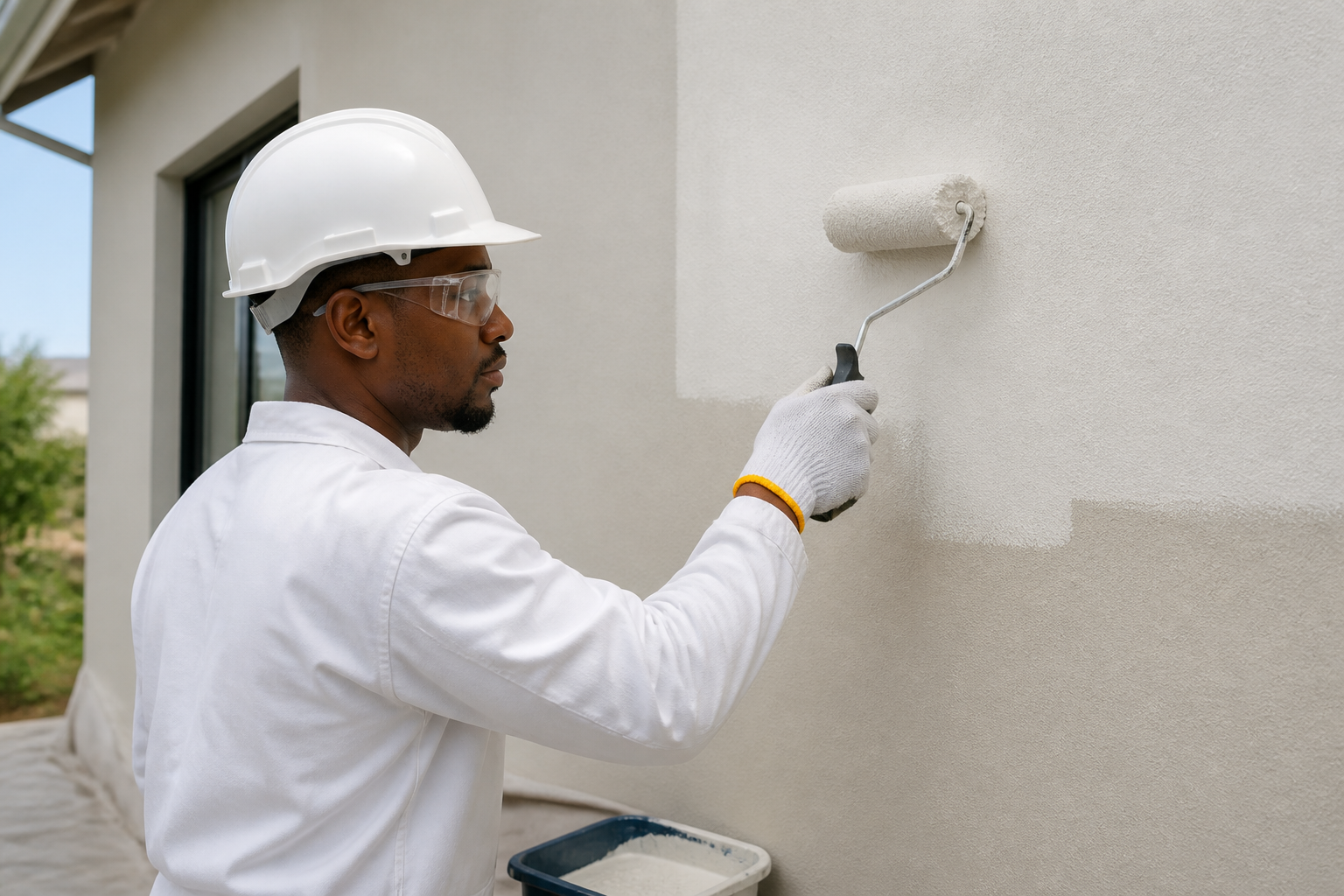
Which ACRO paint is a premium washable low-sheen coating?
ACROKLAD is a fibre-reinforced 100% acrylic low-sheen coating for interior and exterior use.
ACROKLAD is a fibre-reinforced 100% acrylic low-sheen coating for interior and exterior use. It is highly washable, UV resistant and designed for demanding exterior and high-traffic applications.
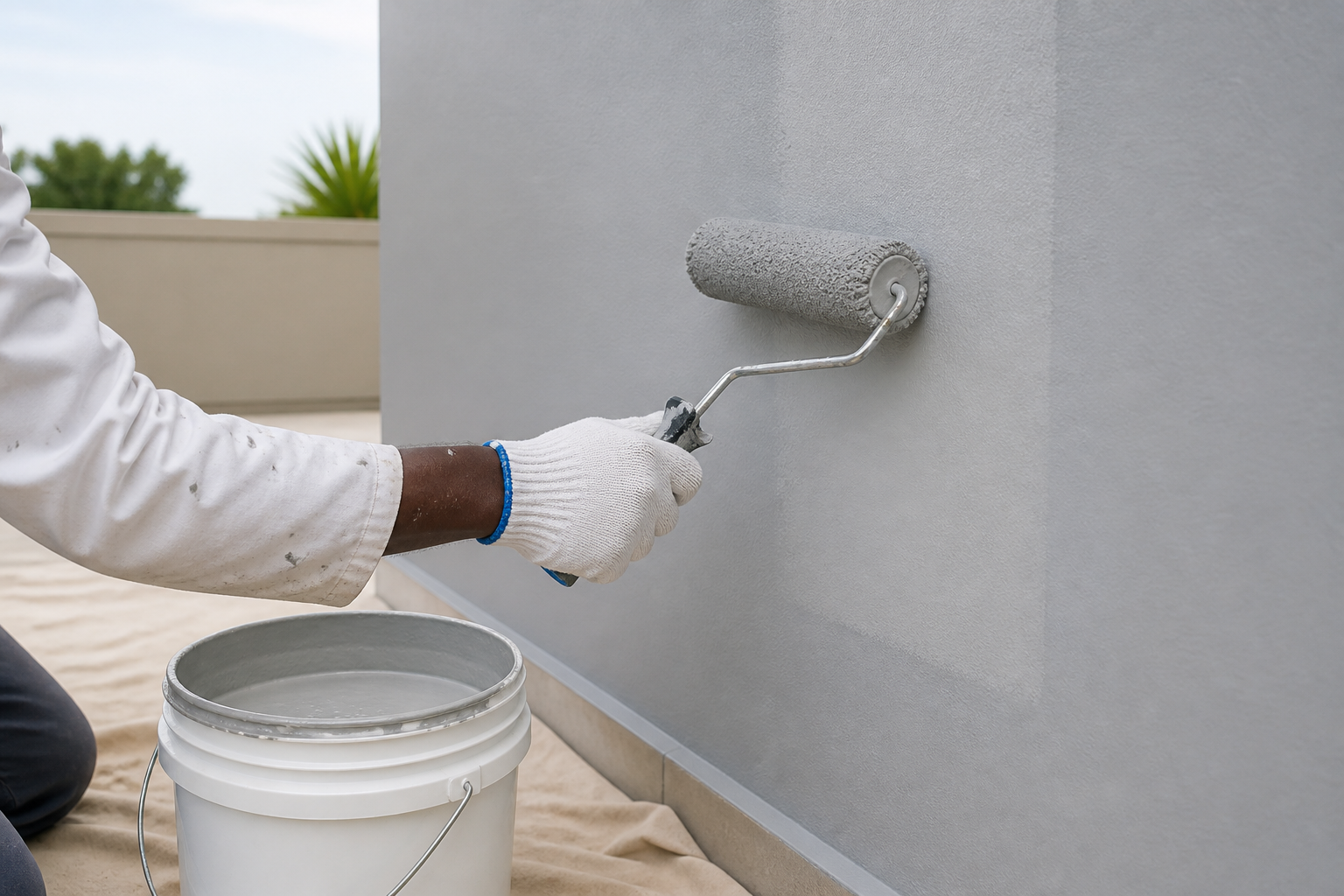
Which ACRO paint gives a soft-sheen finish?
ACROLUX SHEEN is a 100% acrylic soft-sheen coating for interior and exterior walls.
ACROLUX SHEEN is a 100% acrylic soft-sheen coating for interior and exterior walls. It is designed for a durable, highly washable finish in areas such as bedrooms, hallways and lounges.
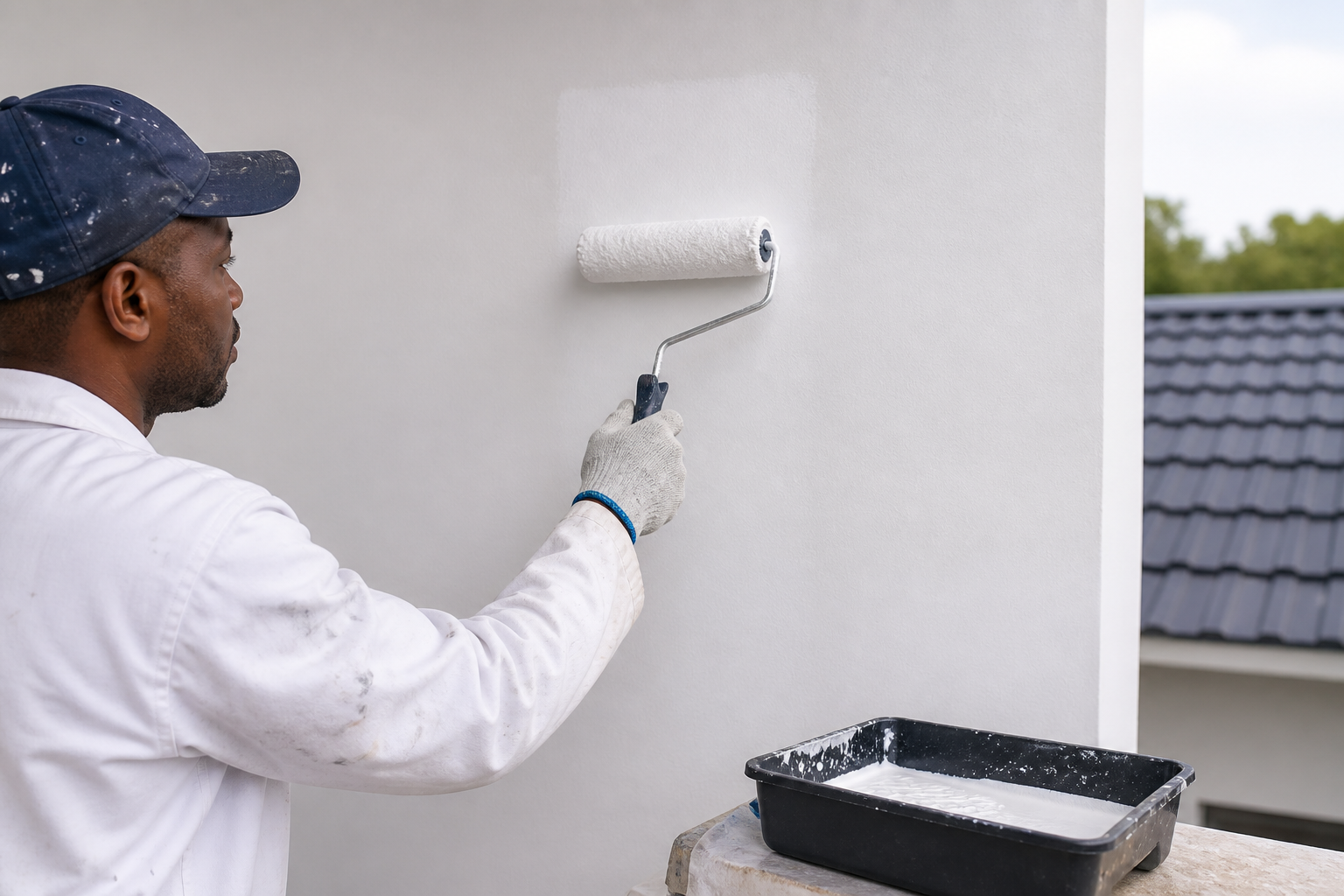
Which ACRO paint gives an ultra-matt finish?
ACROLUX MATT is a 100% acrylic ultra-matt coating for interior and exterior walls.
ACROLUX MATT is a 100% acrylic ultra-matt coating for interior and exterior walls. Its matt appearance helps reduce the visibility of minor surface imperfections while providing a durable, washable finish.
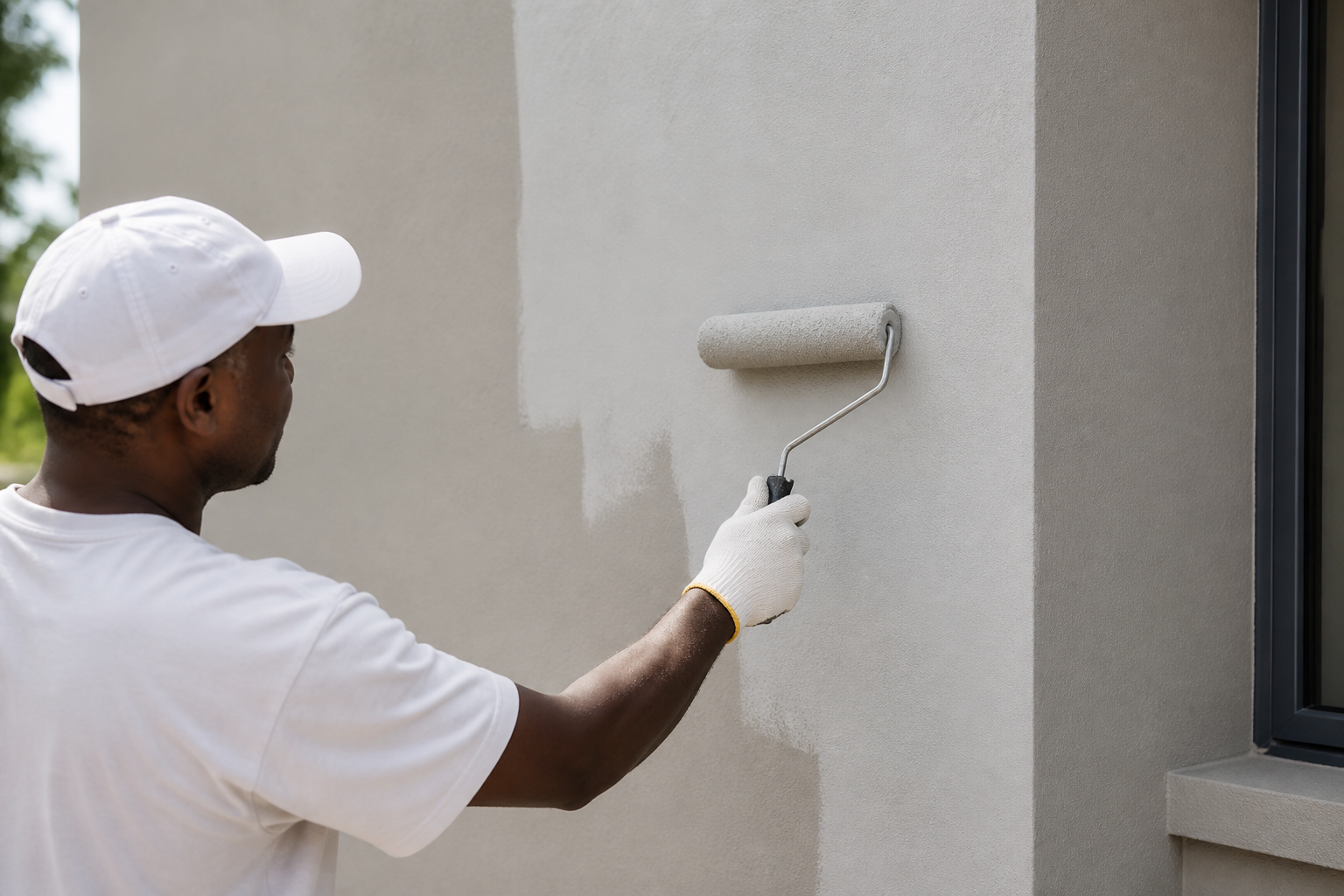
What is LOW SHEEN used for?
LOW SHEEN is an acrylic wall coating for interior and exterior residential, commercial and contractor applications where a smooth, washable low-sheen finish is required.
LOW SHEEN is an acrylic wall coating for interior and exterior residential, commercial and contractor applications where a smooth, washable low-sheen finish is required.
What is CONTRACTORS NU COTE used for?
CONTRACTORS NU COTE is an economical matt PVA coating for walls and ceilings in residential, commercial and contractor applications.
CONTRACTORS NU COTE is an economical matt PVA coating for walls and ceilings in residential, commercial and contractor applications. It is intended for large-area painting where good opacity, easy application and value are important.
Which paint finish hides wall imperfections best?
Matt finishes generally reflect less light and therefore show minor plaster imperfections less than sheen or gloss finishes.
Matt finishes generally reflect less light and therefore show minor plaster imperfections less than sheen or gloss finishes. ACROLUX MATT is specifically described as helping reduce the appearance of minor plaster and surface imperfections.
What roller should I use for water-based wall paint?
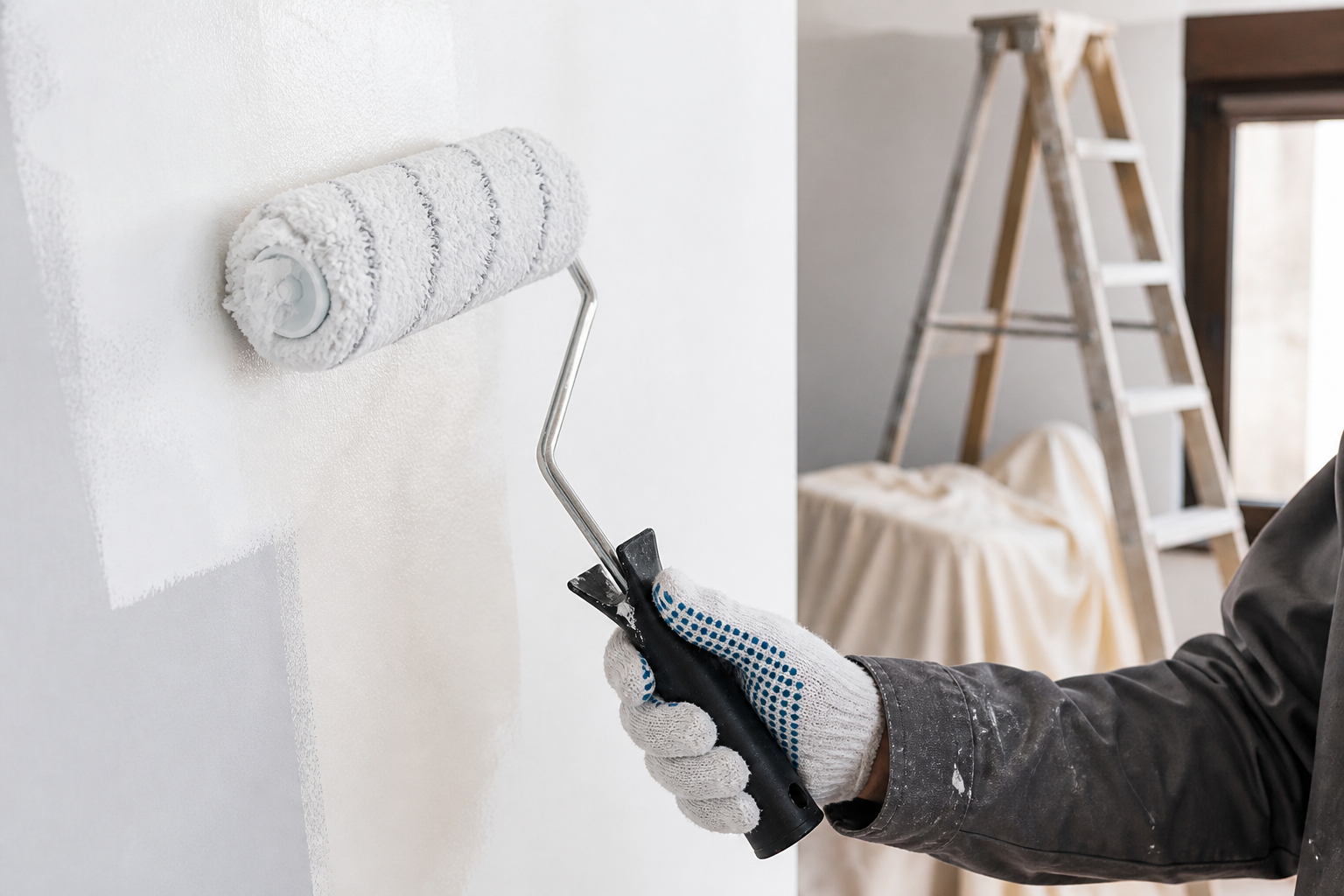
Use a suitable synthetic pile roller selected for the surface profile.
Use a suitable synthetic pile roller selected for the surface profile. Longer pile is useful on rough or textured masonry; shorter or medium pile gives a smoother finish on smooth walls. Avoid choosing a roller only by paint type—the substrate texture and required finish matter too.
What roller should I use for enamel?
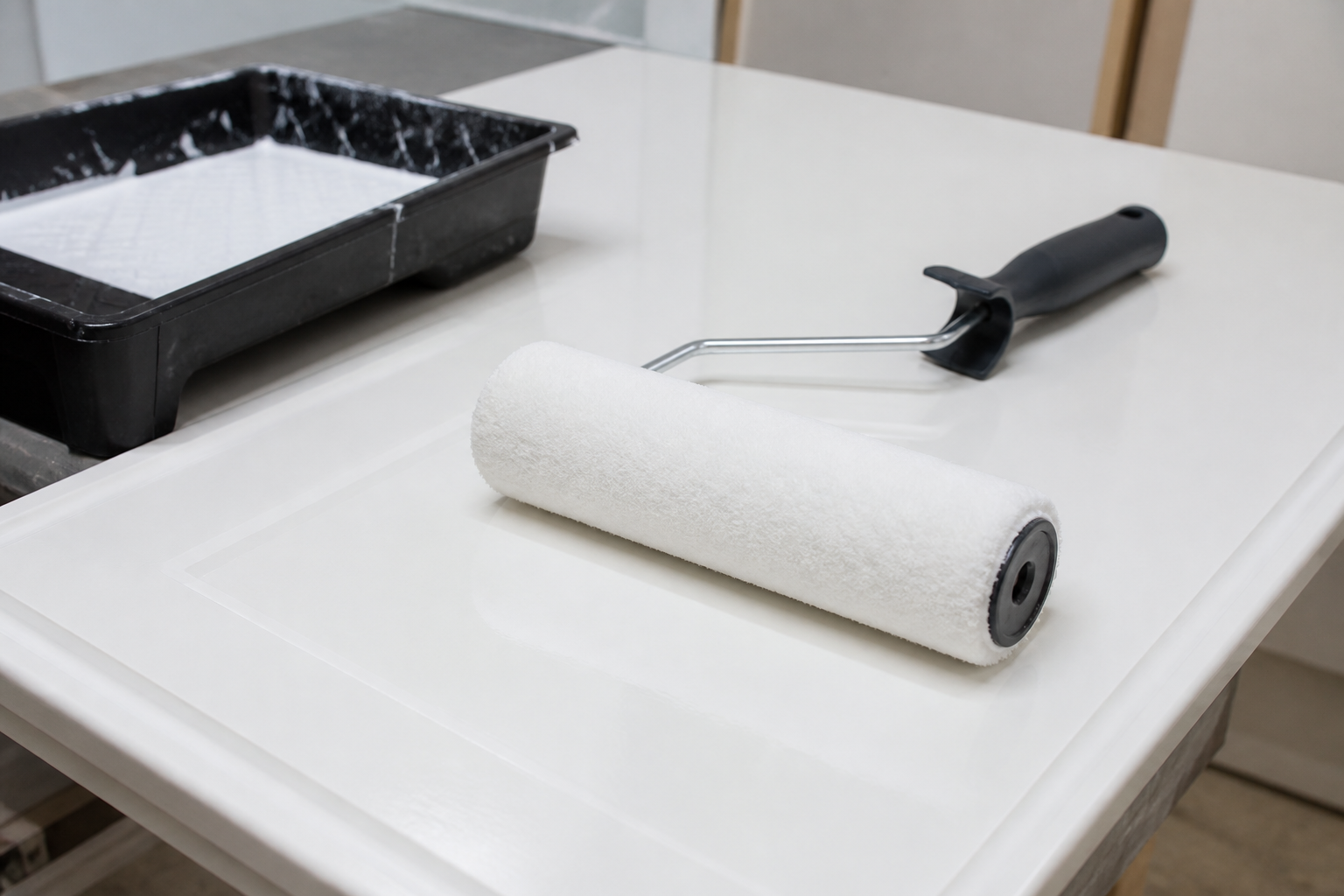
For smooth enamel finishes, use a short-pile mohair-type or suitable foam roller where the coating allows it.
For smooth enamel finishes, use a short-pile mohair-type or suitable foam roller where the coating allows it. The aim is to lay down a thin, even film with minimal texture. Check the product instructions for solvent compatibility.
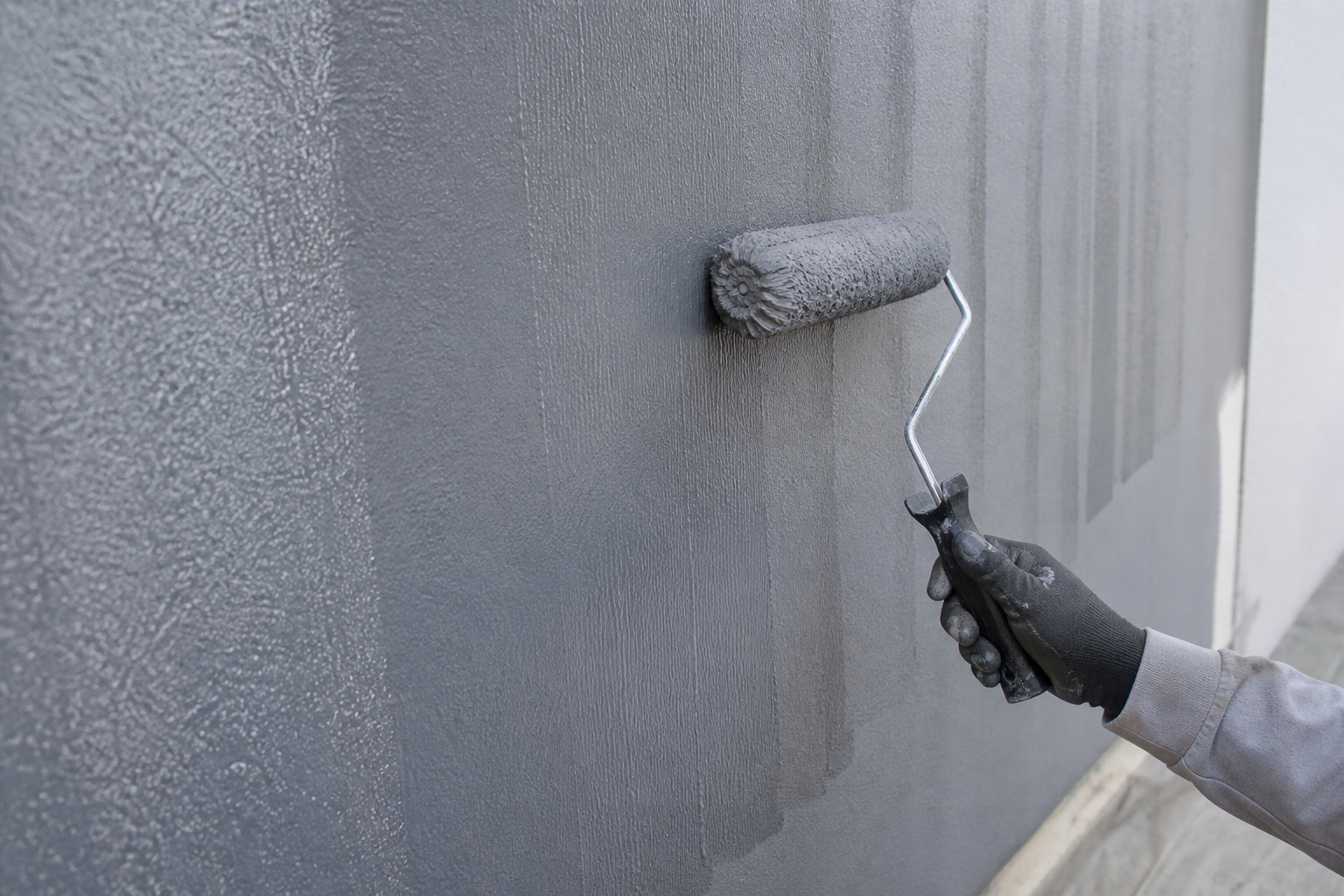
Why do I get roller marks?
Common causes include overworking paint as it begins to dry, uneven loading, poor roller selection, excessive thinning, painting in hot or windy conditions, or failing to…
Common causes include overworking paint as it begins to dry, uneven loading, poor roller selection, excessive thinning, painting in hot or windy conditions, or failing to maintain a wet edge. Work systematically and keep the film uniform.
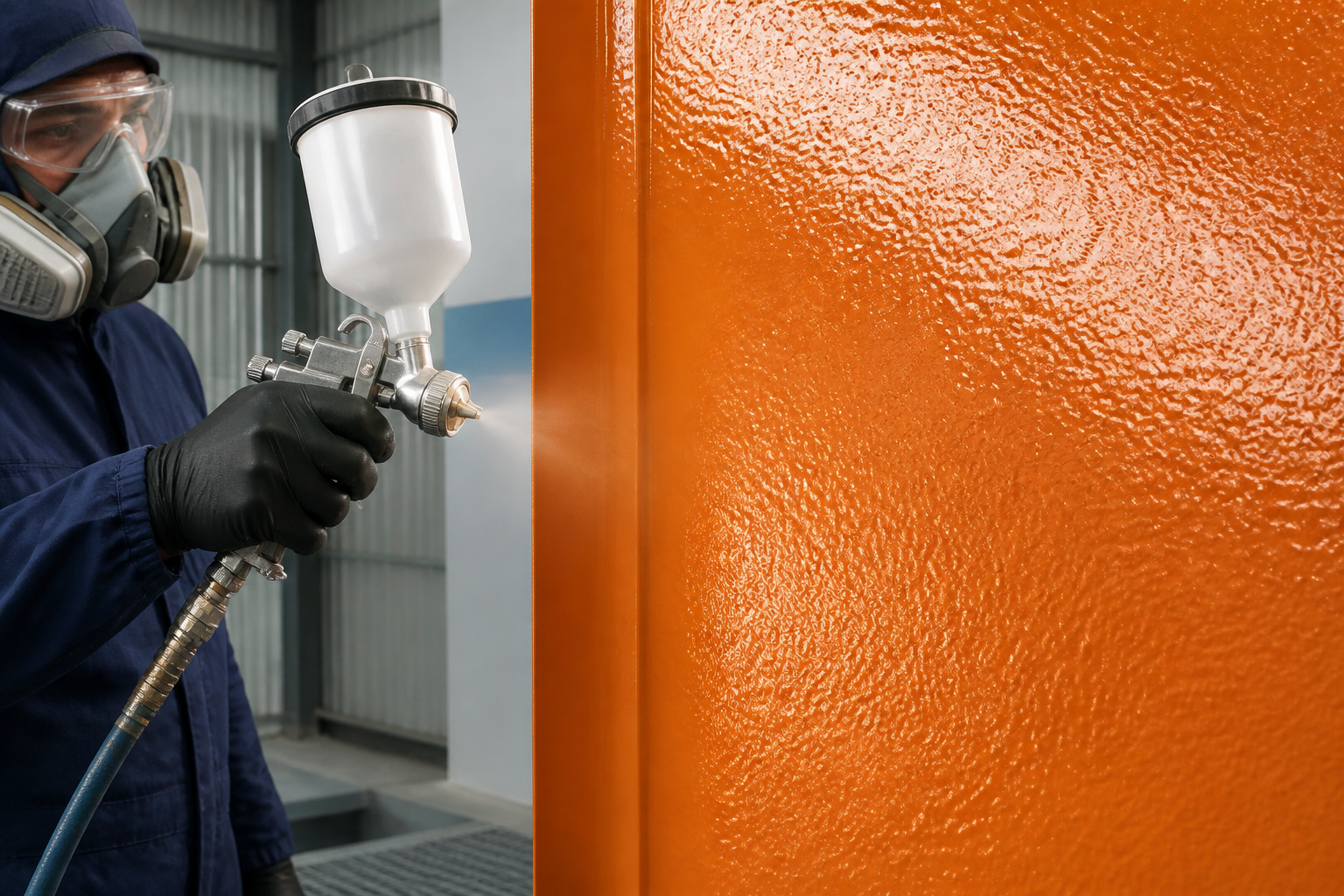
Why does sprayed paint have orange peel?
Orange peel is usually caused by poor atomisation or flow.
Orange peel is usually caused by poor atomisation or flow. Possible causes include incorrect viscosity, wrong thinner, excessive spray distance, incorrect pressure, unsuitable nozzle setup or solvent evaporation that is too fast. Correct the spray setup and use the compatible thinner.
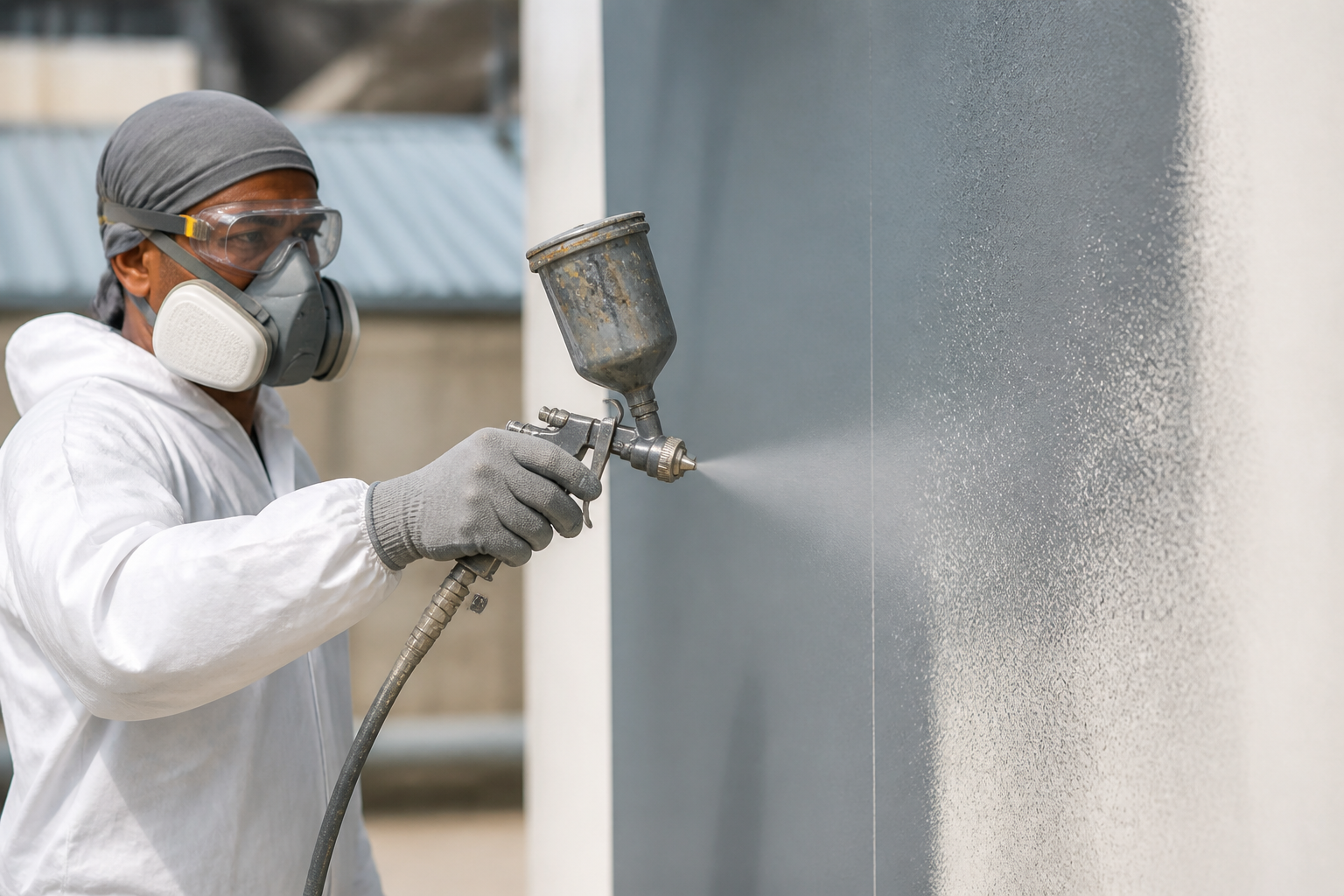
What causes dry spray or overspray?
Dry spray occurs when droplets partly dry before reaching or flowing into the surface.
Dry spray occurs when droplets partly dry before reaching or flowing into the surface. Excessive gun distance, high air pressure, fast solvent evaporation, hot conditions or poor gun technique are common causes. Adjust the gun, distance, pressure and compatible thinner system.
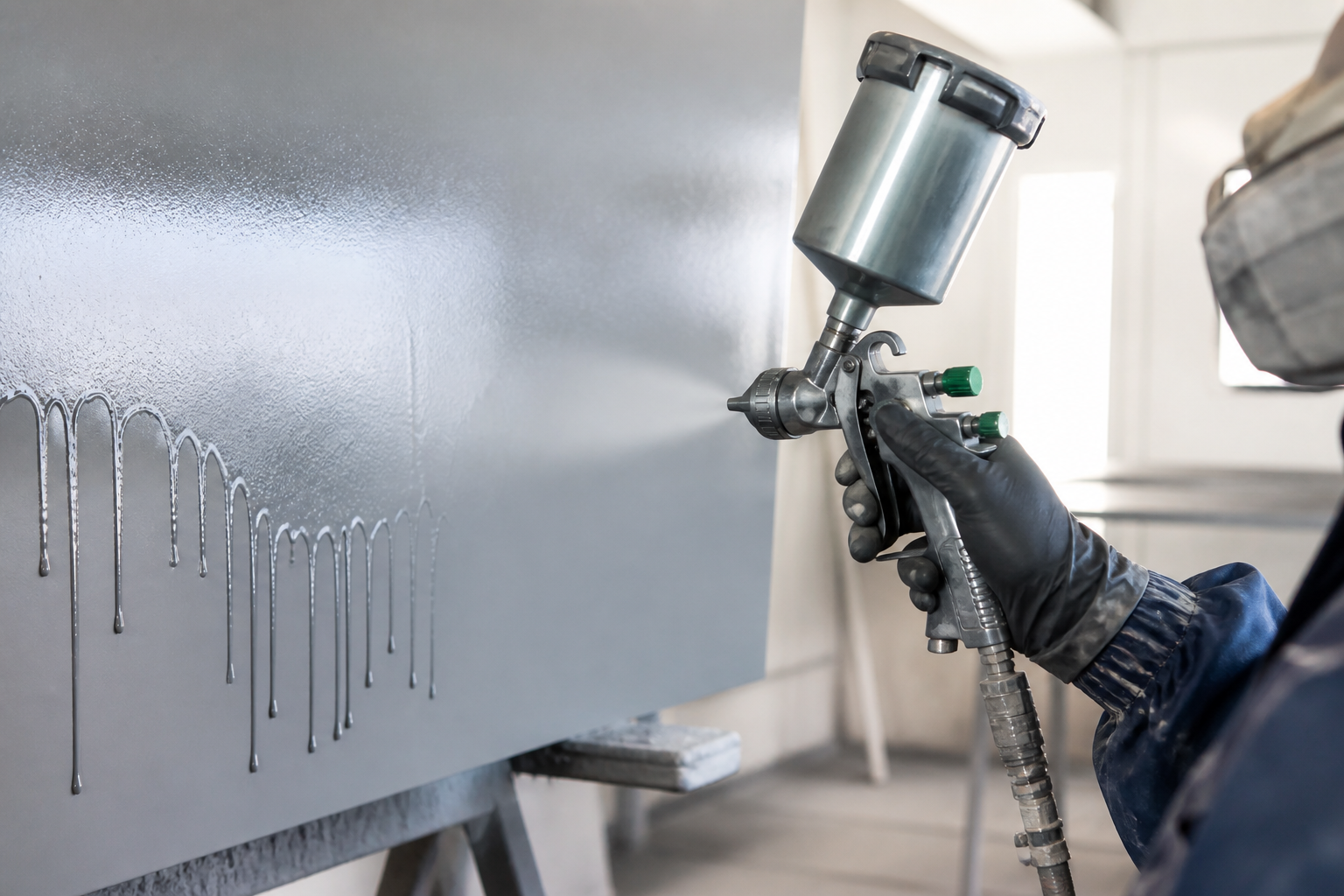
What causes paint runs and sags?
Runs and sags usually result from applying too much wet paint, holding the spray gun too close, moving too slowly, excessive thinning or poor overlap.
Runs and sags usually result from applying too much wet paint, holding the spray gun too close, moving too slowly, excessive thinning or poor overlap. Allow the defect to cure, sand it smooth if appropriate and recoat correctly.
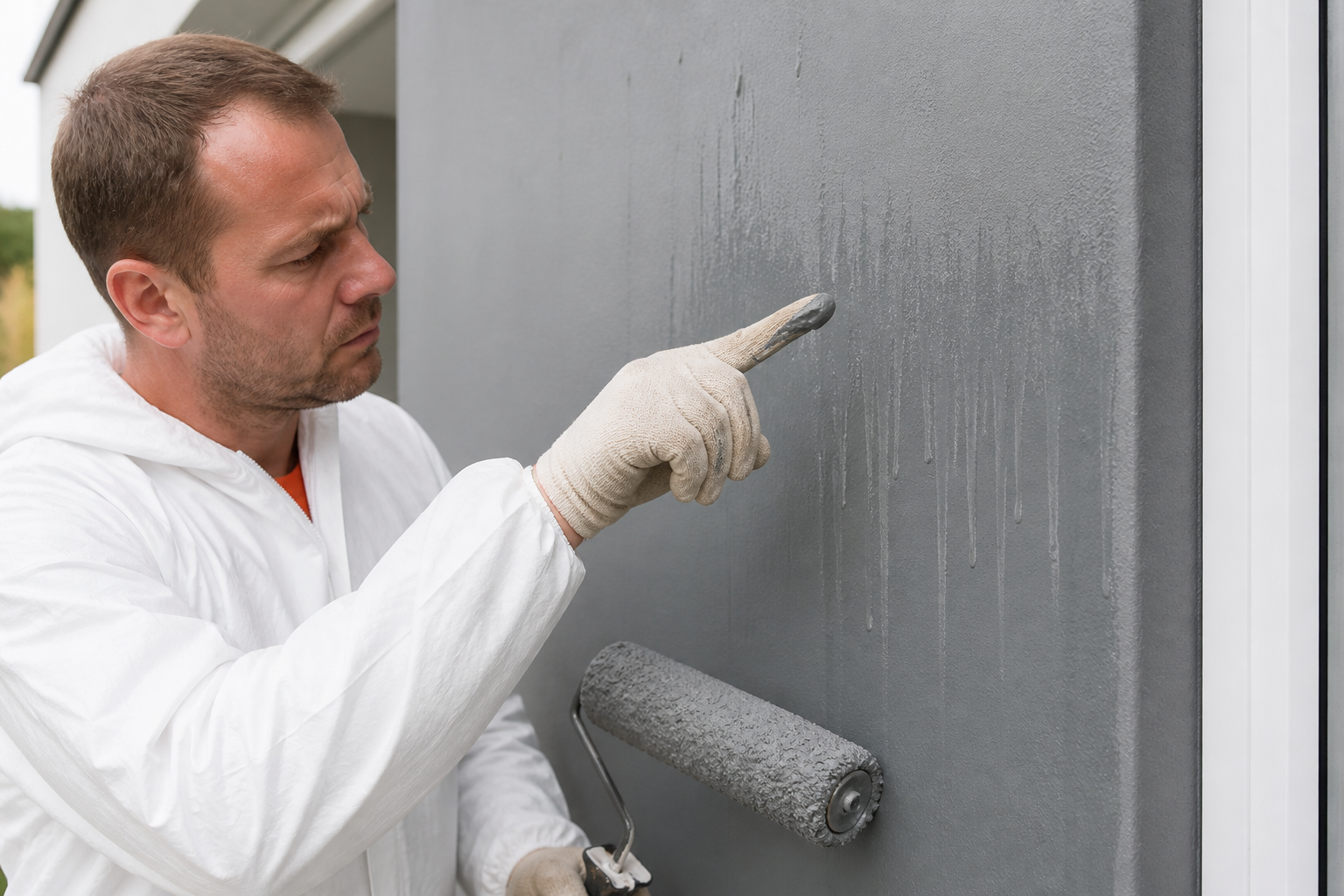
Why is paint not drying properly?
Possible causes include the wrong thinner, excessive colourant, applying the coating too thickly, low temperature, poor ventilation, incompatible substrate contamination or…
Possible causes include the wrong thinner, excessive colourant, applying the coating too thickly, low temperature, poor ventilation, incompatible substrate contamination or incorrect mixing of a multi-component coating. Stop recoating until the cause is identified.
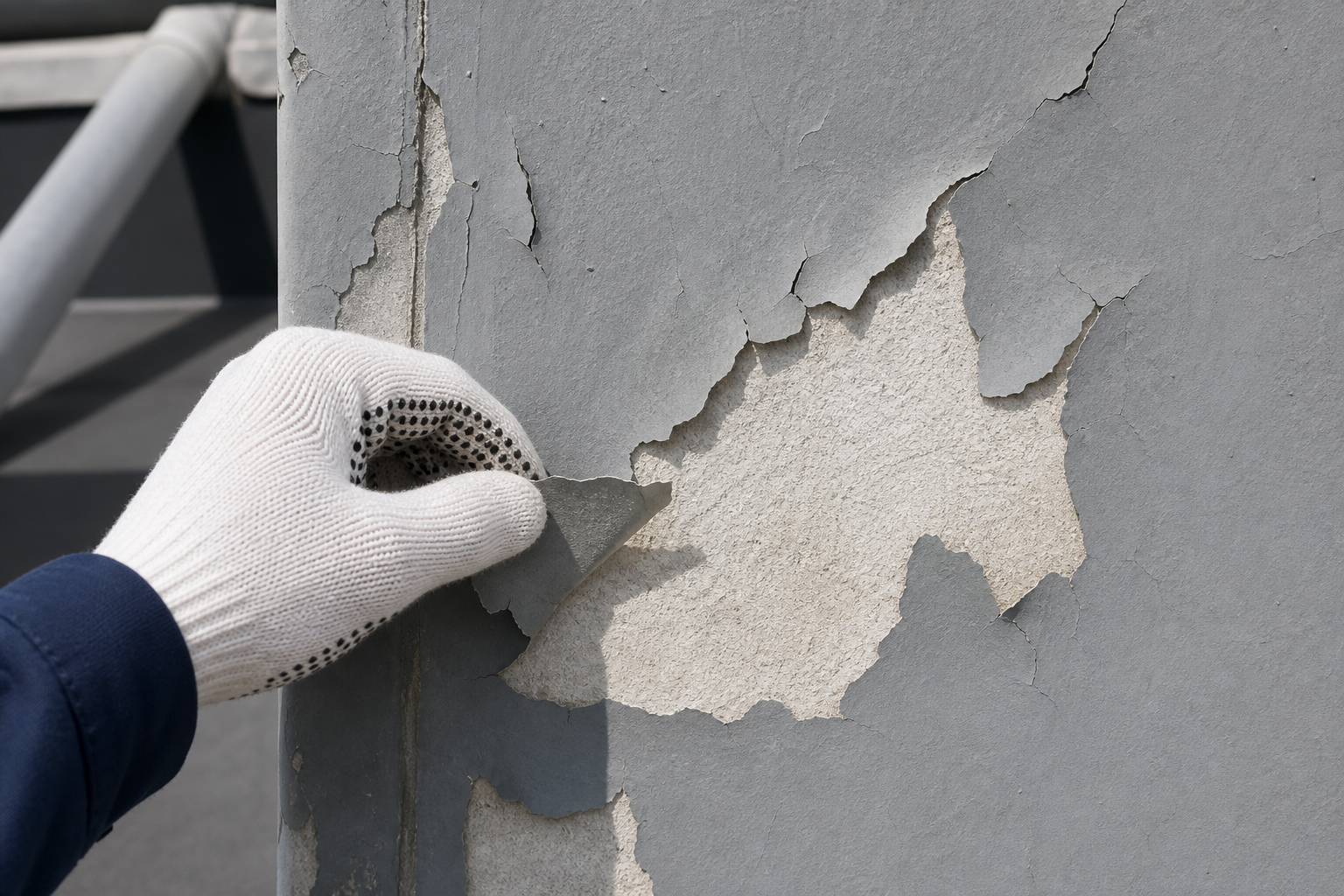
Why is paint peeling?
Peeling is an adhesion failure.
Peeling is an adhesion failure. Common causes include chalk, dust, grease, moisture, loose old paint, an unsuitable primer, painting over silicone or other contamination, or applying incompatible coatings. Remove unsound paint and correct the underlying cause before repainting.
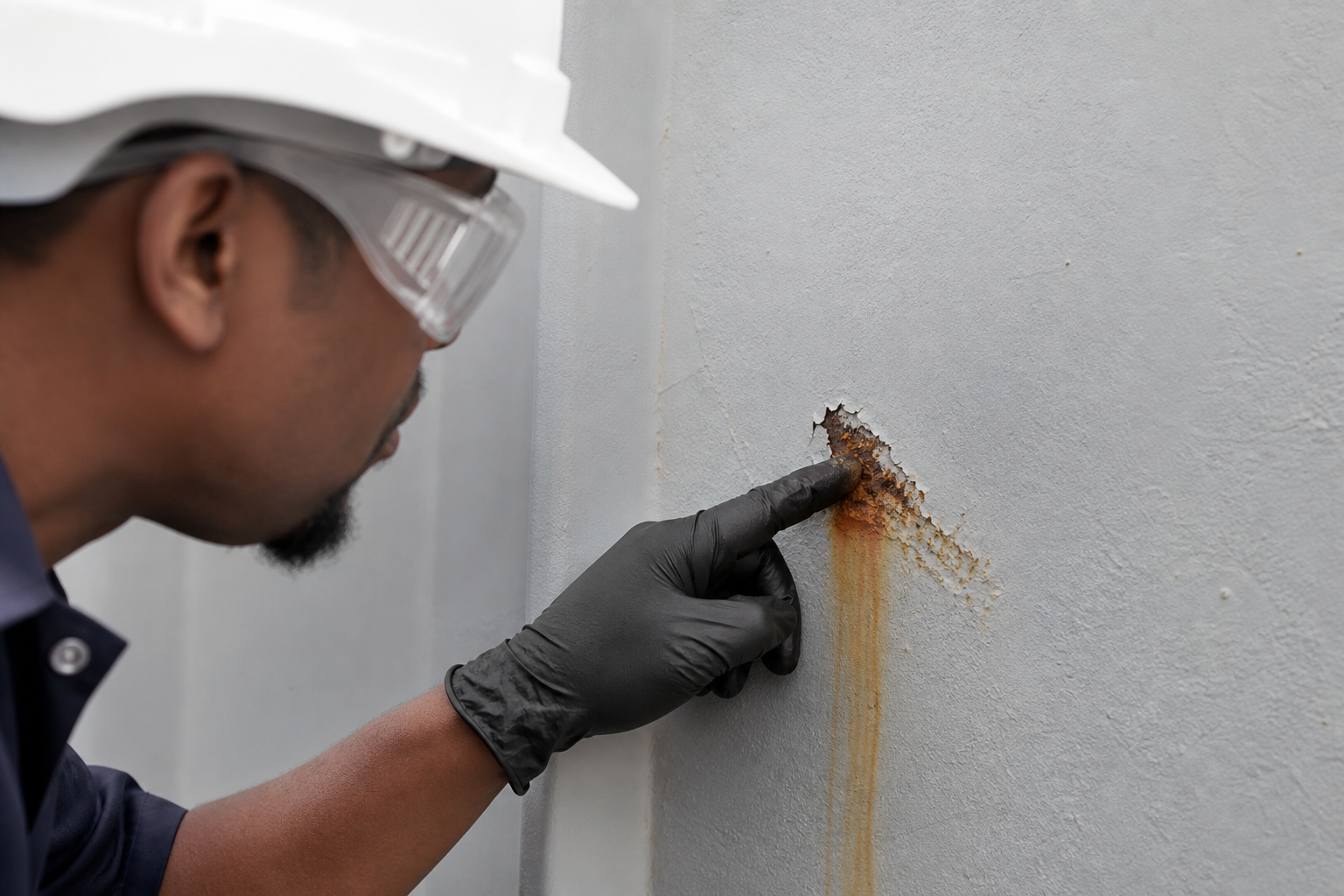
Why is rust coming back through the paint?
Rust can return when corrosion was not fully stabilised, the steel was contaminated, the coating film is too thin or damaged, water reaches the steel through defects, or the…
Rust can return when corrosion was not fully stabilised, the steel was contaminated, the coating film is too thin or damaged, water reaches the steel through defects, or the selected system is inadequate for the environment. Remove loose corrosion and rebuild the anti-corrosive system on properly prepared steel.
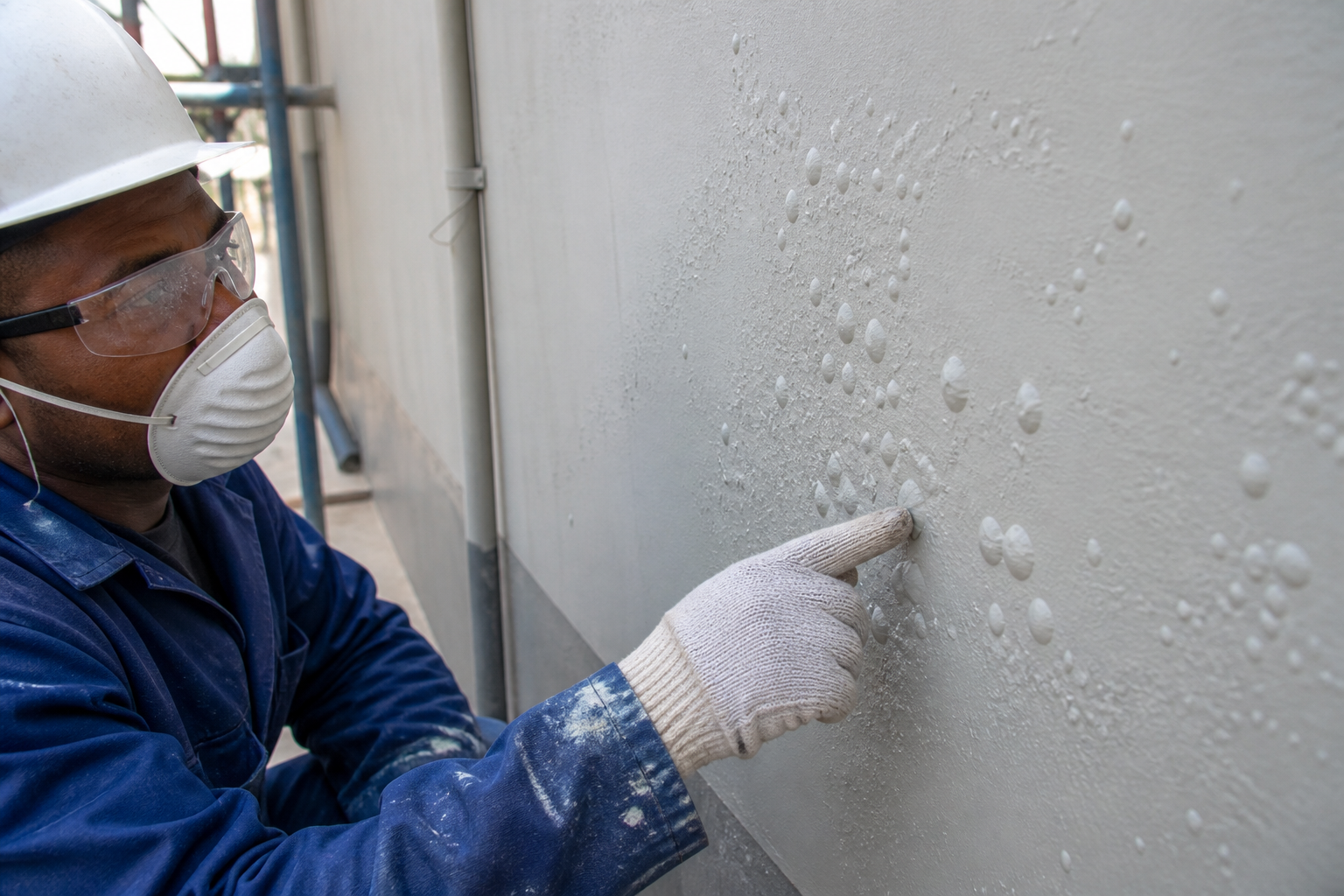
Why does paint blister?
Blisters can form from trapped moisture, solvent entrapment, heat, contamination or poor adhesion.
Blisters can form from trapped moisture, solvent entrapment, heat, contamination or poor adhesion. On walls and roofs, moisture ingress is a frequent cause. Do not simply puncture and overpaint blisters; trace the source, remove failed coating and repair the substrate first.
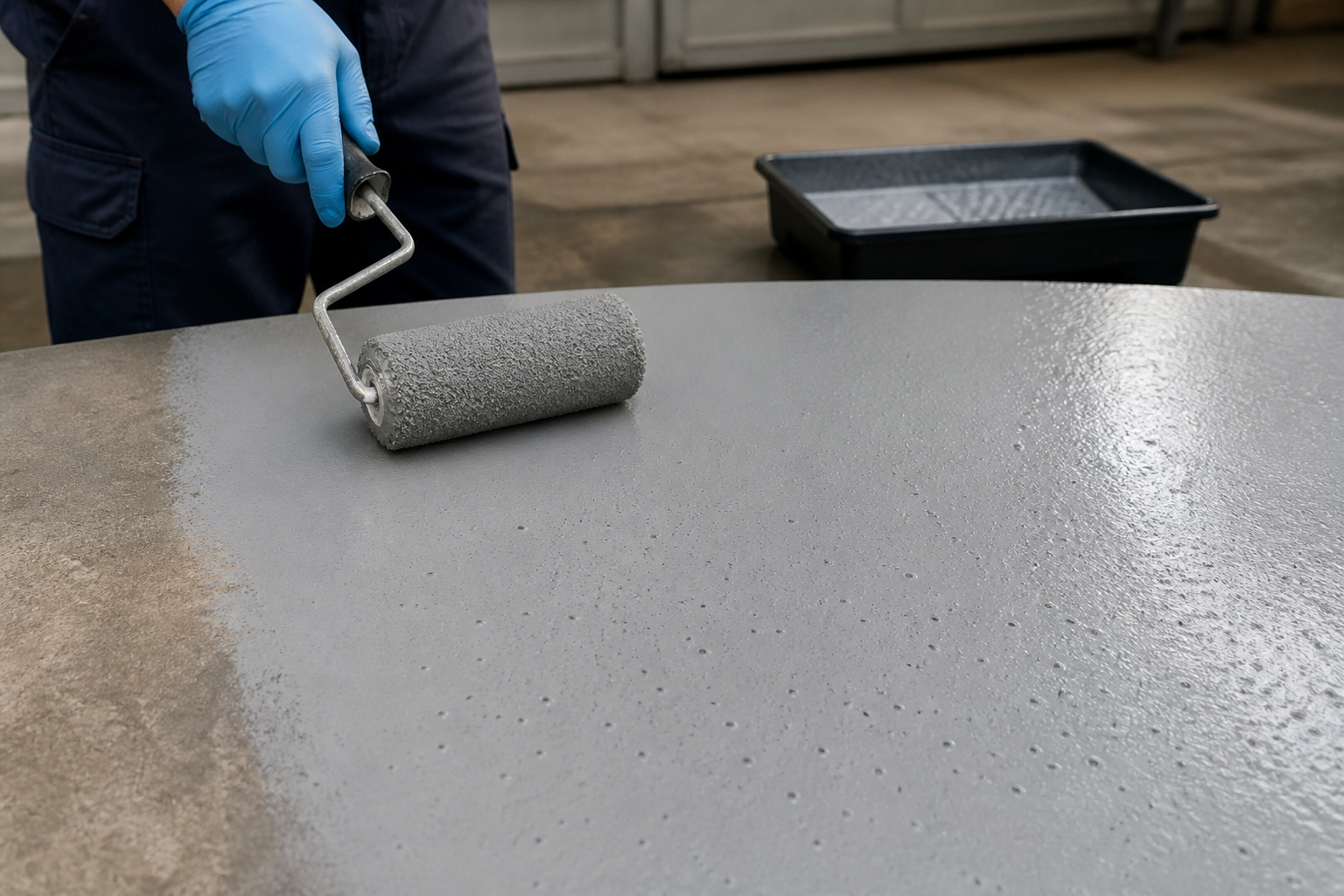
Why are there pinholes in my coating?
Pinholes can result from trapped air, porous substrates, foaming, solvent release, excessive film thickness or poor spray technique.
Pinholes can result from trapped air, porous substrates, foaming, solvent release, excessive film thickness or poor spray technique. Seal porous surfaces where required and apply the coating at the recommended film build.
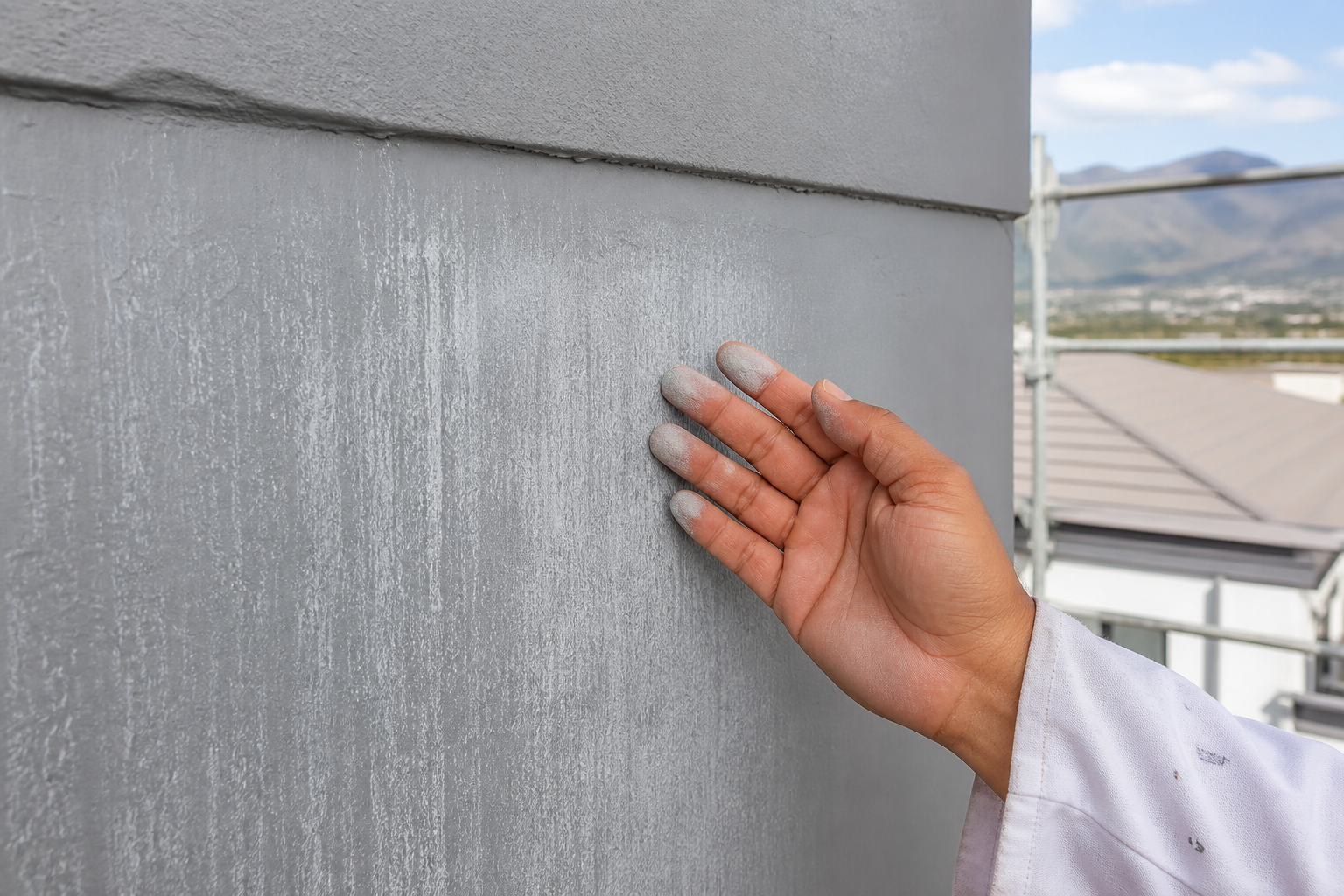
Why is the paint losing gloss?
Gloss loss can result from UV weathering, chalking, poor film formation, incorrect thinner, dry spray, porous substrate absorption or chemical exposure.
Gloss loss can result from UV weathering, chalking, poor film formation, incorrect thinner, dry spray, porous substrate absorption or chemical exposure. Diagnose whether the problem is at the surface or throughout the coating before recoating.
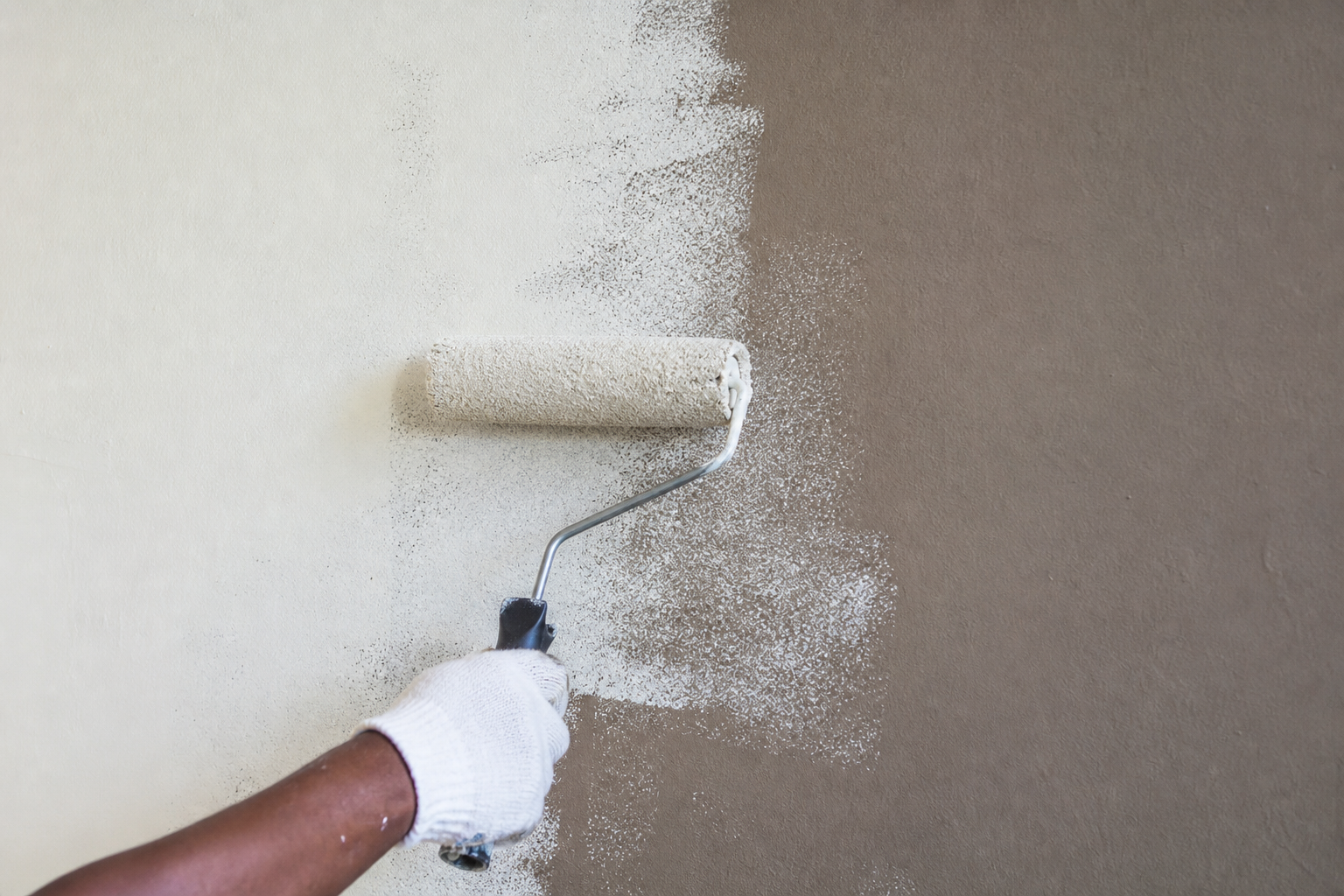
Why is the paint not covering properly?
Poor hiding can be caused by excessive thinning, spreading the paint too far, insufficient coats, strong colour contrast underneath, an unsuitable tint base or uneven substrate…
Poor hiding can be caused by excessive thinning, spreading the paint too far, insufficient coats, strong colour contrast underneath, an unsuitable tint base or uneven substrate absorption. Apply the recommended film build and use the correct primer/base where needed.
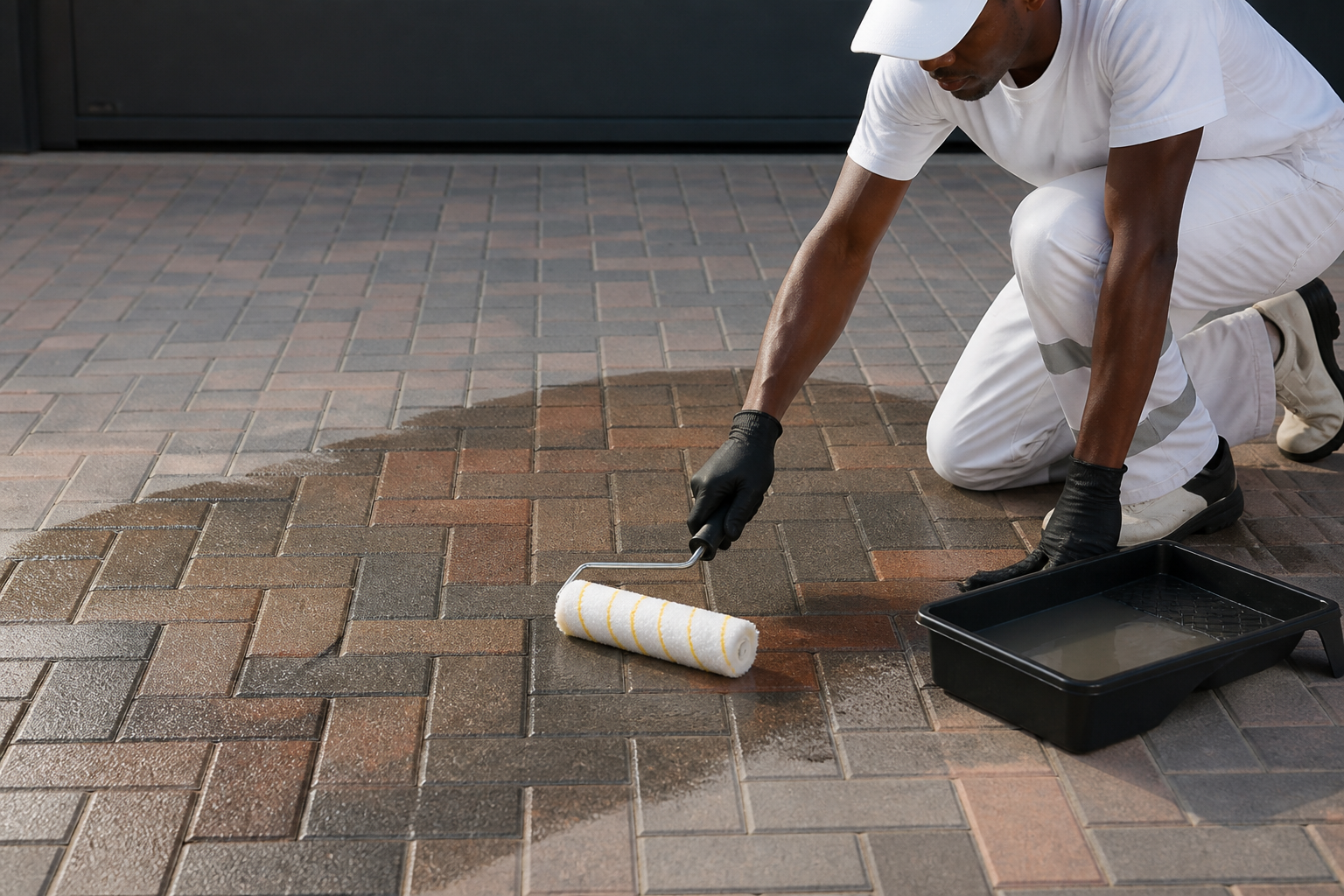
What ACRO product is intended for concrete paving bricks?
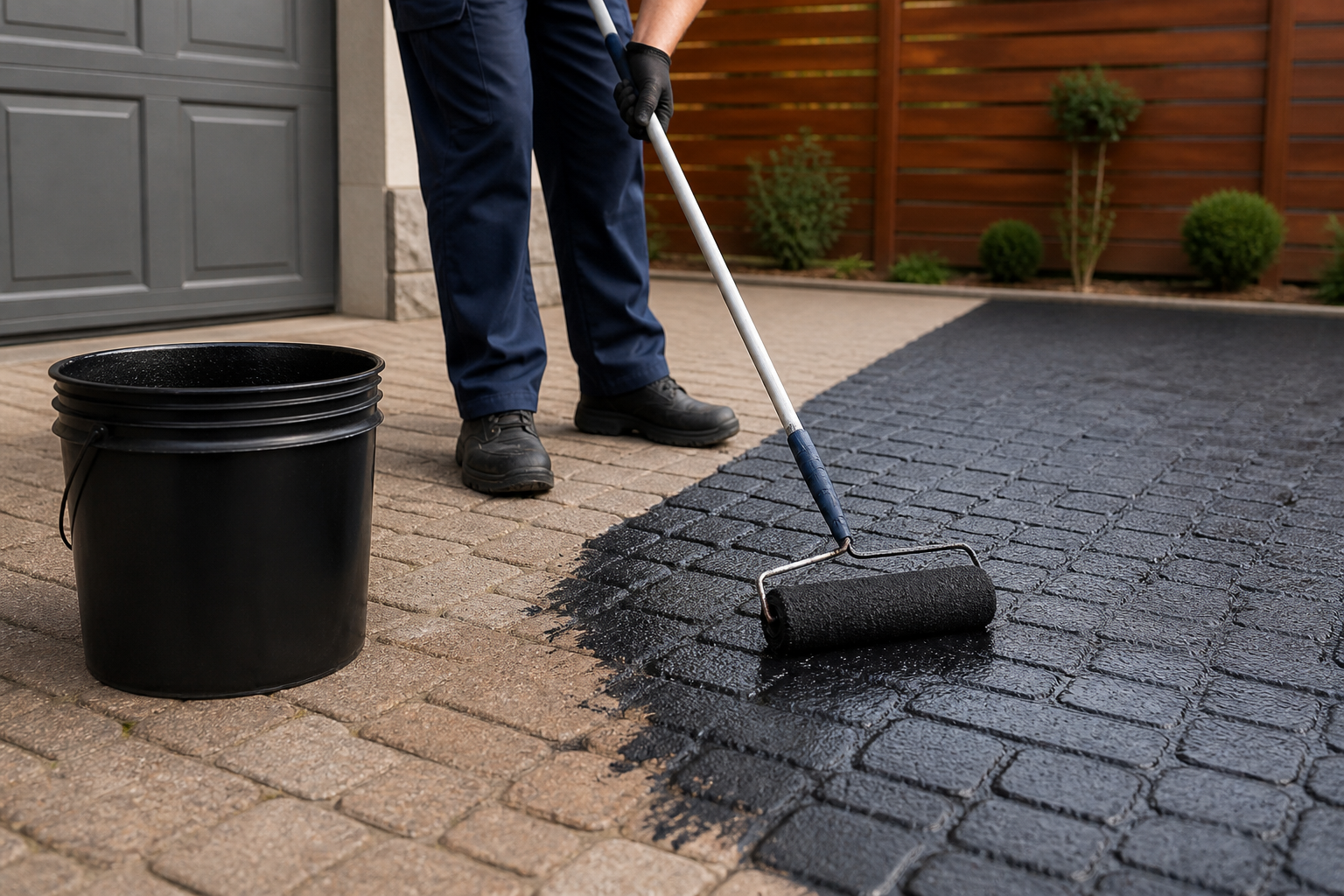
PAVE & SEAL is designed for concrete paving bricks and suitable cement-based surfaces. It provides an alkali-resistant, washable, hard-wearing exterior finish.
PAVE & SEAL is designed for concrete paving bricks and suitable cement-based surfaces. It provides an alkali-resistant, washable, hard-wearing exterior finish.
How much PAVE & SEAL will I need?
The coverage guideline is approximately 6–8 m²/L per coat. Actual consumption varies with the porosity, texture and condition of the paving.
The coverage guideline is approximately 6–8 m²/L per coat. Actual consumption varies with the porosity, texture and condition of the paving.
Why is surface preparation so important?
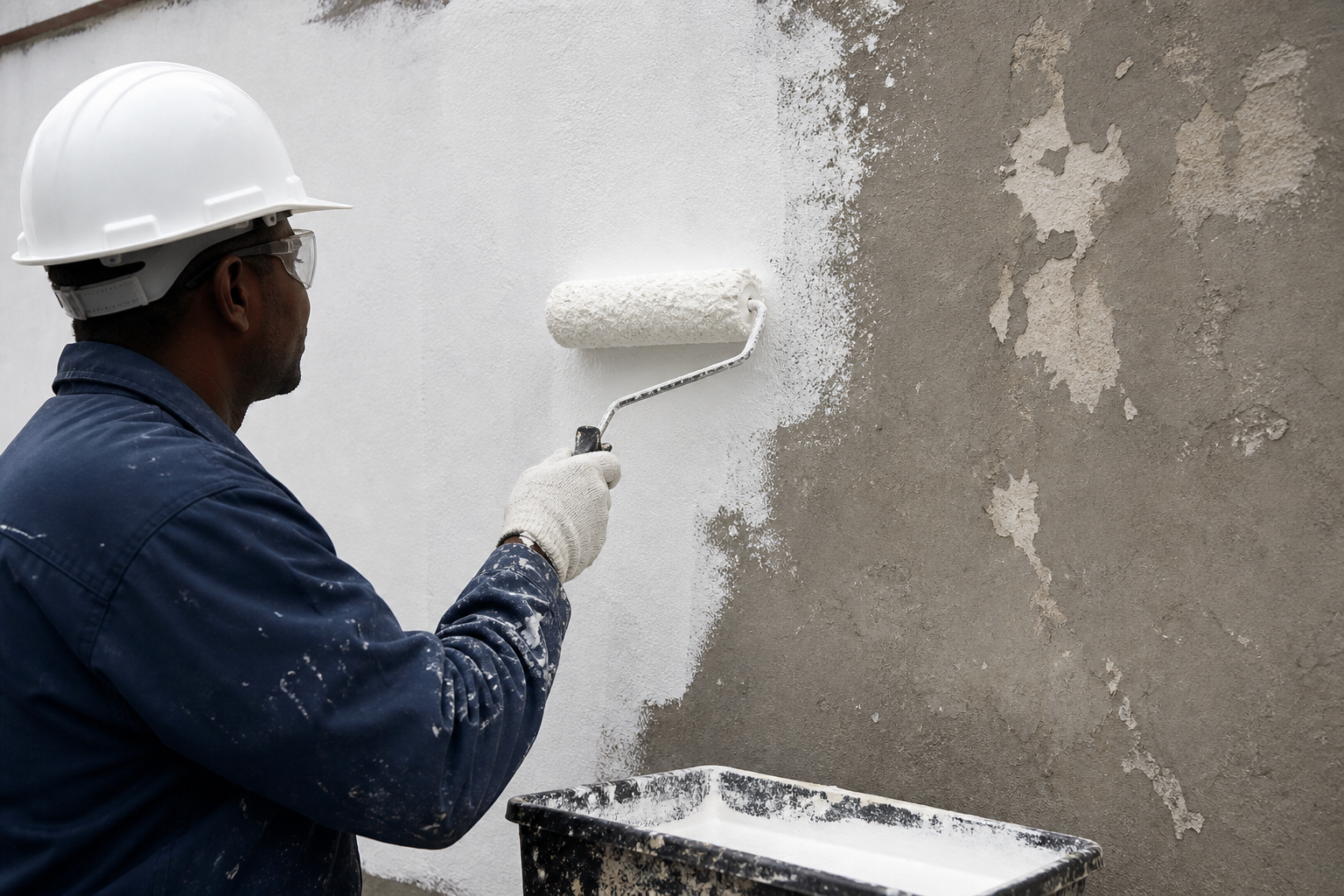
A coating can only perform as well as the surface beneath it.
A coating can only perform as well as the surface beneath it. Dust, chalk, salts, grease, loose rust, weak plaster, moisture and incompatible old coatings can all cause premature failure. Cleaning, repair, drying and correct priming are part of the coating system—not optional extras.
When should I contact ACRO for technical advice instead of choosing a product myself?
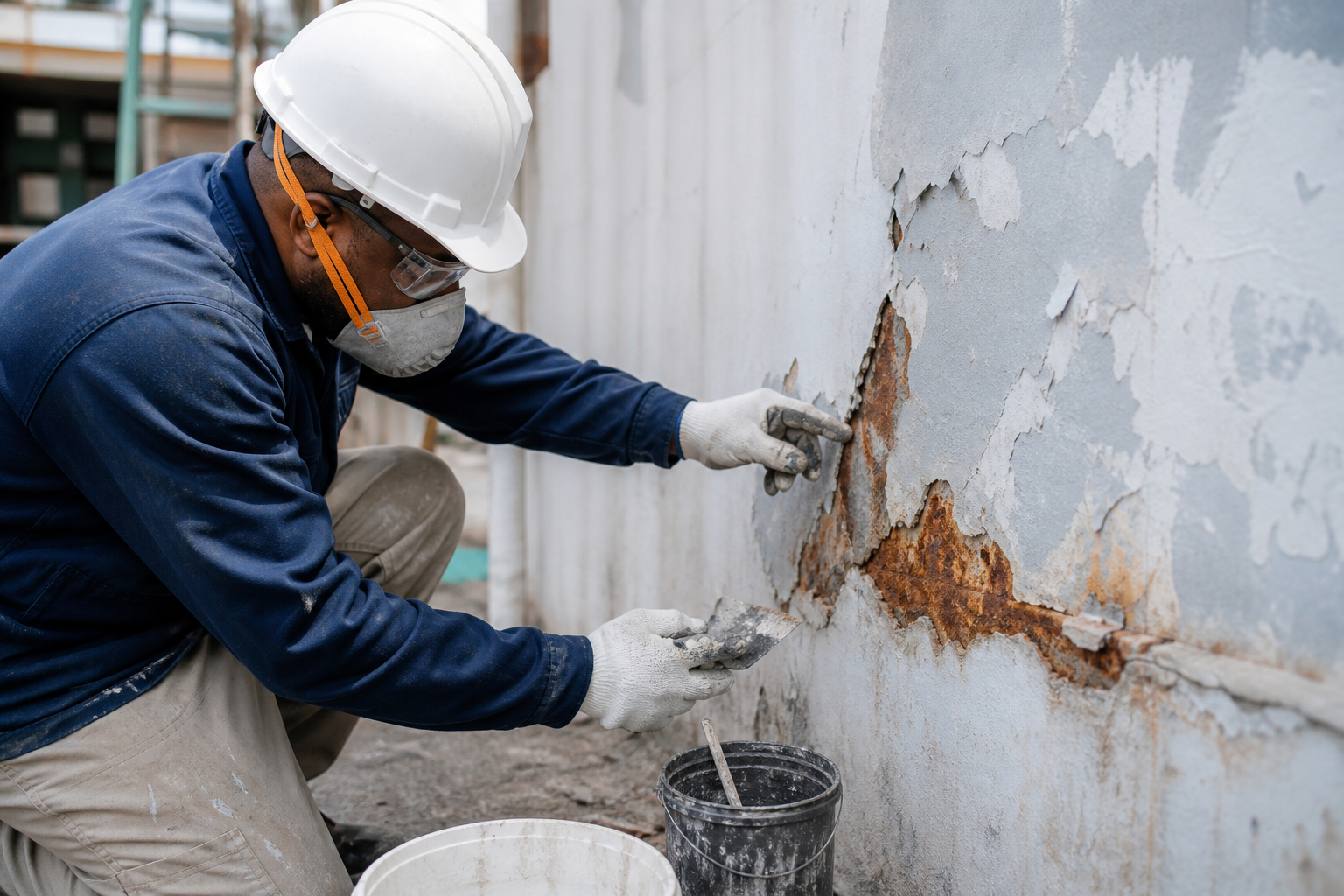
Ask for technical advice when the substrate is unknown, the old coating cannot be identified, there is active moisture or corrosion, the surface is chemically exposed, a 2K…
Ask for technical advice when the substrate is unknown, the old coating cannot be identified, there is active moisture or corrosion, the surface is chemically exposed, a 2K system is involved, waterproofing has repeatedly failed, or the job carries significant cost or warranty risk.
What is alligatoring in paint?
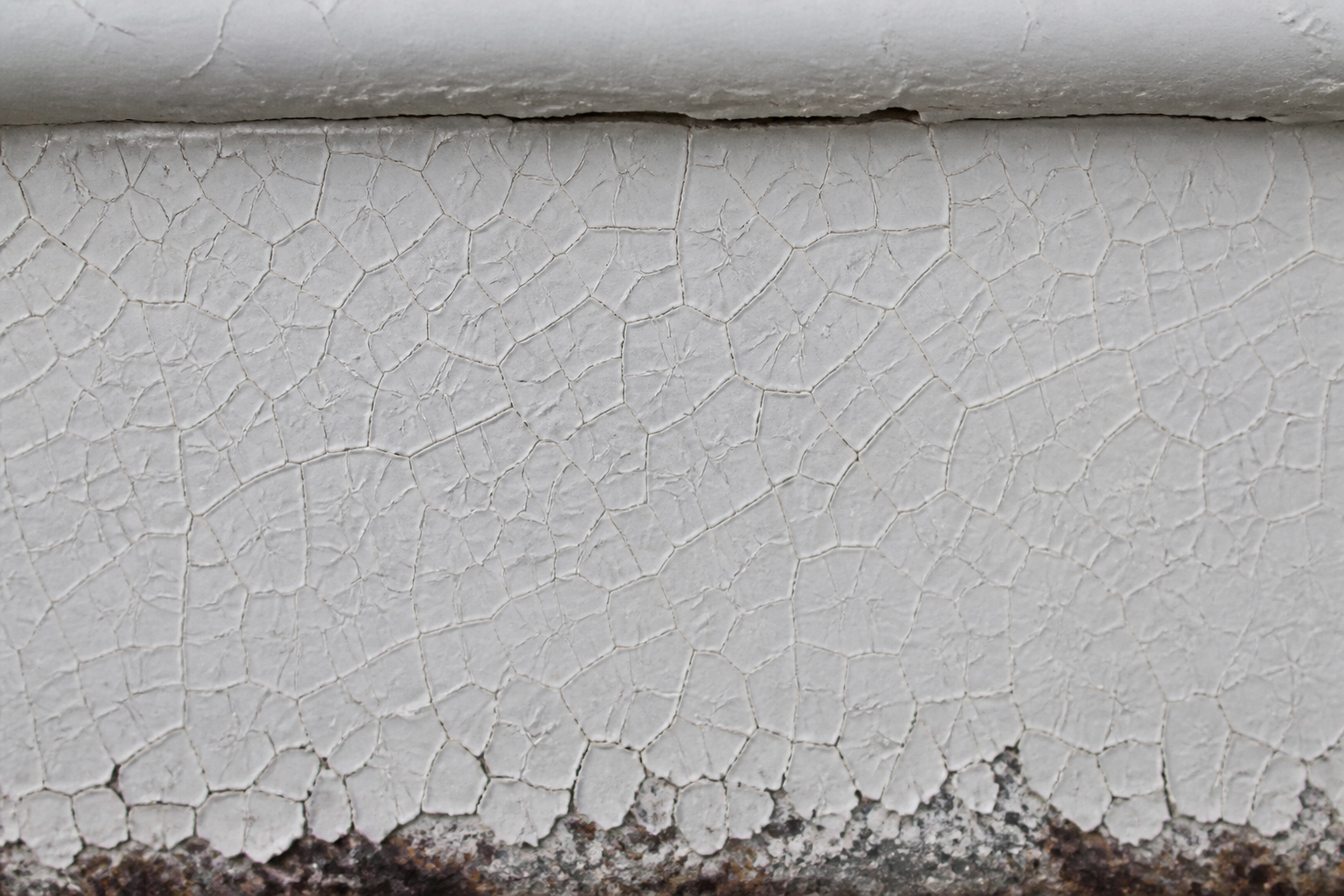
Alligatoring is a cracking pattern that resembles alligator skin.
Alligatoring is a cracking pattern that resembles alligator skin. It usually develops when an old coating becomes hard and brittle, when incompatible coats are applied over one another, or when a topcoat dries and moves differently from the layer beneath it. Remove loose and cracked coating, sand back to a sound edge, correct any compatibility problem, prime where required and repaint with a compatible system.
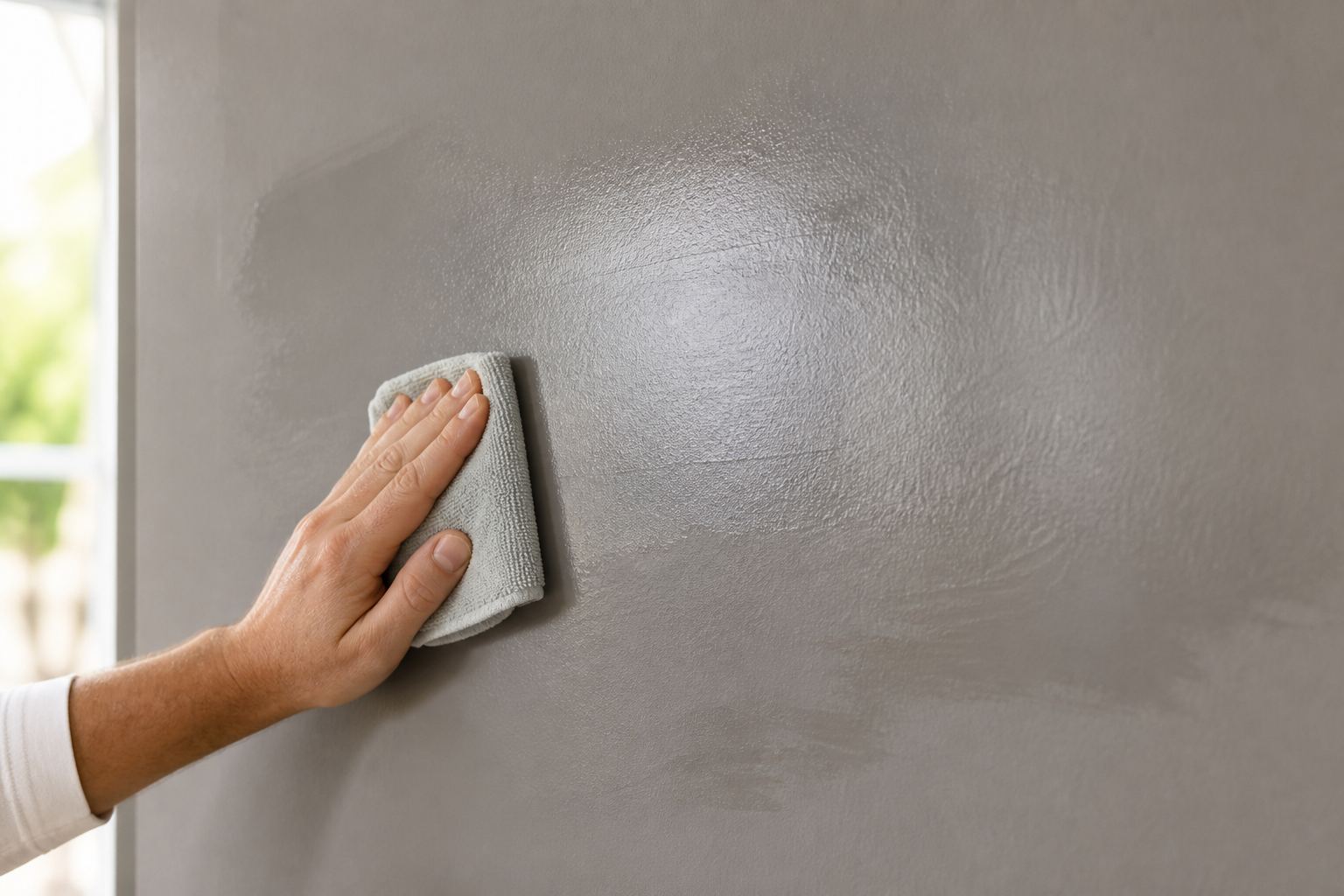
Why does a matt wall develop shiny patches after cleaning or rubbing?
This is called burnishing. Repeated rubbing, scrubbing or contact can polish a matt or low-sheen paint film and create unwanted shiny areas.
This is called burnishing. Repeated rubbing, scrubbing or contact can polish a matt or low-sheen paint film and create unwanted shiny areas. Avoid aggressive cleaning and abrasive cloths. If the appearance is unacceptable, clean the wall, prepare it correctly and recoat the affected area with the appropriate finish.
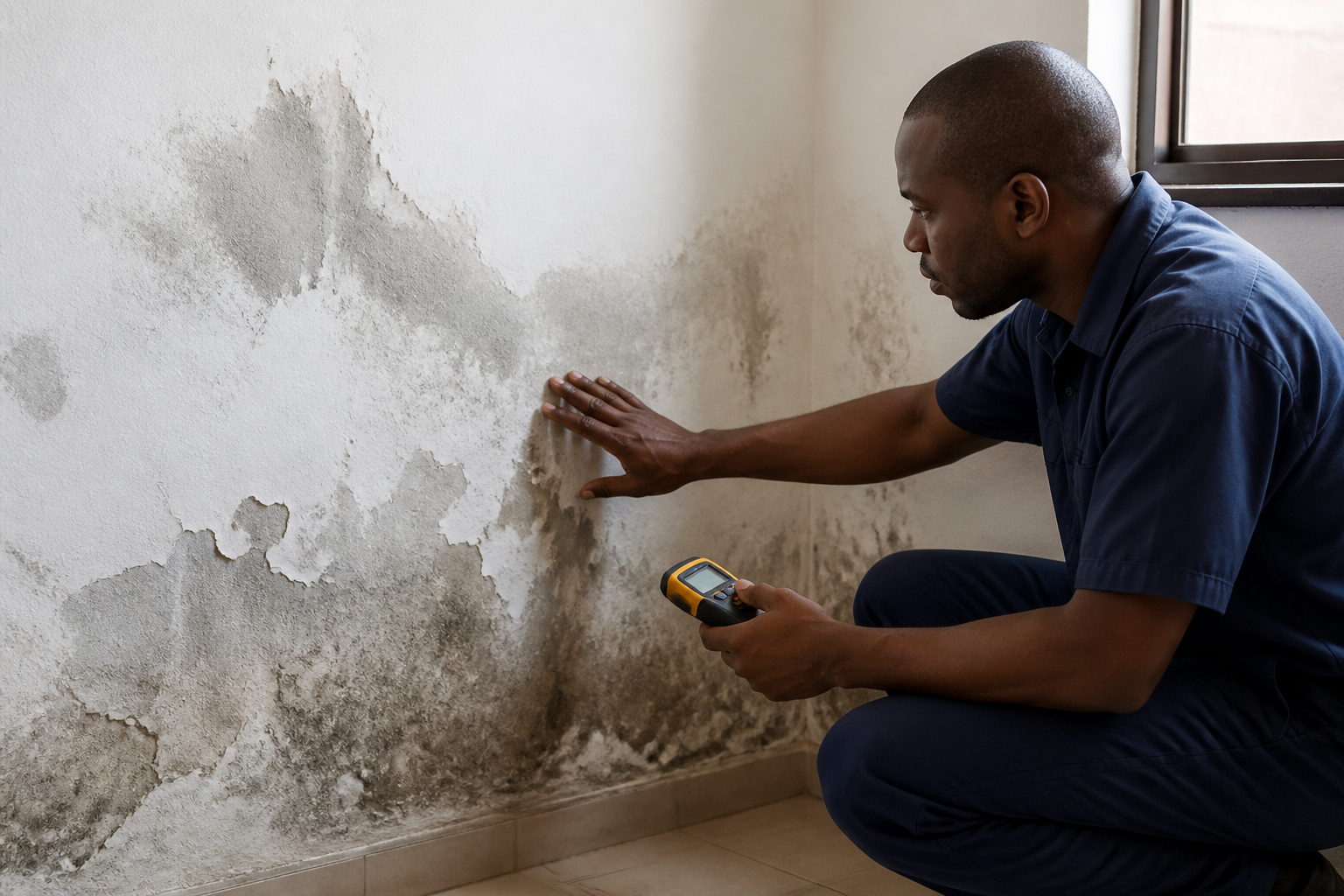
How can I tell if damp is causing my paint problem?
Damp often shows as persistent dark patches, blistering, peeling, salt deposits, mould growth or staining.
Damp often shows as persistent dark patches, blistering, peeling, salt deposits, mould growth or staining. The moisture may come from plumbing leaks, roof leaks, failed waterproofing, rising damp, exterior water penetration or condensation. Find and correct the moisture source before repairing and repainting the coating.
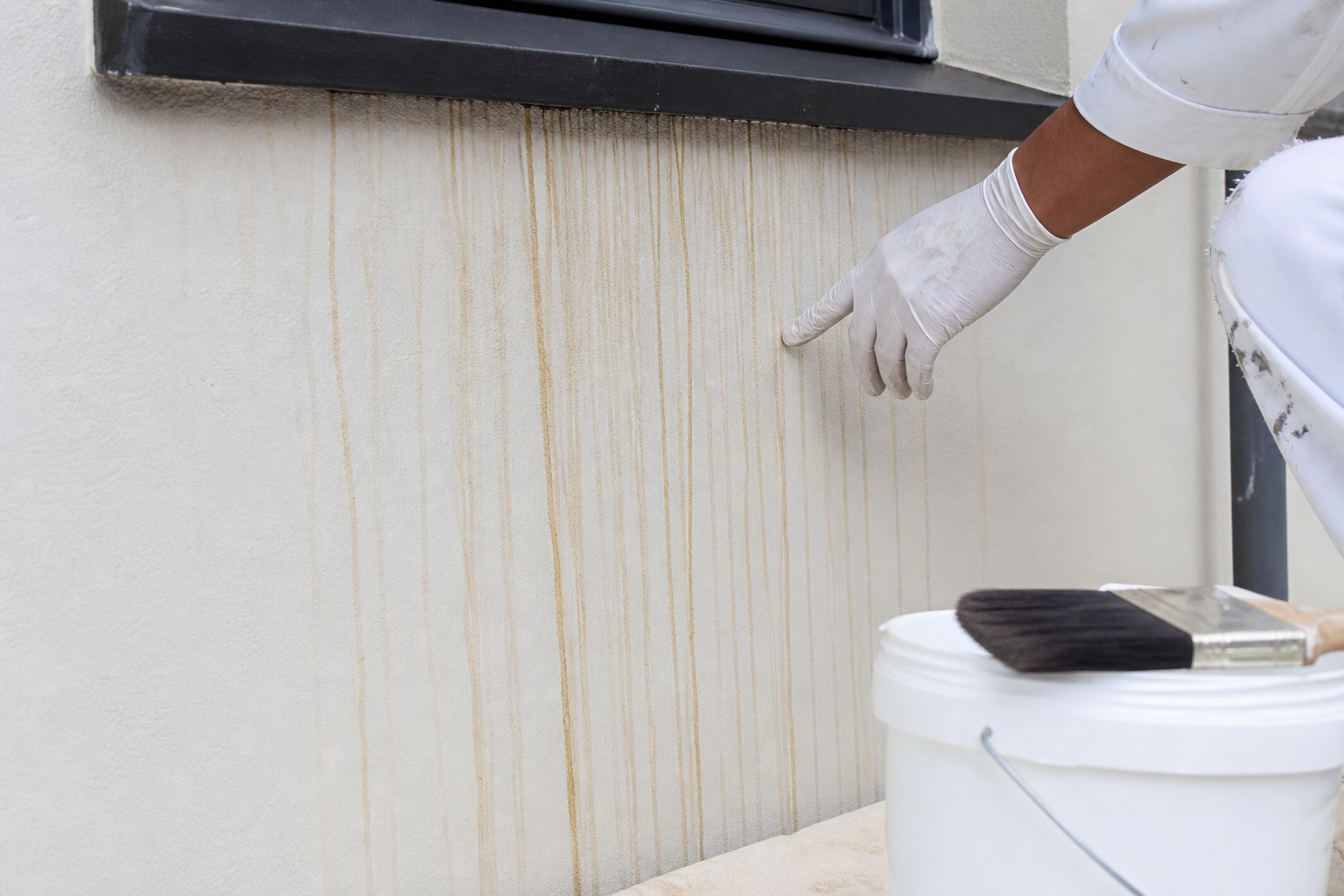
What is surfactant leaching?
Surfactant leaching appears as sticky, glossy, brownish or translucent streaks on some water-based coatings, especially when the paint dries in cool, humid or poorly ventilated…
Surfactant leaching appears as sticky, glossy, brownish or translucent streaks on some water-based coatings, especially when the paint dries in cool, humid or poorly ventilated conditions. Once the paint has fully cured, the residue can often be washed away gently. Improve ventilation and avoid painting when prolonged high humidity is expected.
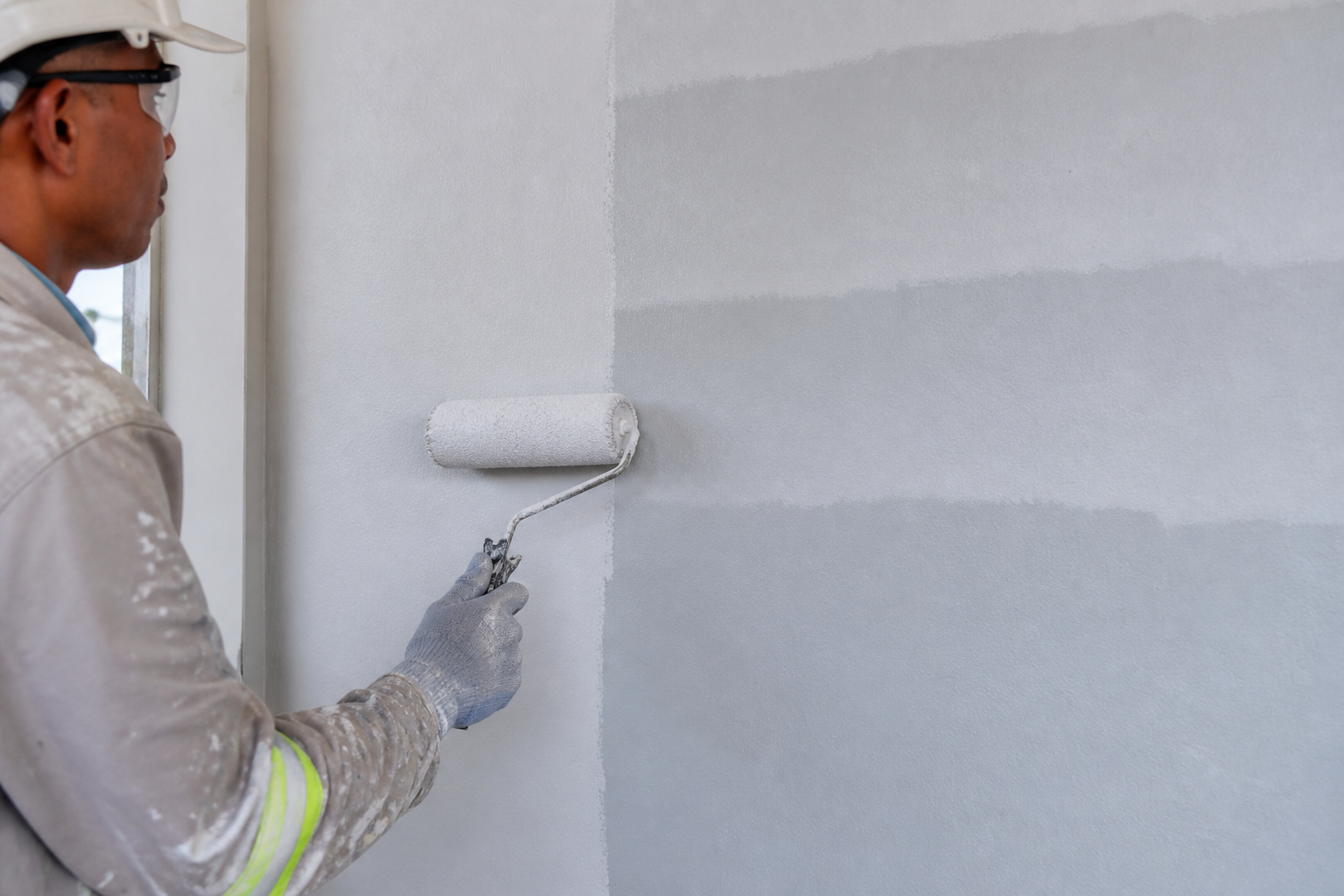
What causes lap marks on a painted wall?
Lap marks are darker or uneven bands where one section of paint has partly dried before the next section overlaps it.
Lap marks are darker or uneven bands where one section of paint has partly dried before the next section overlaps it. They are more likely in hot, dry or windy conditions or when the painter does not maintain a wet edge. Work in manageable sections, keep a wet edge and avoid overworking paint that has started to set.
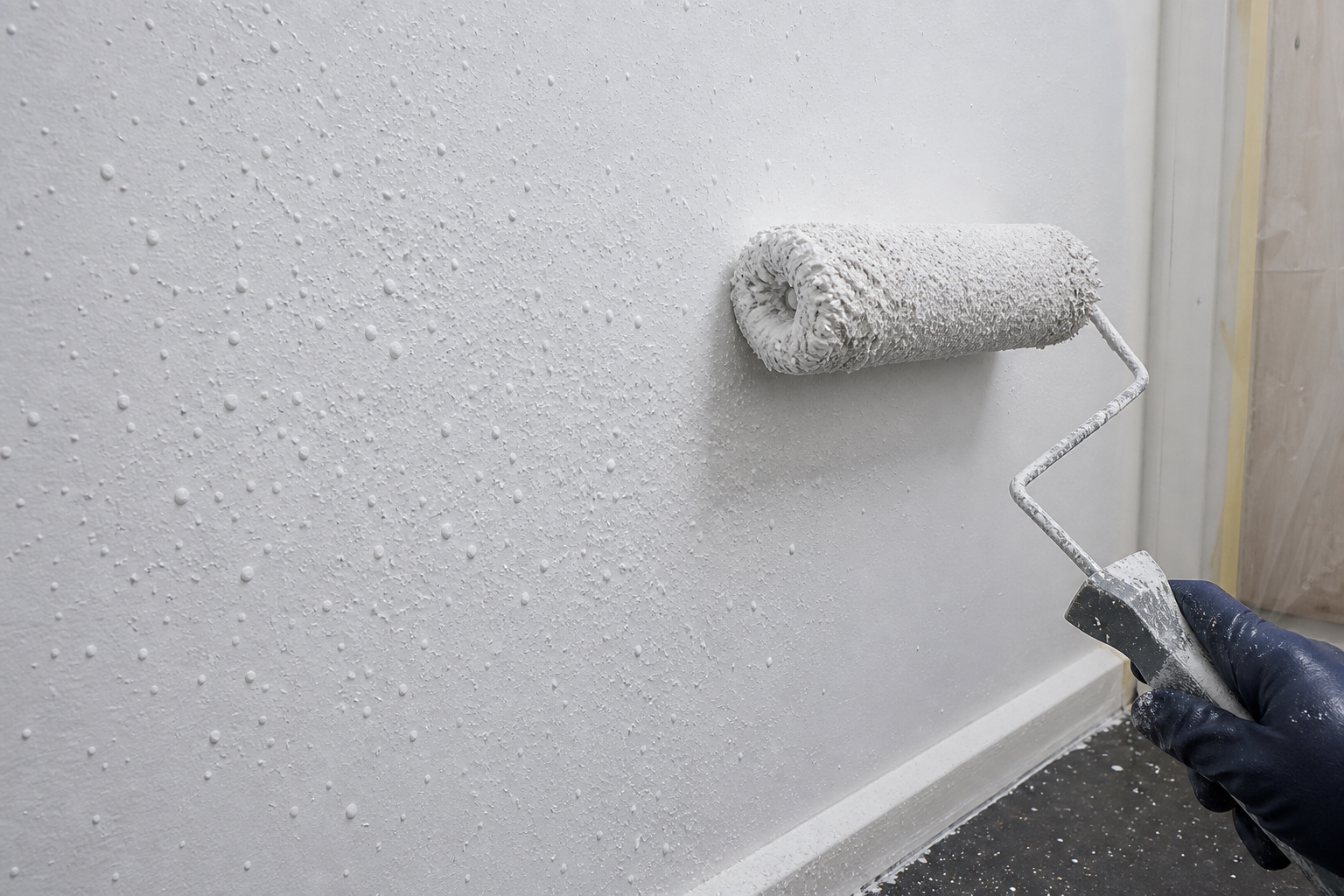
Why is my roller spraying tiny paint droplets everywhere?
Roller splatter is often caused by using the wrong roller cover, overloading the roller, rolling too fast, excessive thinning or using a very coarse roller on a smooth surface.
Roller splatter is often caused by using the wrong roller cover, overloading the roller, rolling too fast, excessive thinning or using a very coarse roller on a smooth surface. Use a roller suited to the coating and substrate, load it evenly and apply with controlled pressure and speed.
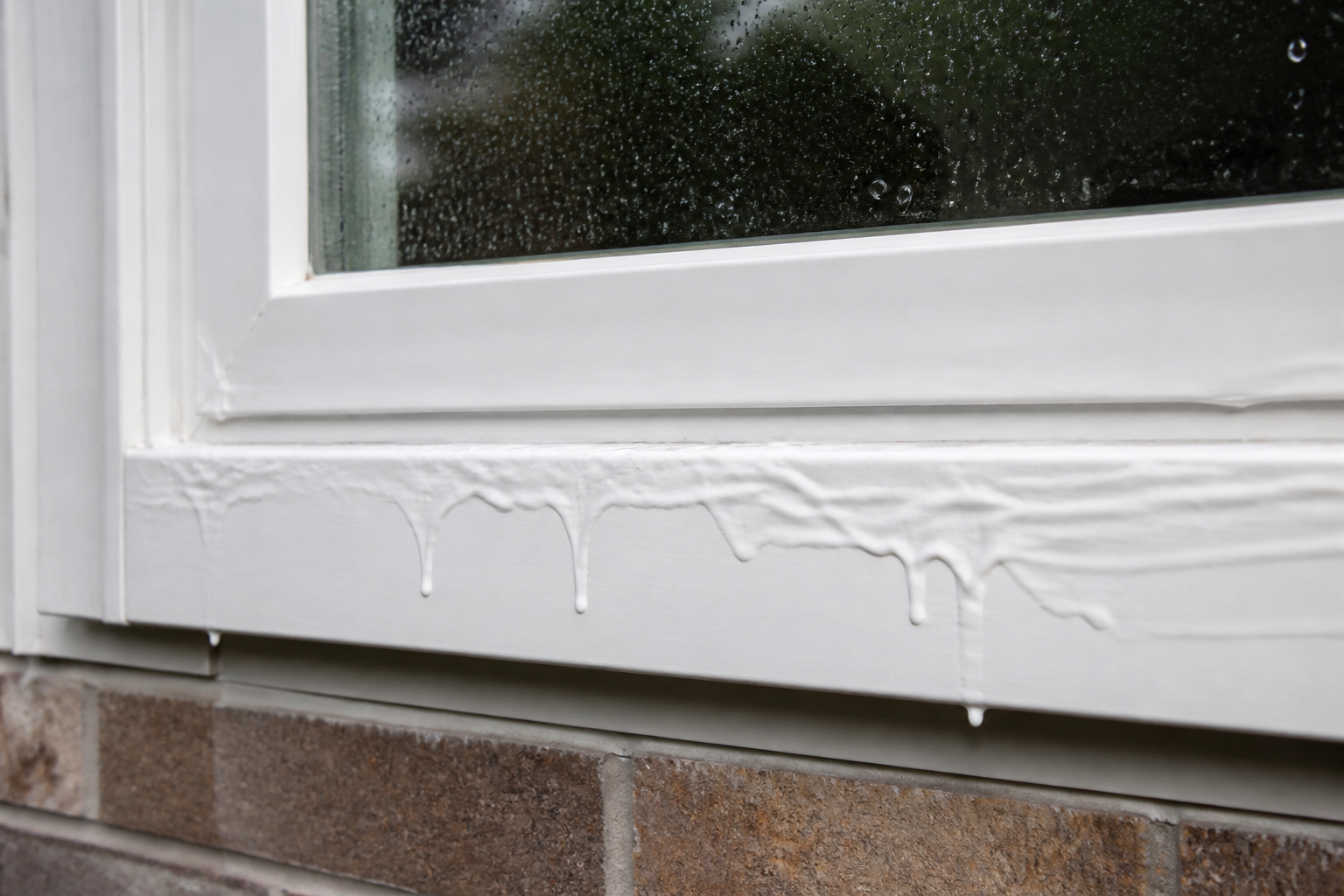
Why has paint wrinkled or run on a window frame after rain?
If rain or heavy moisture reaches a freshly applied coating before it has developed sufficient cure, the film may wrinkle, run, soften or lose adhesion.
If rain or heavy moisture reaches a freshly applied coating before it has developed sufficient cure, the film may wrinkle, run, soften or lose adhesion. Remove the damaged material once dry, prepare the surface again and repaint only when suitable dry weather is expected for the required curing period.
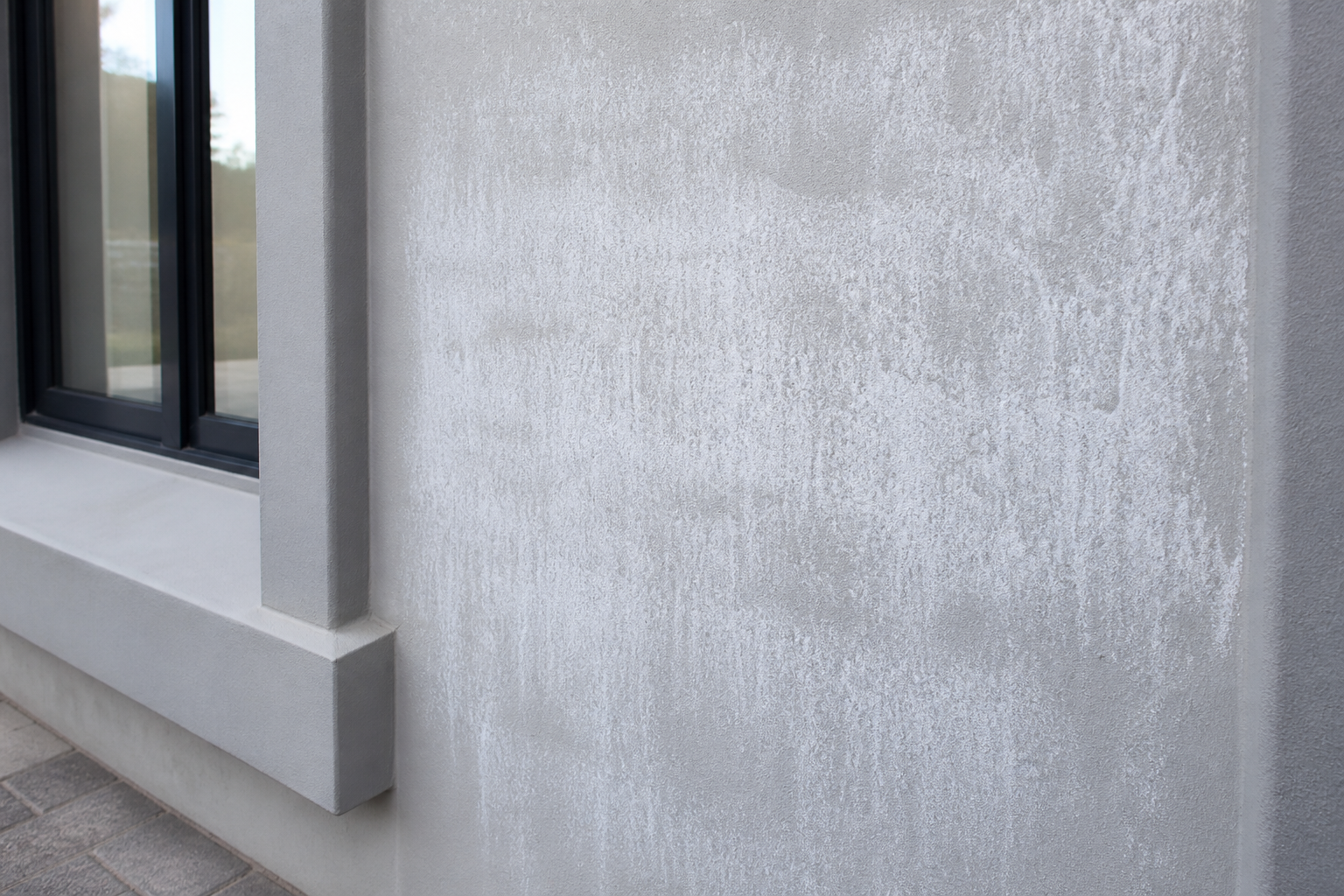
What is frosting on exterior paint?
Frosting is a whitish surface deposit or appearance that can develop when coatings are exposed to very cold, damp conditions during early drying or curing.
Frosting is a whitish surface deposit or appearance that can develop when coatings are exposed to very cold, damp conditions during early drying or curing. Do not paint onto very cold or wet surfaces. Allow the coating and substrate to dry fully, clean the affected surface and assess adhesion before recoating.
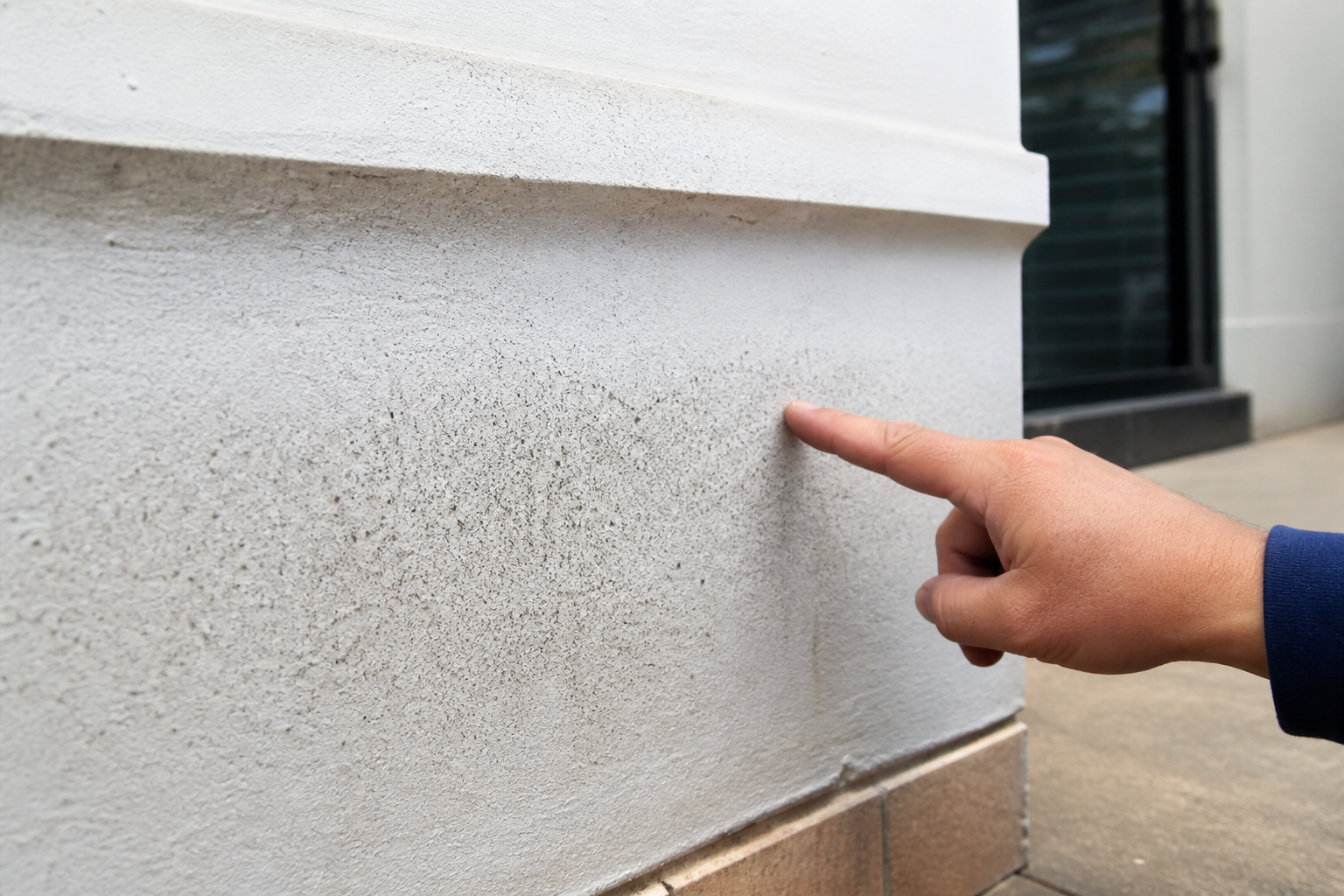
Why does dirt stick to newly painted exterior walls?
Dirt pick-up occurs when dust, pollution or airborne particles adhere easily to a coating that remains soft or tacky, or when the surface texture traps contamination.
Dirt pick-up occurs when dust, pollution or airborne particles adhere easily to a coating that remains soft or tacky, or when the surface texture traps contamination. Slow drying, unsuitable weather, excessive film thickness and some low-sheen or flexible coatings can increase the effect. Let the coating cure fully and clean it according to the product instructions.
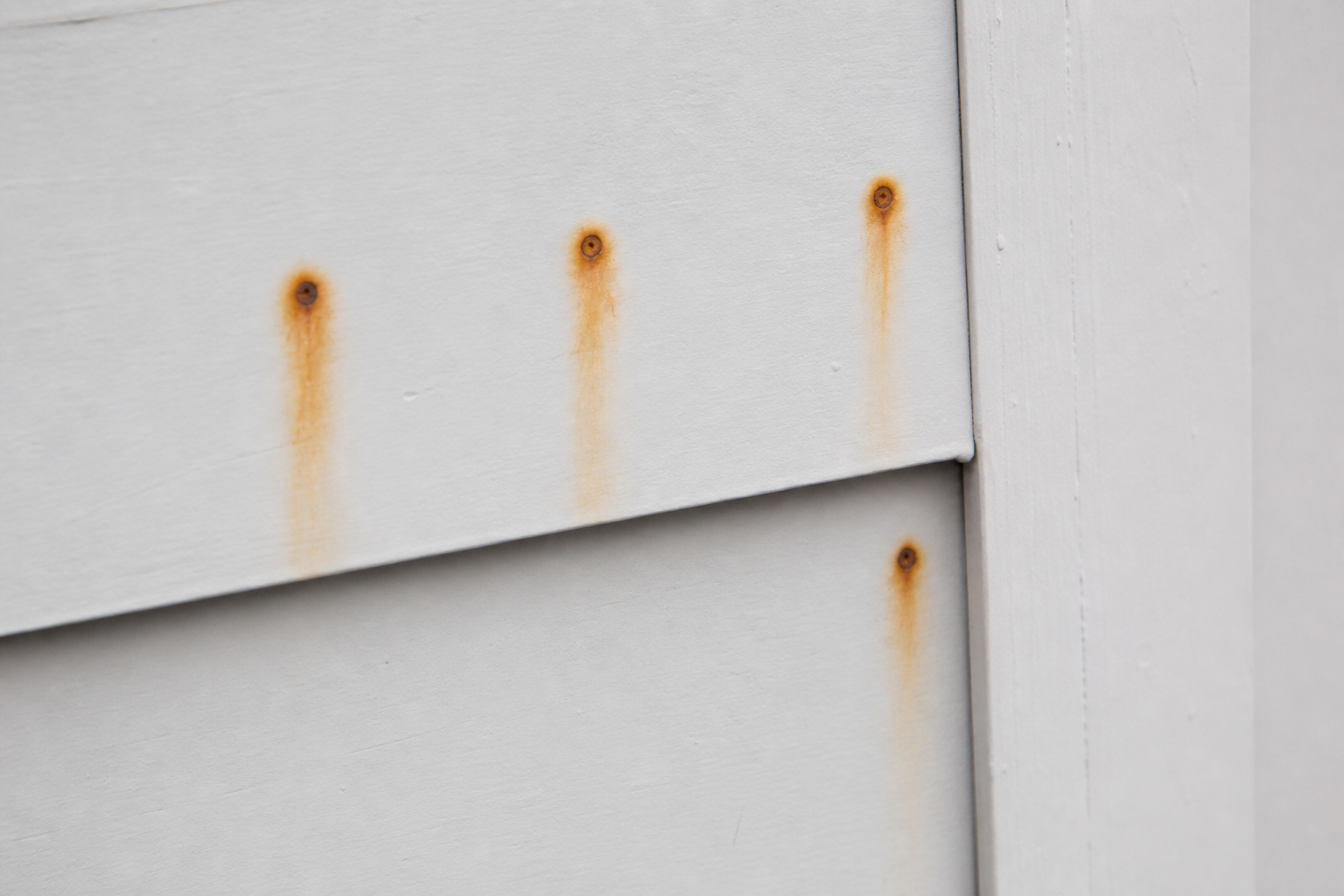
Why are rust spots appearing over nail heads?
Nail-head staining occurs when unprotected or corroding steel fasteners rust and the corrosion products bleed through the paint.
Nail-head staining occurs when unprotected or corroding steel fasteners rust and the corrosion products bleed through the paint. Remove loose rust, clean the fastener, spot-prime it with a suitable anti-corrosive primer and then restore the coating system.
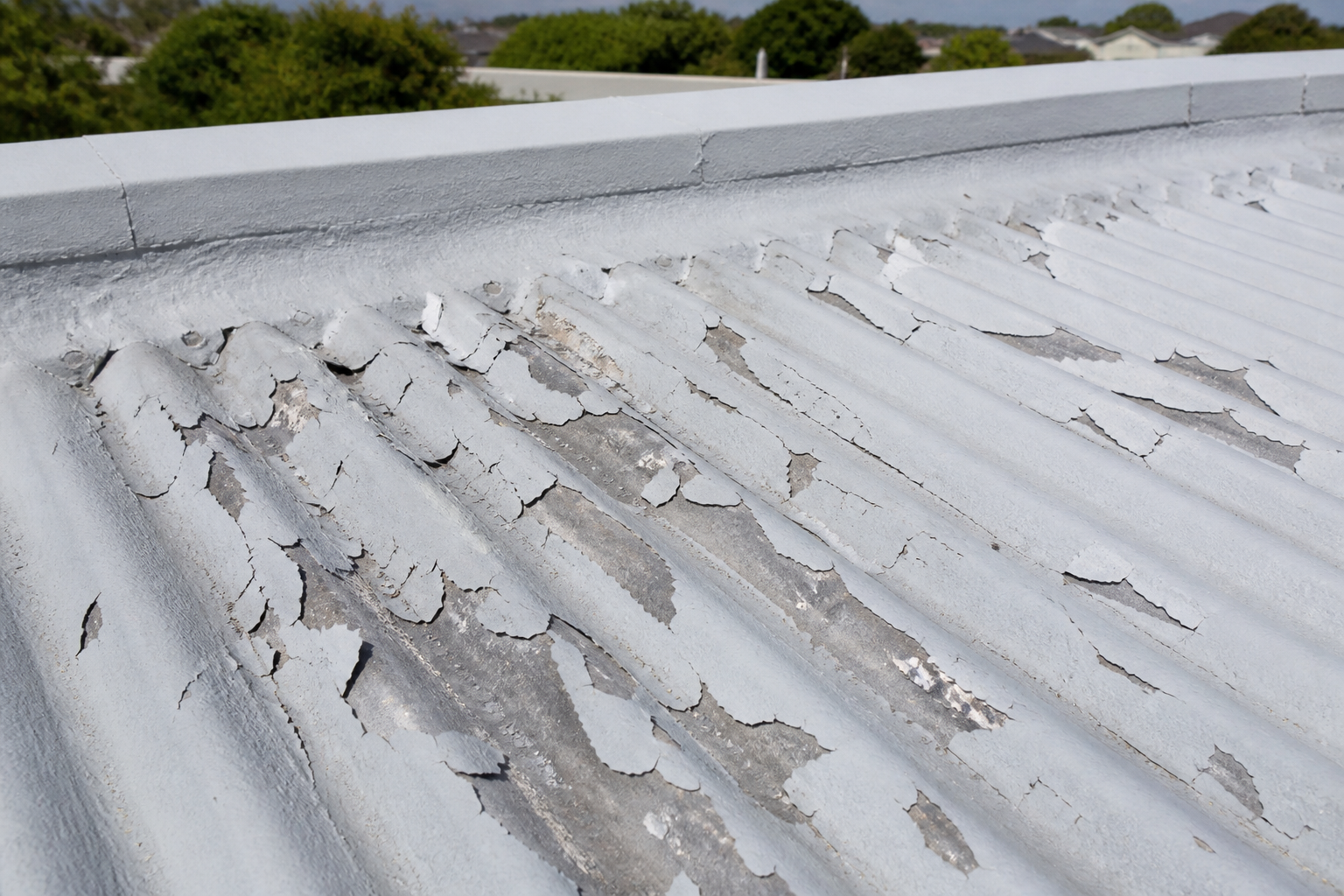
Why is roof paint flaking?
Roof coatings can flake when the underlying surface is chalky, rusty, dirty, damp or poorly bonded, or when strong thermal movement stresses a weak coating system.
Roof coatings can flake when the underlying surface is chalky, rusty, dirty, damp or poorly bonded, or when strong thermal movement stresses a weak coating system. Remove loose coating, clean and stabilise the substrate, treat corrosion or biological growth where present and rebuild the coating system on a sound dry surface.
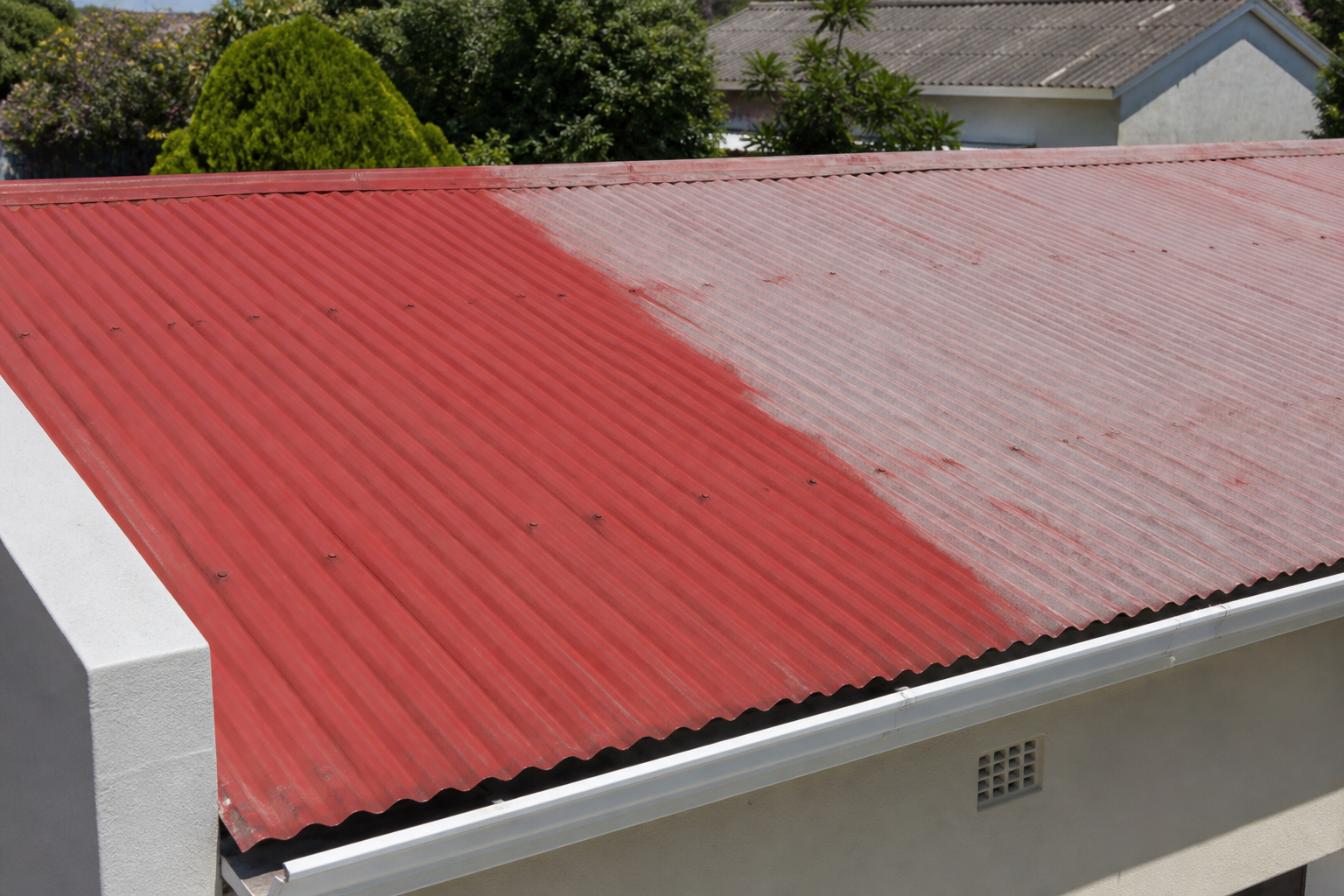
Why has my roof colour faded or changed?
Roof colours are exposed to intense sunlight and weathering.
Roof colours are exposed to intense sunlight and weathering. UV radiation can gradually alter less light-fast pigments, while chalking can make a surface look lighter even when the pigment colour underneath remains. Clean the surface first to determine whether the problem is chalking, dirt or true fading.
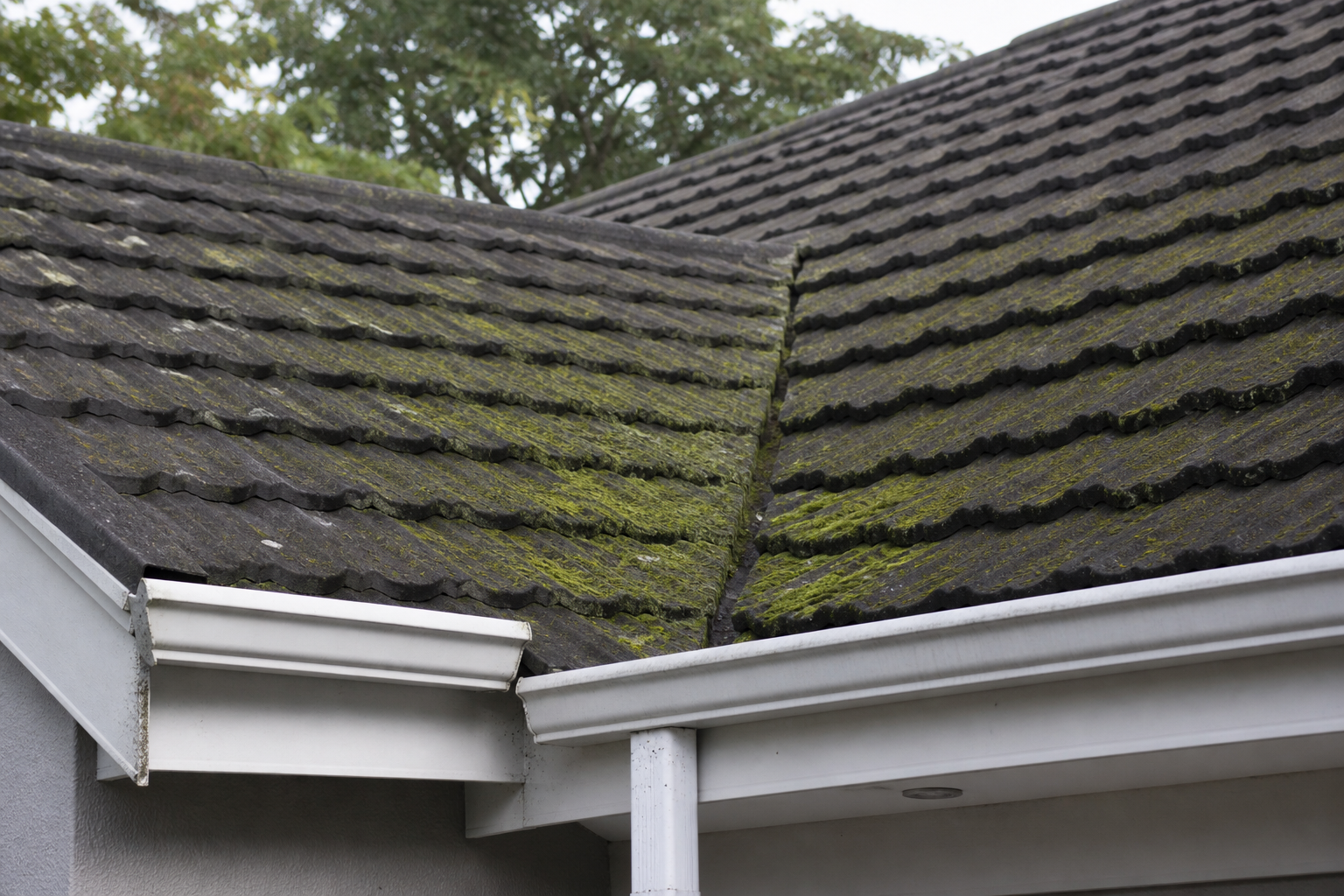
Why is algae or moss growing on my roof?
Algae and moss favour damp, shaded areas where water dries slowly, such as valleys, overlaps and south-facing sections.
Algae and moss favour damp, shaded areas where water dries slowly, such as valleys, overlaps and south-facing sections. Correct drainage or water-retention problems where possible, remove growth safely, treat the surface with an appropriate biocidal cleaner and allow it to dry before recoating.
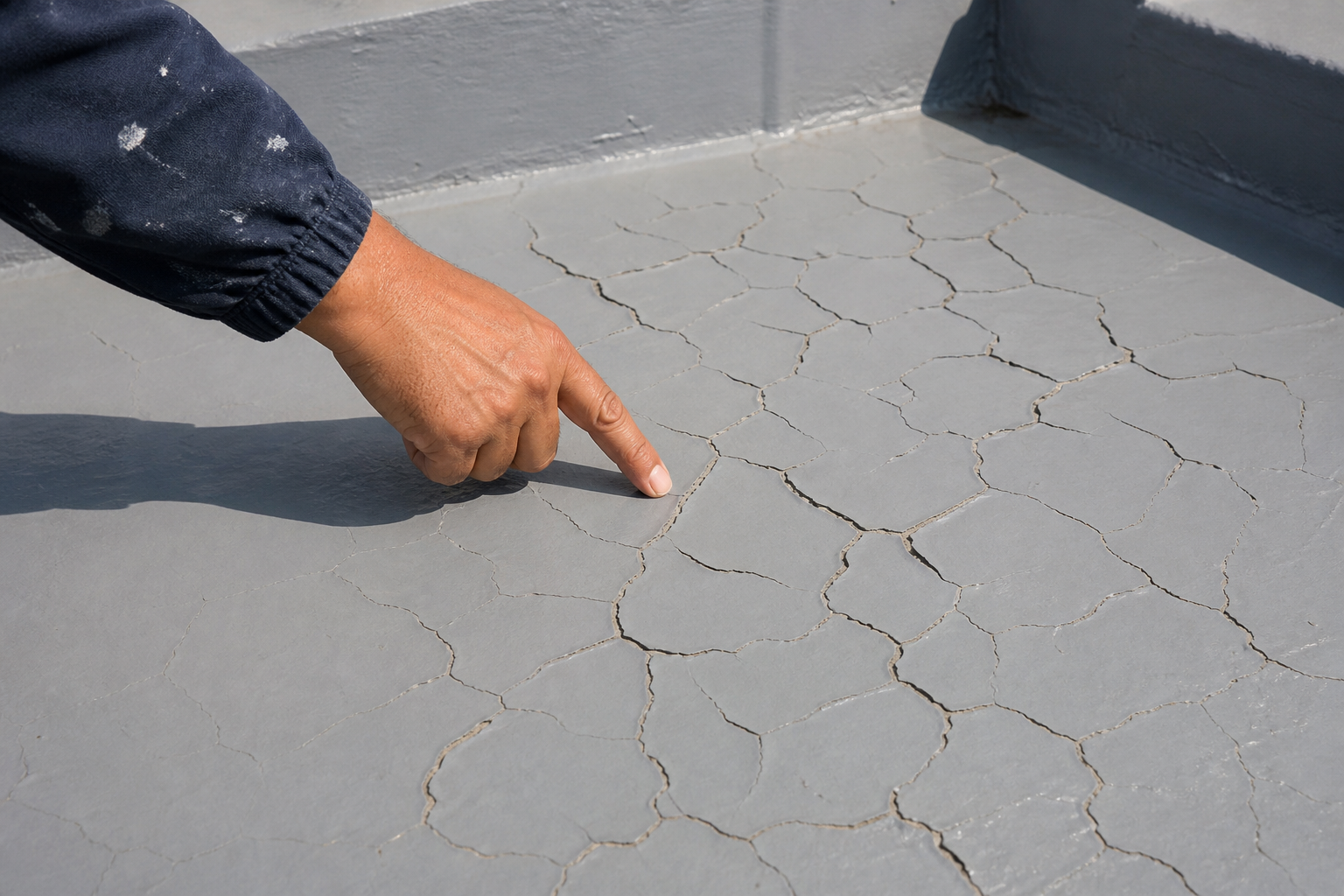
Why has a hard topcoat cracked over flexible waterproofing?
Different coatings expand and contract at different rates.
Different coatings expand and contract at different rates. A hard or brittle topcoat applied over a soft, flexible waterproofing layer may not accommodate the same movement and can crack or lose adhesion. Use only coating layers that are compatible as a complete system.
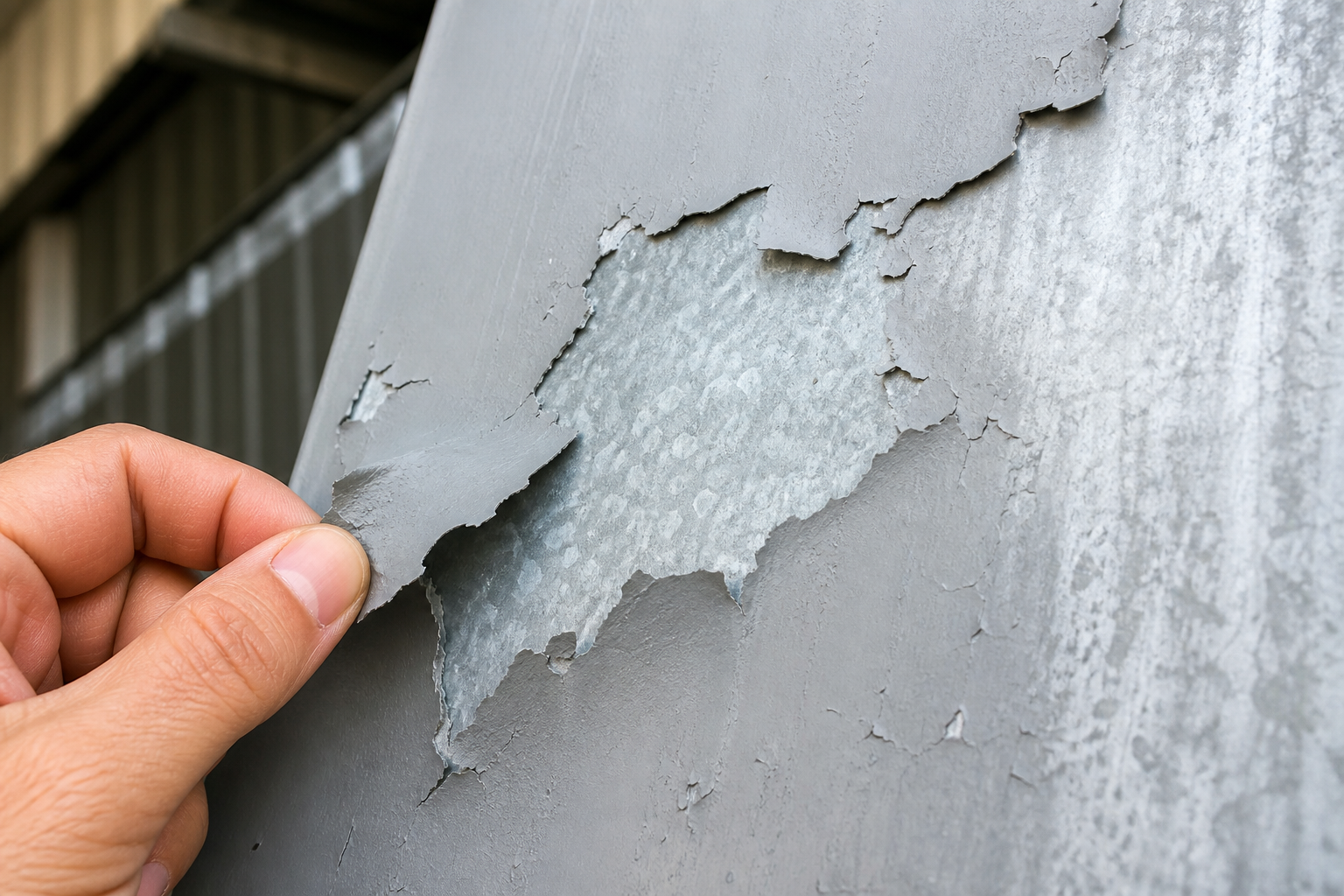
Why is paint peeling off galvanised steel in sheets?
This is a delamination or adhesion failure.
This is a delamination or adhesion failure. Galvanised steel requires careful cleaning and a compatible coating system because oils, passivation treatments and the zinc surface itself can interfere with adhesion. Remove failed coating, prepare the galvanised surface correctly and use a suitable primer or direct-to-metal system intended for galvanised steel.
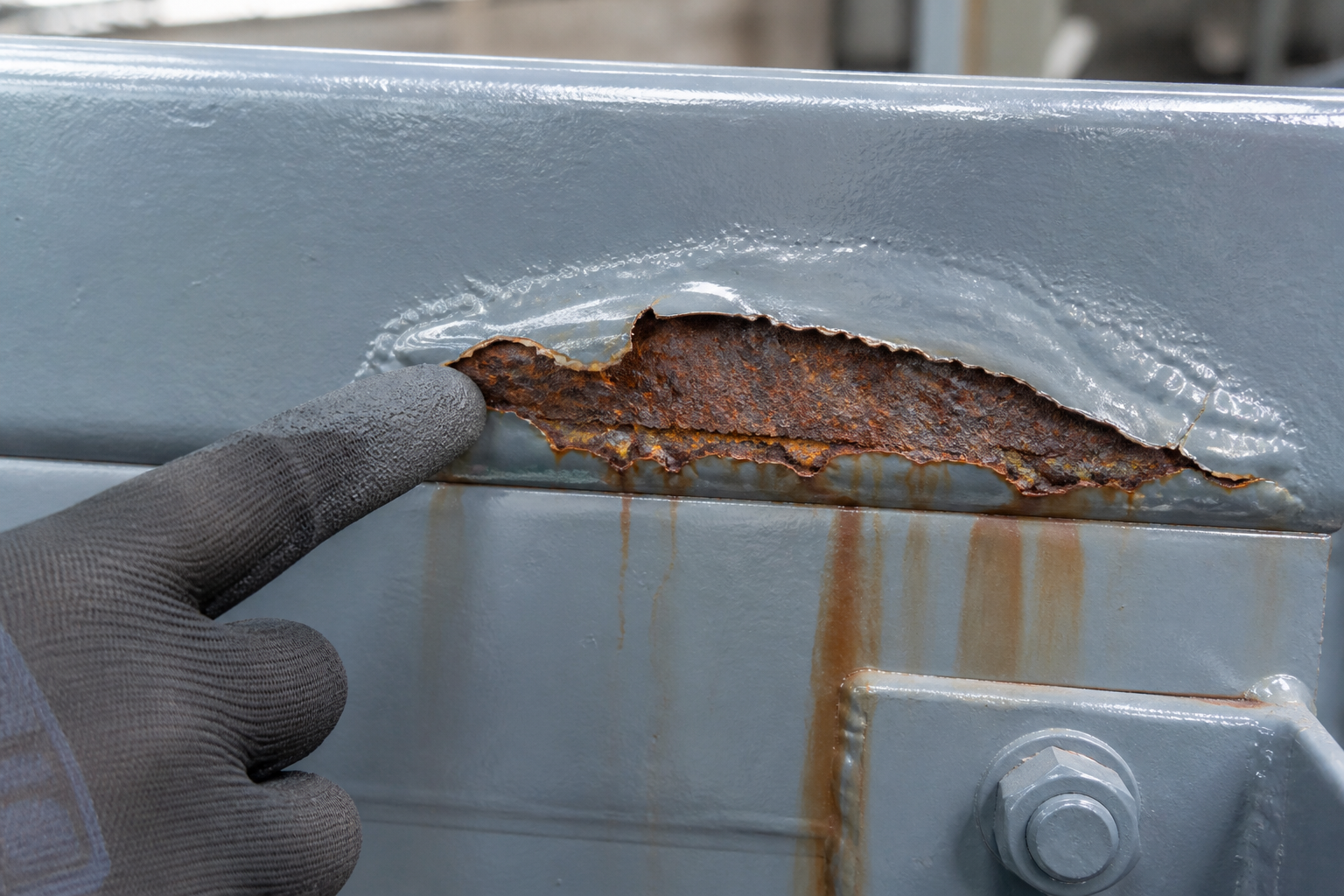
What is underfilm corrosion?
Underfilm corrosion is rust that spreads beneath an apparently intact coating, often starting at a scratch, edge, pinhole, fastener or damaged area.
Underfilm corrosion is rust that spreads beneath an apparently intact coating, often starting at a scratch, edge, pinhole, fastener or damaged area. Moisture and salts enter at the defect and corrosion creeps sideways under the paint. Remove coating back to sound, clean and prepare the steel properly, then rebuild the anti-corrosive coating system.
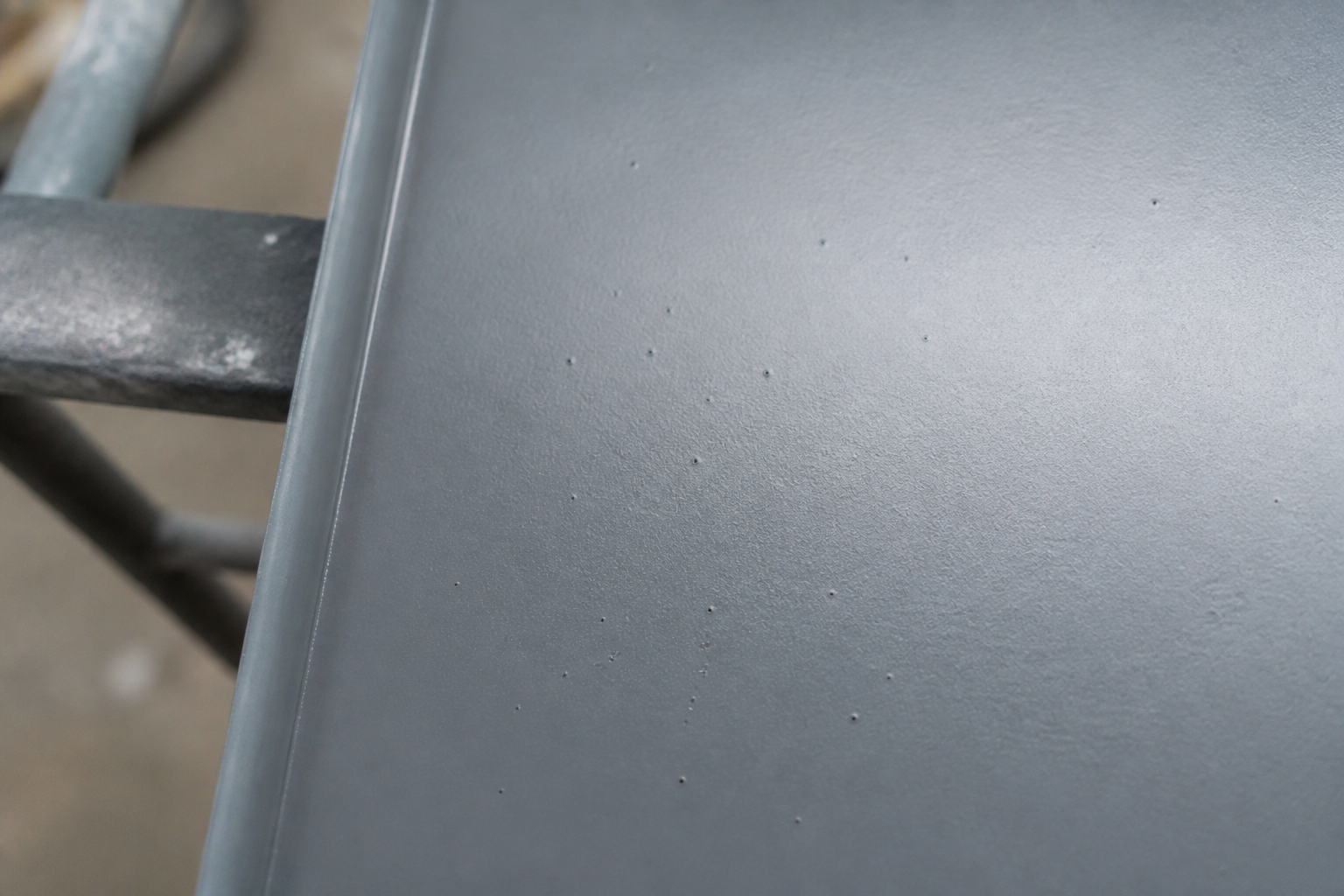
Why are tiny pinholes forming in a sprayed metal coating?
Pinholes can form when trapped air or solvent escapes through a coating as it dries.
Pinholes can form when trapped air or solvent escapes through a coating as it dries. Excessive film thickness, porous contamination, incorrect thinner, fast evaporation, foaming or poor spray technique can contribute. Correct the spray setup, film build and solvent system before recoating.
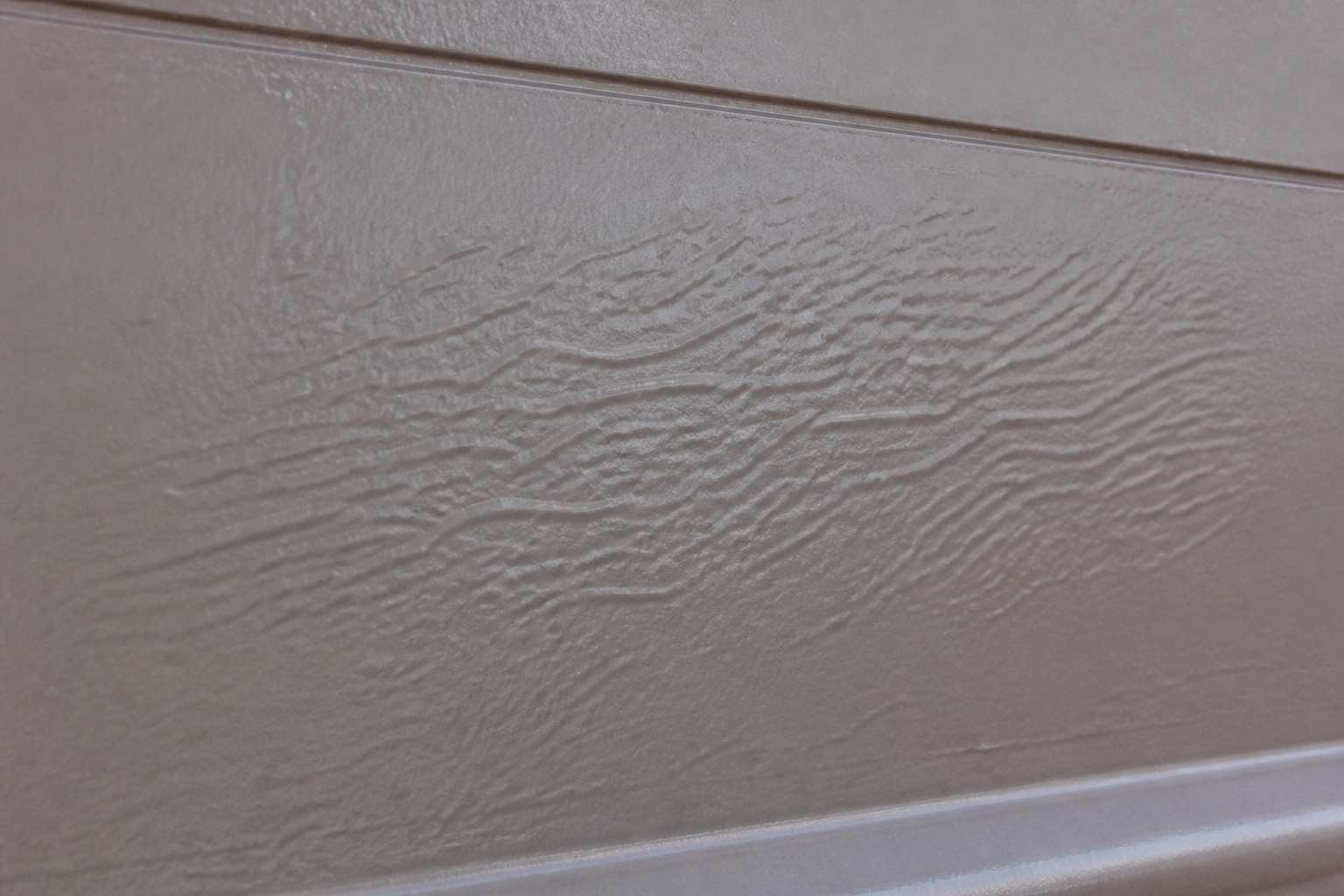
Why has the paint wrinkled after the second coat?
Wrinkling can occur when the surface of a coating skins over while the material underneath is still soft, or when a second coat is applied too soon over an incompletely dried…
Wrinkling can occur when the surface of a coating skins over while the material underneath is still soft, or when a second coat is applied too soon over an incompletely dried first coat. Heavy film build, incompatible solvents and cool drying conditions can worsen the problem. Let the coating cure, remove or sand defective material and recoat within the correct recoat window.
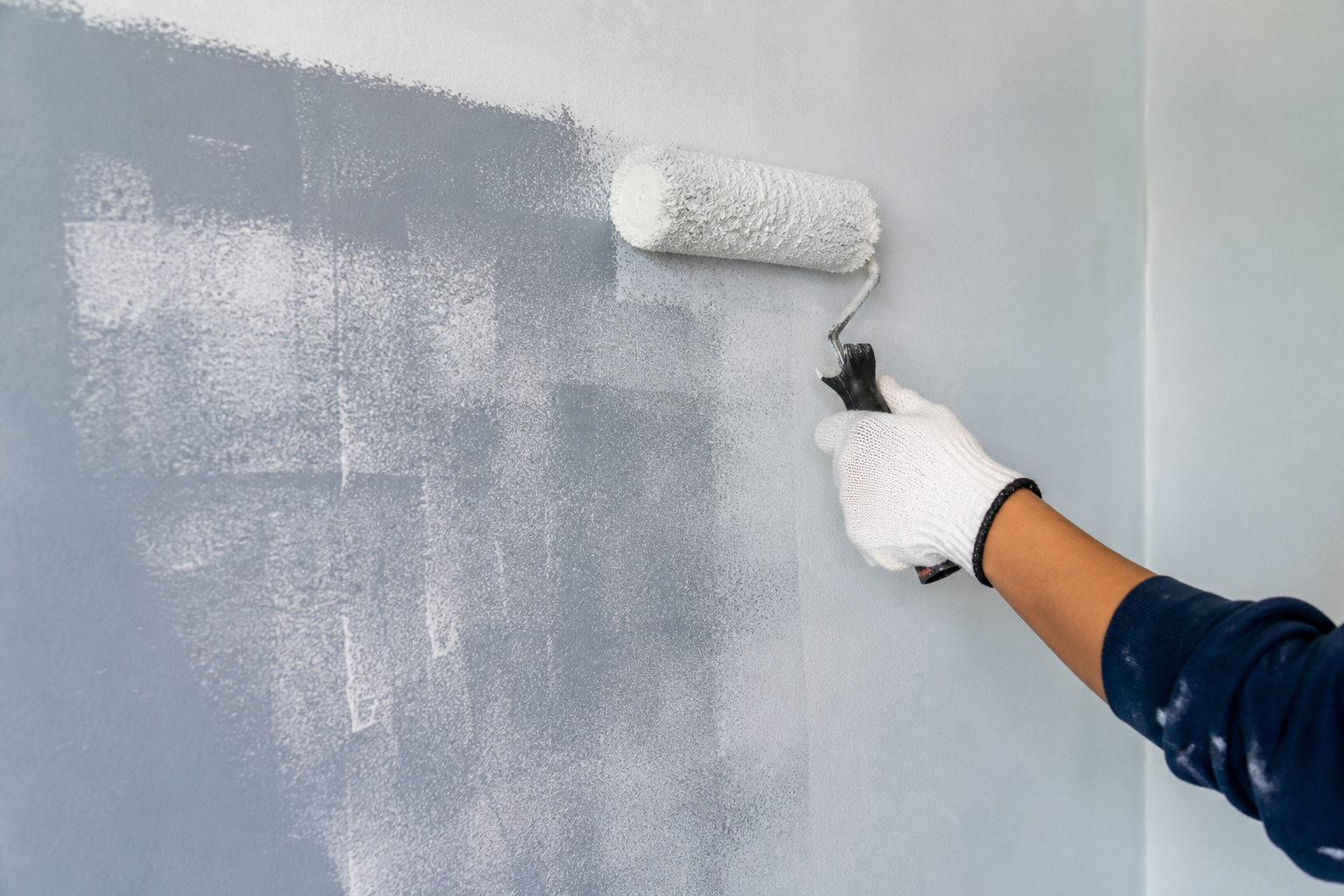
Why is the colour underneath still showing through?
This is poor hiding or poor opacity.
This is poor hiding or poor opacity. Common causes include excessive thinning, spreading the paint too far, too few coats, a large colour change, an unsuitable base or primer, and uneven substrate absorption. Apply the correct film build and use the appropriate primer or tint base where required.
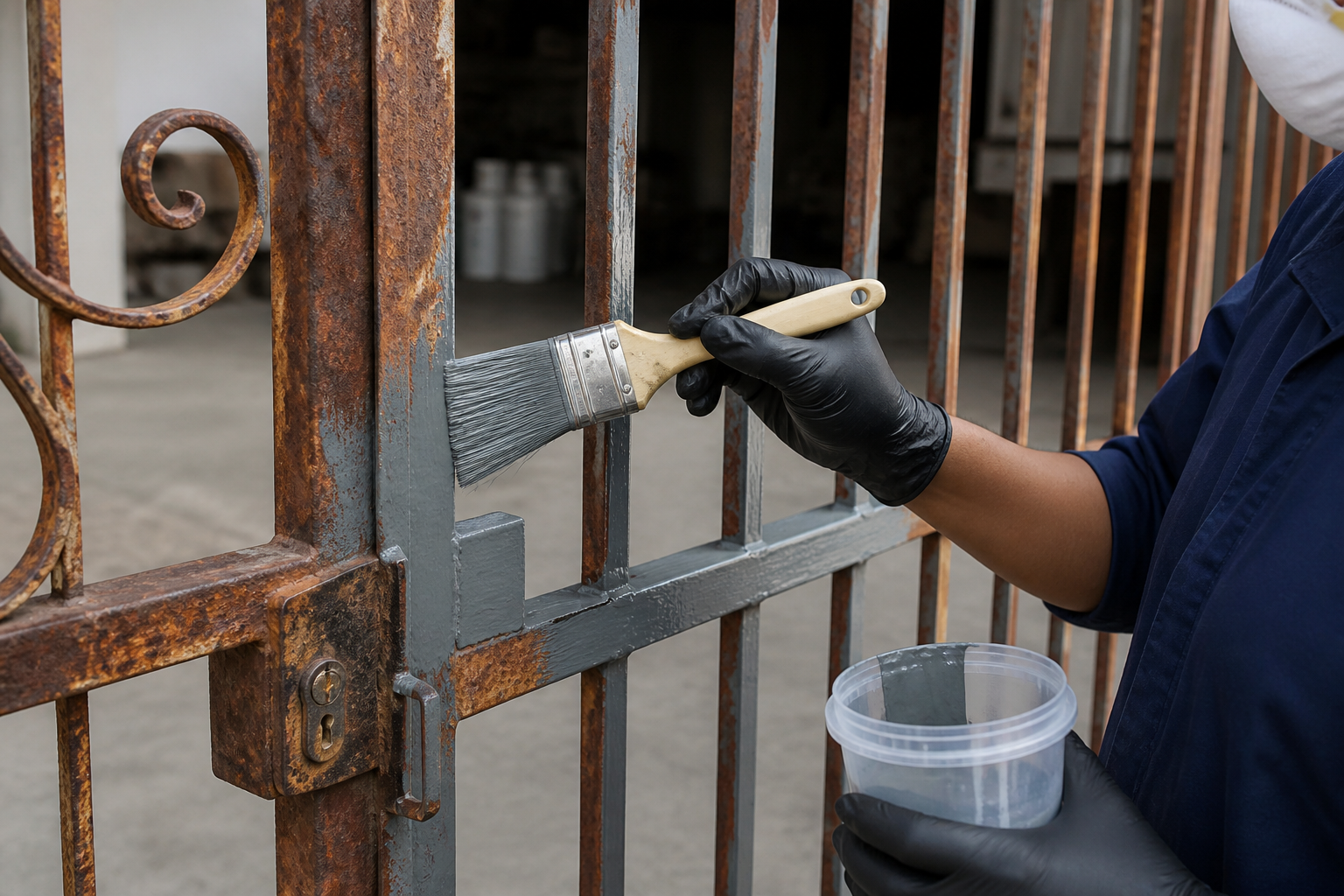
What paint should I use on a rusted steel gate?
Remove loose rust, scale, dirt and grease first.
Remove loose rust, scale, dirt and grease first. For a conventional system, prime the prepared steel with the appropriate ACRO anti-corrosive metal primer and then apply a compatible topcoat such as Quick Drying Enamel. Where a suitable direct-to-metal system is specified, follow that product’s preparation and coat requirements.
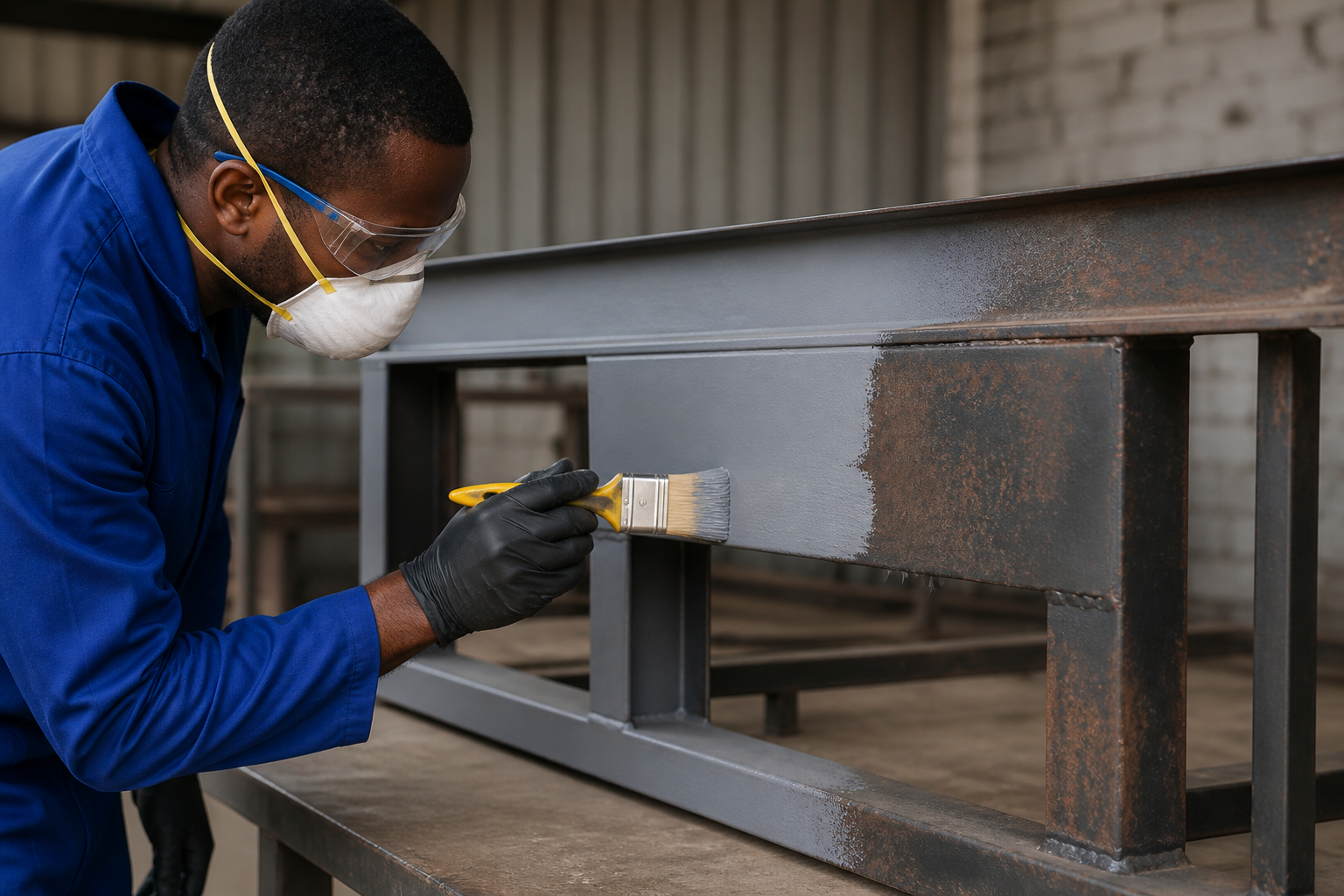
Do I need a primer before applying Quick Drying Enamel?
Usually yes on bare steel.
Usually yes on bare steel. Quick Drying Enamel is a topcoat and performs best over a correctly prepared, compatible primer unless the specific coating system states that it can be applied direct to metal. Previously painted sound surfaces may need cleaning, sanding and spot-priming rather than a full primer coat.
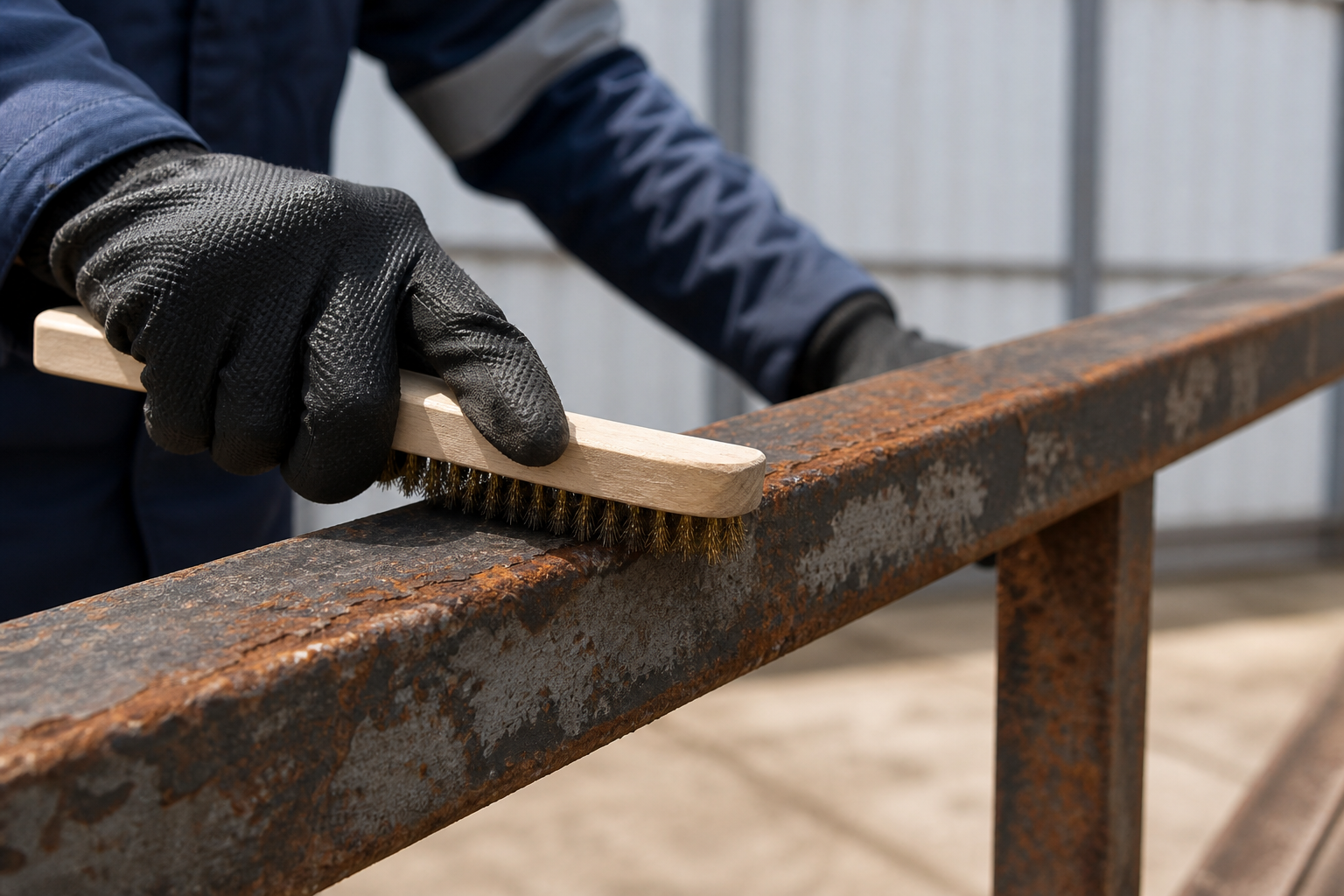
Can I paint directly over rust?
Do not simply coat over loose or active rust. Remove loose corrosion and scale, clean and degrease the surface, then use the primer or rust-treatment system specified for the job.
Do not simply coat over loose or active rust. Remove loose corrosion and scale, clean and degrease the surface, then use the primer or rust-treatment system specified for the job. Some specialist products are designed for prepared rusted steel, but preparation is still required.
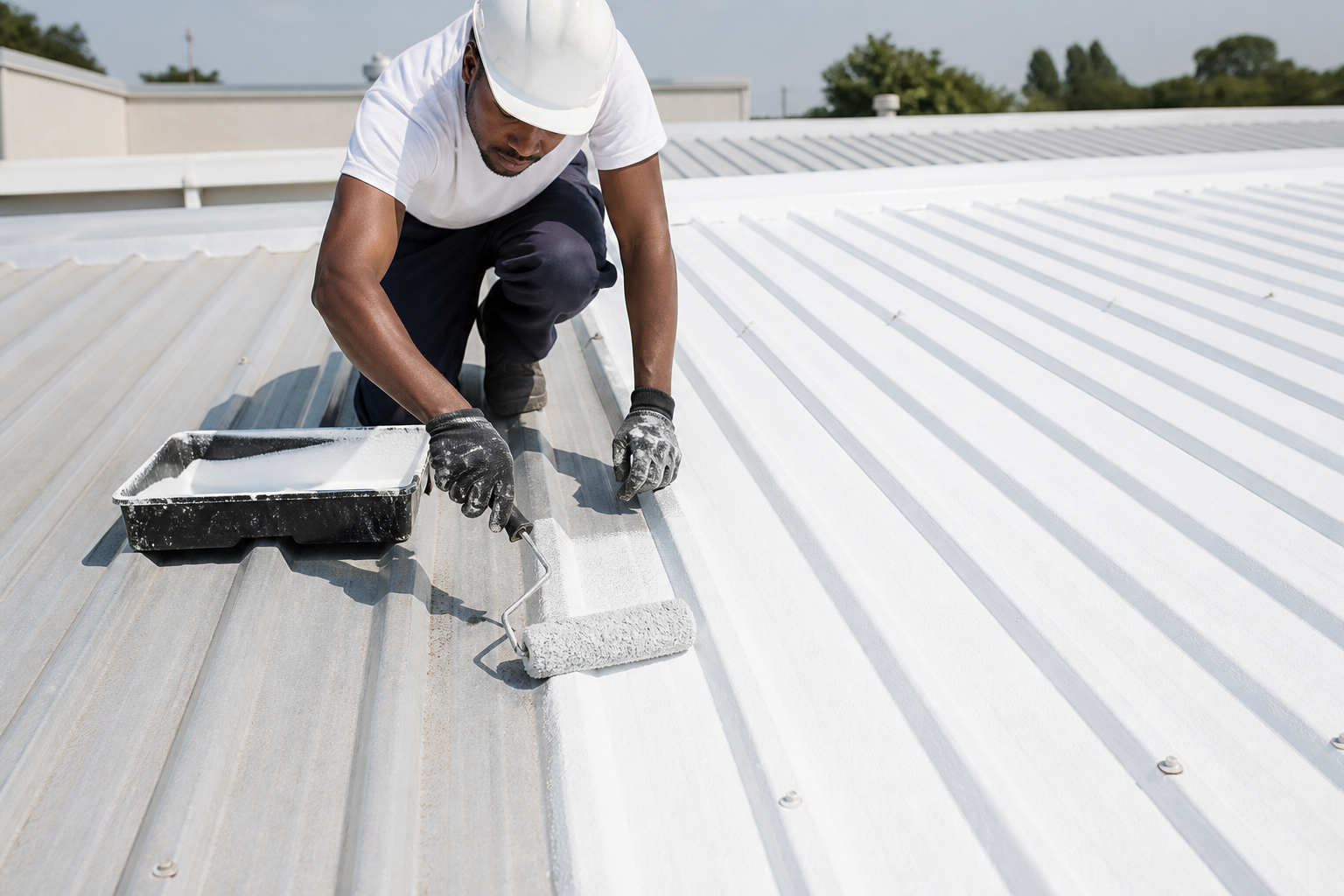
What paint should I use on an IBR or corrugated metal roof?
Use a roof coating suitable for metal roofing and choose the system according to whether the roof is new galvanised metal, previously painted, or rusted.
Use a roof coating suitable for metal roofing and choose the system according to whether the roof is new galvanised metal, previously painted, or rusted. Clean and prepare the roof, treat rust and bare areas as required, and apply the selected ACRO roof coating to the current TDS.
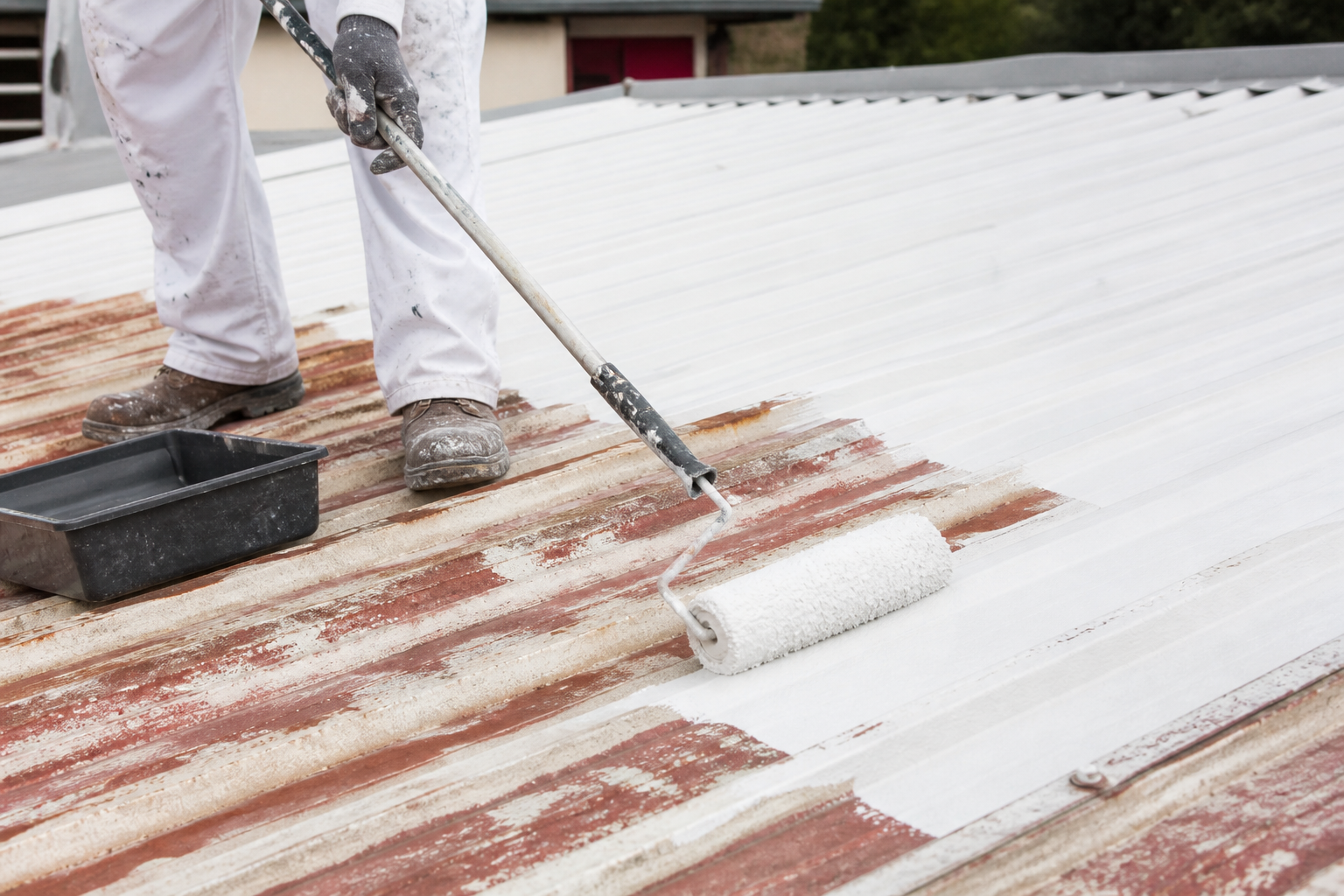
Can roof paint be applied over an old coating?
Yes, but only if the old coating is sound, firmly attached and compatible.
Yes, but only if the old coating is sound, firmly attached and compatible. Wash the roof, remove chalking, loose paint, rust and contamination, sand or prepare glossy areas where required, and repair failed sections before recoating. If the old coating is peeling or unknown, test adhesion and compatibility first.
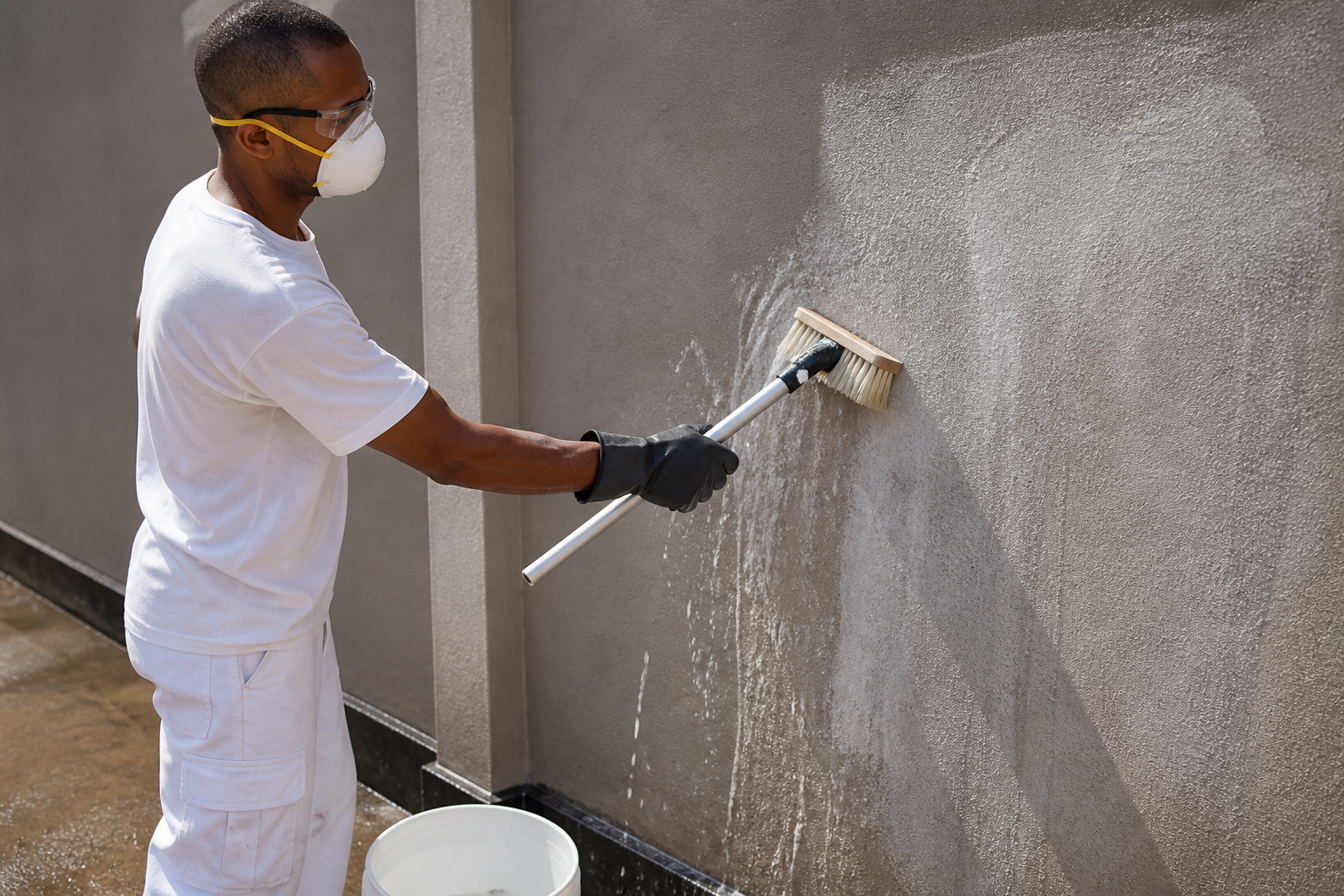
How do I prepare a chalky exterior wall before painting?
Wash and remove as much loose chalk, dust and contamination as possible.
Wash and remove as much loose chalk, dust and contamination as possible. Allow the wall to dry, then stabilise a sound but powdery surface with the appropriate penetrating sealer or bonding liquid before applying the finish coat. Painting directly over weak chalk can cause poor adhesion.